And by lately, I mean for nearly a year.
And by change, I mean big change.
Last November, I got engaged. In December, I graduated. In January, I learned about anthropology and business (and how to eat strange foods) in India (A+ in the class, F in adapting to the foods – I subsisted on naan for over three weeks). In February, I interned for a newspaper in Kansas City. In March, I was back home, on the search for jobs, and found myself behind the counter of a coffee shop. In April, May, June – wedding prep… and wedding. In July and August, I was working and learning how to be married. And now, at the tail end of September, I am still in the process of rolling with the punches, something that does not come naturally to me, still, but that I need to accept for now.
One thing in which I have found (comforting) stability is baking. This is an oddity to me, because I am no Top Chef, and I often find myself frustrated by my naivete of baking/cooking knowledge. I just like watching Food Network and, when I’m not working, sleeping or watching the aforementioned television station, I am in the kitchen, baking and digesting bits – or spoonfuls – of cookie/cake/bread dough that never had a chance of making it to the oven (I can’t serve food that hasn’t been taste-tested by me first, now can I?).
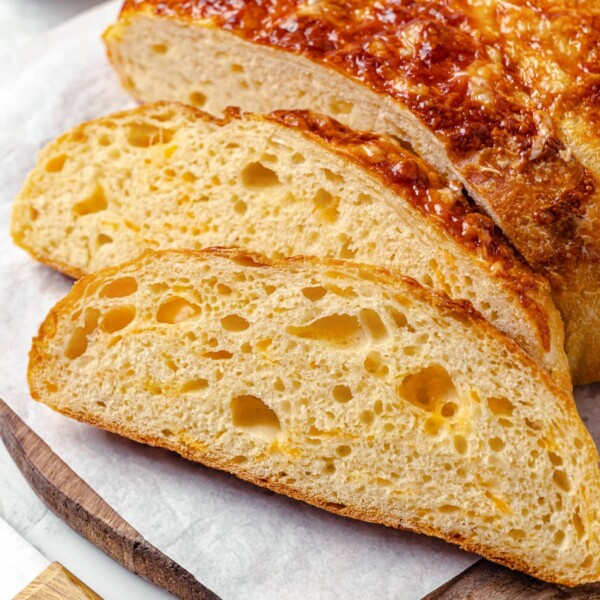
So, in the name of sweet, sweet comfort, I decided to try my hand at a recipe that, to me, is one that perfectly accompanies comfort foods. That is cheese bread.


The name itself exudes no fanciness, no razzmatazz or flair. It is what it is, as a dear friend always says. This is a bread that cannot be judged by its title. The flavors in this loaf, with multifaceted accents of honey and herbs, exponentially surpass the rudimentary label of cheese. It can be prepared simply, with cheese and dough and nothing else, or it can contain a medley of thyme and marjoram and pimiento and, of course, cheese. I chose the middle road, with just thyme, marjoram and mild cheddar, and was fairly pleased with the results.

Though my version featured the healthiest alternatives (whole wheat flour, honey and skim milk) and as such lost a portion of its sweetness, it still hit the spot next to a bowl of hot soup.
Debrief: Next time, for a more universally-accepted taste, I’ll try the recipe without the marjoram, and use all-purpose flour and sugar instead of wheat flour and honey. I also plan to try different kinds of cheese, including sharp cheddar (which is what the recipe originally calls for).
Cheese Bread
courtesy of The Joy of Cooking
Yields two 5 x 9-inch loaves
For a pleasant variation, try using whole-wheat flour and 2 tablespoons honey instead of the sugar indicated (I used this variation, though I bet both versions are tasty).
Scald:
1 ½ cups milk
Add to it and cool to about 105 degrees:
1/3 cup sugar
¼ cup butter
1 tablespoon salt
In a large bowl, dissolve for 3 to 5 minutes:
2 packages active dry yeast
In:
½ cup 105-115 degree water
Stir in the cooled milk mixture. Add and beat until smooth:
1 well-beaten egg
1 ½ cups shredded sharp cheddar cheese (I used mild cheddar because that’s all we had, and I was too lazy to get anything else)
Optional: 1 tsp powdered thyme
Optional: ½ tsp powdered marjoram
Optional: ½ cup finely chopped pimiento (I left this out as a matter of personal preference)
Beat in well:
3 cups sifted all-purpose flour
Add, and then continue beating and stirring until the dough begins to leave the sides of the bowl, about:
3 cups sifted all-purpose flour
Knead the dough about 10 minutes. Allow to rise once in the bowl and once in the pans, covered, until doubled in bulk (for me, the first rise took about 2 hours, and the second about an hour). Brush the loaves with:
Optional: Melted butter (I topped it with shredded cheese instead, for looks and taste)
Bake in a preheated 375 degree oven about 30 minutes.
Extra punches: To ensure the dough was kneaded enough, I utilized the windowpane test again and checked its temperature (a well-kneaded dough should render 80 degrees). To test for doneness, take the loaf out of the oven and out of the tin, and stick a thermometer in the bottom. Yeast breads should yield a temperature between 210 and 220 degrees when done baking. You can also test for doneness if you thwack the bottom of the loaf and hear a hollow, “thump-like” sound.

I am in love with this recipe, and I’ll tell you why:
1. There is no need for the “overnight poolish sit.” Just four or so hours, and the loaf is done. This is great for those, like me, who have a hard time being patient. Why am I baking breads again?
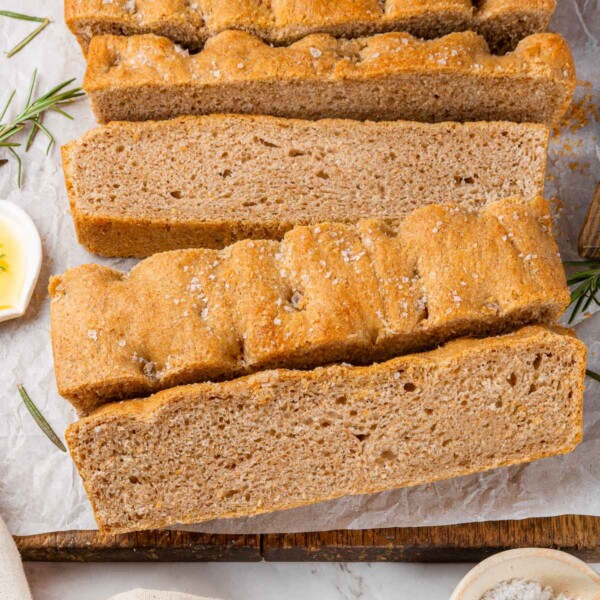
2. It’s simple. There’s really nothing in this recipe that requires a professional to intercede in the preparation of the loaf. Even an amateur baker (including yours truly) can accomplish a loaf of wheat sandwich bread with these instructions.
3. You could probably (though I haven’t had the pleasure of trying this yet) take the basics of this recipe and modify it to whatever kind of loaf your taste buds desire at the moment (which is also where the lack of waiting comes in handy): herb bread, white bread, raisin bread, cheese bread even. Of course I say this based on theory, but I plan on testing this in the near future.


Light Wheat Bread
courtesy of The Bread Baker’s Apprentice (adapted from Smitten Kitchen)
Makes one two-pound loaf
2 1/2 cups (11.25 oz) unbleached high-gluten or bread flour
1 1/2 cups (6.75 oz.) whole-wheat flour
1 1/2 tablespoons (.75 oz.) granulated sugar or honey (I used sugar, only because I didn’t have any honey)
1 1/2 teaspoons (.38 oz.) salt
3 tablespoons (1 oz.) powdered milk
1 1/2 teaspoons (.17 oz.) instant yeast
2 tablespoons (1 oz.) shortening or unsalted butter, at room temperature (I used butter, for the same reason that I used sugar)
1 1/4 cups (10 oz.) water, at room temperature
From Smitten Kitchen:
1. Stir together the high-gluten flour, whole-wheat flour, sugar (if using), salt, powdered milk, and yeast in a 4-quart mixing bowl (or in the bowl of an electric mixer). Add the shortening, honey (if using), and water. Stir (or mix on low speed with the paddle attachment) until the ingredients form a ball. If there is still flour in the bottom of the bowl, dribble in additional water. The dough should feel soft and supple. It is better for it to be a little too soft that to be too stiff and tough.
2. Sprinkle high-gluten or whole-wheat flour on the counter, and transfer the dough to the counter, and begin kneading (or mix on medium speed with the dough hook). Add more flour if needed to make a firm, supple dough that is slightly tacky but not sticky. Kneading should take about 10 minutes (6 minutes by machine). The dough should pass the windowpane test (this really helped!) and registers 77 to 81 degrees F (I used a meat thermometer and was just fine). Lightly oil a large bowl and transfer the dough to the bowl, rolling it around to coat it with oil. Cover the bowl with plastic wrap.
3. Ferment at room temperature for 1 1/2 to 2 hours, or until the dough doubles in size.
4. Remove the dough from the bowl and press it by hand into a rectangle about 3/4 inch thick, 6 inches wide, and 8 to 10 inches long. Form it into a loaf by working from the short side of the dough, rolling up the length of the dough one section at a time, pinching the crease with each rotation to strengthen the surface tension. It will spread wider as you roll it. Pinch the final seam closed with the back edge of your hand or with your thumbs. Place the loaf in a lightly oiled 8 1/2 by 4 1/2 inch bread pan; the ends of the loaf should touch the ends of the pan to ensure an even rise. Mist the top with spray oil and loosely cover with plastic wrap.
5. Proof at room temperature for approximately 60 to 90 minutes, or until the dough crests above the lip of the pan.
6. Preheat the oven to 350 degrees F with the oven rack on the middle shelf.
7. Place the bread pan on a sheet pan and bake for 30 minutes. Rotate the pan 180 degrees for even baking and continue baking for 15 to 30 minutes, depending on the oven. The finished loaf should register 190 degrees F in the center, be golden brown on the top and the sides, and sound hollow when thumped on the bottom.
8. When the bread is finished baking, remove it immediately from the loaf pan and cool it on a rack for at least 1 hour, preferably 2 hours, before slicing or serving.
Extra punches: Though the recipe calls for instant yeast, I used (by accident and by default) active dry yeast and water slightly above room temperature and had no issues whatsoever. I also used bread flour as opposed to all-purpose flour, but I’m sure you could tweak quite a bit of this unfussy recipe and still get away with a great-tasting bread.