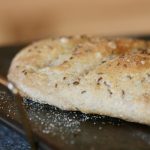
Deli Rye Bread
Deli rye bread is built for pastrami sandwiches, toast, and everything in between. The dough keeps for days and bakes up beautifully!
Servings: 48 slices
Ingredients
- 3 cups lukewarm water
- 1 ½ tablespoons granulated yeast 1 ½ packets
- 1 ½ tablespoons salt
- 1 ½ tablespoons caraway seeds plus more for sprinkling on the top
- 1 cup rye flour
- 5 ½ cups unbleached all-purpose flour
- Cornmeal for pizza peel or, as I used, cutting board
- Cornstarch wash Blend ½ teaspoon cornstarch with a small amount of water to form a paste; add ½ cup water and whisk with a fork; microwave mixture until it appears glassy, about 30 to 60 seconds on high
Instructions
- Mixing and storing the dough: Mix the yeast, salt, and caraway seeds with the water in a 5-quart bowl, or a lidded (not airtight) food container.
- Mix in the remaining dry ingredients without kneading, using a spoon, a 14-cup capacity food processor (with dough attachment), or a heavy-duty stand mixer (with dough hook) (what I used). If you’re not using a machine, you may need to use wet hands to incorporate the last bit of flour.
- Cover (not airtight), and allow to rest at room temperature until the dough rises and collapses (or flattens on top), approximately 2 hours.
- The dough can be used immediately after the initial rise, though it is easier to handle when cold. Refrigerate in a lidded (not airtight) container and use over the next 14 days.
- On baking day, dust the surface of the refrigerated dough with flour and cut off a 1-pound (grapefruit-sized) piece. Dust the piece with more flour and quickly shape it into a ball by stretching the surface of the dough around to the bottom on all four sides, rotating the ball a quarter-turn as you go. Elongate the ball into an oval-shaped loaf. Allow to rest and rise on a cornmeal-covered pizza peel for 40 minutes.
- Twenty minutes before baking time, preheat the oven to 450 degrees F, with a baking stone placed on the middle rack. Place an empty broiler tray on any other shelf that won’t interfere with the rising bread.
- Using a pastry brush, paint the top crust with cornstarch wash and then sprinkle with additional caraway seeds. Slash with deep parallel cuts across the loaf, using a serrated bread knife.
- Slide the loaf directly onto the hot stone. Pour 1 cup of hot tap water into the broiler tray, and quickly close the oven door. Bake for about 30 minutes, or until deeply browned and firm. Smaller or larger loaves will require adjustments in baking time.
- Allow to cool before slicing or eating.
Notes
Yield: 4 loaves (1 pound each)
Extra punches: For caraway seed-lovers, an alternative: Caraway Swirl Rye. Follow above recipe as stated, but add 2 tablespoons of caraway seeds. When rolling the grapefruit-sized dough into a ball, use your hands and a rolling pin to flatten the ball into a 1/2-inch-thick oval (avoid using extra flour here or it might remain as a dry deposit in the caraway swirl). Sprinkle the dough with caraway seeds. The amount can vary with your taste; save some for the top crust. Then roll up the dough from the short end like a jelly roll, forming a cylindrical loaf. Pinch the ends closed. Continue following above recipe as stated.
Nutrition
Calories: 61kcal | Carbohydrates: 13g | Protein: 2g | Fat: 0.2g | Saturated Fat: 0.03g | Polyunsaturated Fat: 0.1g | Monounsaturated Fat: 0.04g | Sodium: 219mg | Potassium: 27mg | Fiber: 1g | Sugar: 0.1g | Vitamin A: 1IU | Vitamin C: 0.04mg | Calcium: 5mg | Iron: 1mg