
This spoon bread recipe comes from my Nana, and it bakes up more like a savory soufflé than a slice of cornbread. Light, spoonable, and naturally gluten free, it is the kind of dish that earns its place at every table.


A Quick Look At The Recipe
This is a brief summary of the recipe. Jump to the recipe to get the full details.
Prep Time
20 minutes
Cook Time
40 minutes
Total Time
1 hour
Servings
6 servings
Difficulty
Intermediate
Calories *
270 kcal per serving
Technique
Stovetop cooking and baking
Flavor Profile
Mild, savory, buttery, lightly corn
* Based on nutrition panel
I made this for Thanksgiving and everyone kept asking what it was. The texture surprised me because I expected something dense like regular cornbread, but it came out light and almost custardy. I will absolutely be making this every year.⭐⭐⭐⭐⭐
Lauren
Why You Will Love This Recipe
- Naturally gluten free. This recipe contains no flour at all, just cornmeal, milk, eggs, butter, and baking powder. There is nothing to swap or substitute.
- Lighter than you expect. Spoon bread is often described as dense, but this one has a texture closer to a corn soufflé. A quick stovetop step is what makes it so light.
- Six ingredients, one pot, one pan. The stovetop takes about 10 minutes, then the oven does the rest. If you enjoy working with cornmeal in savory recipes, my cheddar, chive & cornmeal pancakes use a similar no-fuss approach.
- Versatile enough to go any direction. Serve it alongside a spicy braise, baked chickpea patties or rich roast, or spoon it with butter and maple syrup at breakfast. The mild, savory flavor works either way.
Table of Contents
This recipe came from my Nana, and that’s already exactly right. I grew up eating this at family holidays, and it never lasted long. Six ingredients, a simple stovetop step, and 35 minutes in the oven, and you have something genuinely special.
It is traditionally served as a side for spicy or rich dishes, but I have been eating it alongside eggs and sautéed vegetables lately, and it’s honestly so good. If you want to compare it to a more modern version with flour and sugar, my original spoon bread recipe from the Joy of Cooking is a good reference point.
Or, for a more traditional, sliceable version, try my sourdough cornbread next (coming soon!)!
Ingredients & Substitutions

- Cornmeal: This is the base of the recipe, cooked into a thick mush with the milk before baking. Substituting a different grain will change both the flavor and texture significantly. (1 1/4 cup cornmeal, 205g) If you enjoy cooking with cornmeal in savory recipes, my cornmeal crusted catfish sandwich is worth bookmarking.
- Milk: Milk hydrates the cornmeal on the stovetop and creates the creamy, custard-like base the eggs get whisked into. A non-dairy milk can work, but expect a less rich result depending on the fat content.
- Eggs: Beaten eggs whisked into the warm cornmeal mush are what lift this dish from dense pudding to something airy and soufflé-like. Beat them well before adding so the dish rises evenly.
- Baking Powder: This is the leavening agent that helps the spoon bread puff in the center during baking and gives it that signature jiggle. Without it, the dish would bake flat and dense.
- Salted Butter: Whisked in after the mush comes off the heat, butter adds richness and smooths out any lumps in the cornmeal. If you use unsalted butter, add a small pinch more salt to compensate.
- Salt: Seasons the mush at the same point as the butter, right after it comes off the heat.
Variations for Spoon Bread
- Breakfast style.: Serve it warm with a generous pat of butter and a drizzle of maple syrup instead of savory mains. The mild corn flavor works beautifully sweet, and it pairs naturally with a spread like my pumpkin pancakes for a full breakfast table.
- Herb and cheese.: Whisk a handful of shredded sharp cheddar and a tablespoon of fresh chives or thyme into the mush along with the butter. The cheese melts into the base and adds a savory depth. If you like a little heat, my Mexican cornbread is a great contrast!
Professional Tips for Perfect Spoon Bread
- Whisk constantly once the cornmeal hits the milk. Cornmeal sinks and scorches quickly on direct heat if left alone. Keep the whisk moving in slow, steady circles from the moment you stir it in until the mush is fully cooked and thick.
- Beat the eggs thoroughly before they touch the hot mush. Poorly beaten eggs create streaks and uneven lift in the finished dish. Whisk them in a separate bowl until the yolks and whites are completely combined and slightly frothy, then add them all at once and whisk fast to prevent scrambling.
- Pull it from the oven while the center still jiggles. The jiggle is correct, not a sign it needs more time. Spoon bread sets as it rests, and overbaking drives out moisture and collapses the airy texture you worked to build. Look for a puffed center that moves like fully baked cheesecake when you nudge the pan.
- Serve it as soon as possible after baking. Like a soufflé, spoon bread looks its best right out of the oven. The longer it sits, the more it falls and the more the top dries out. Serve it right away for the best texture.
How to Make Spoon Bread
Use these instructions to make a warm, puffed, spoon bread that bakes up light and custardy. Further details and measurements can be found in the recipe card below.
Step 1: Prepare your dish and oven. Preheat the oven to 350°F (not convection) and butter a 9-inch square or round baking dish. Set the dish aside while you make the batter on the stovetop.
The pre-cooking in the pan and whisking in the beaten eggs before adding baking powder gives this spoon bread an exceptionally light texture, almost like a substantial corn soufflé.
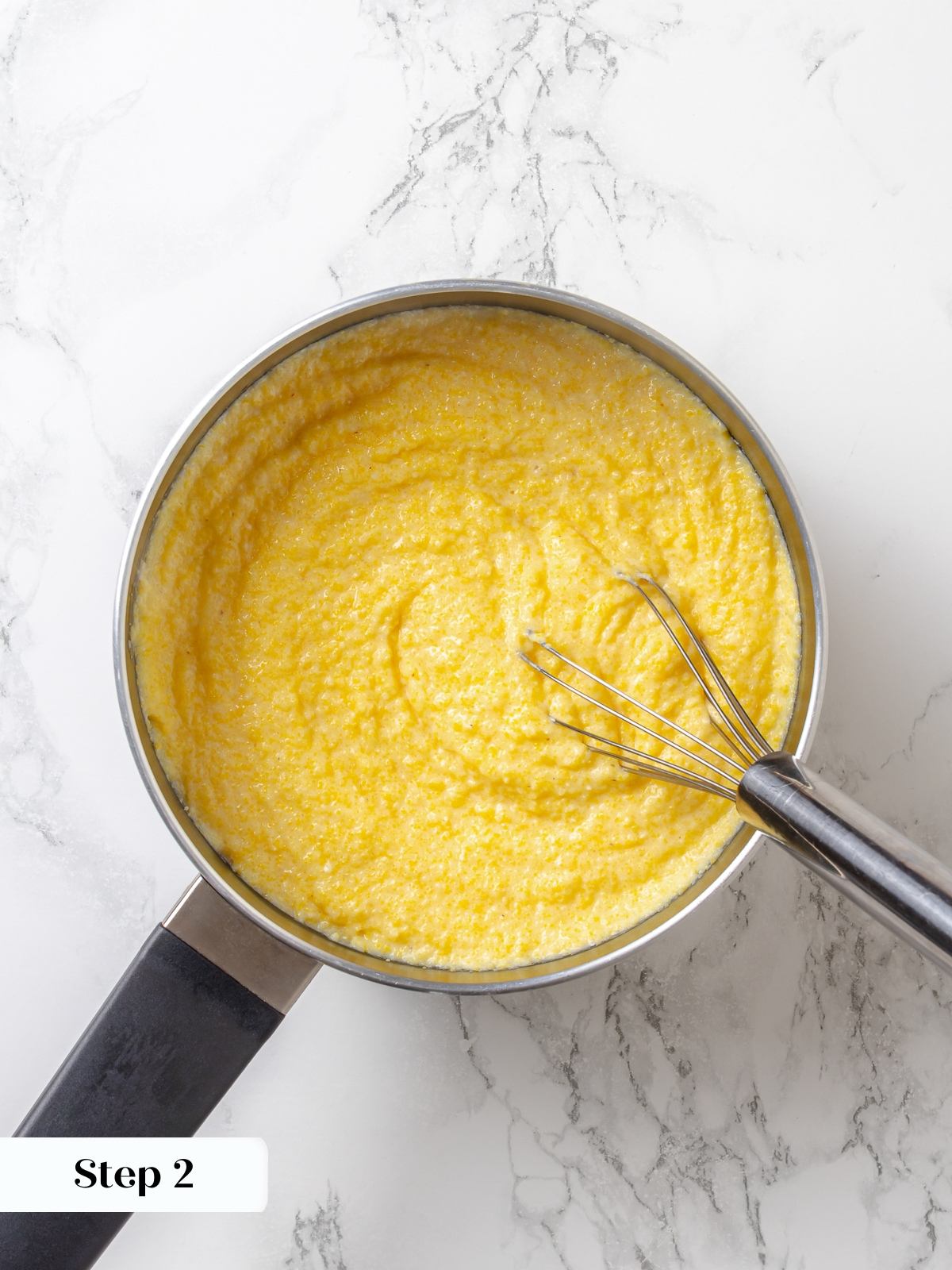


Step 2: Cook the cornmeal mush. Pour the milk into a large saucepot and gradually stir in the cornmeal (photo 1). Place the pot over medium heat and let the mixture come to a boil, whisking occasionally. The mixture will thicken into a soft, porridge-like mush as it heats. This takes a few minutes. It will look lumpy at first, and that’s normal.
Keep whisking throughout. If you walk away, the cornmeal settles and the milk scorches quickly. Stay close and keep that whisk moving.
Steps 3 & 4: Add butter and salt. Remove the pot from the heat and immediately whisk in the salt and salted butter (photos 2 & 3). Whisk until the butter melts and the mixture is smooth. If you still see small lumps, keep whisking. You want an even, uniform mush before the eggs go in.
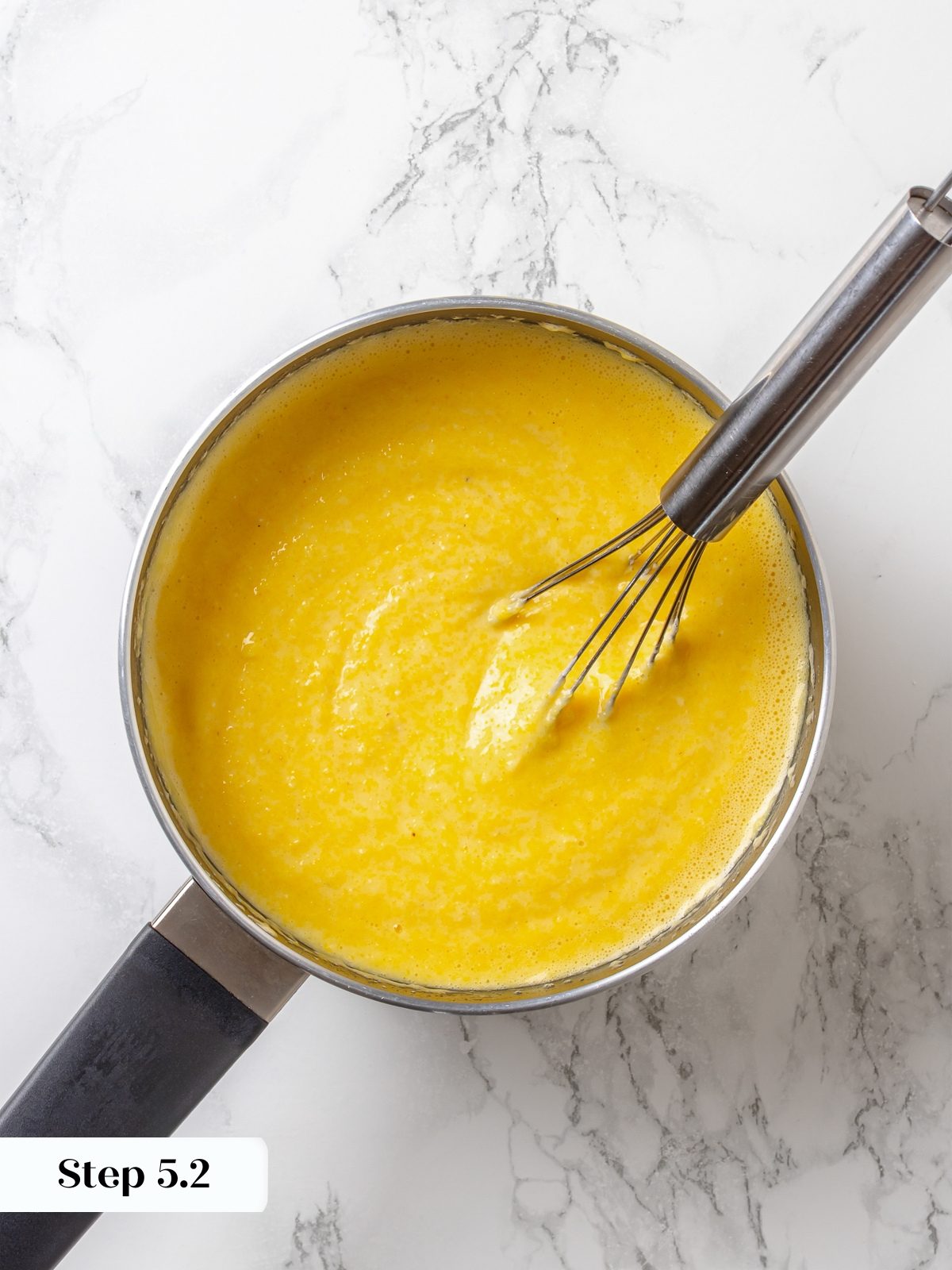
Step 5: Whisk in the eggs and baking powder. Add the well-beaten eggs and baking powder to the hot cornmeal mixture and whisk vigorously to incorporate (photos 4 & 5). The batter will loosen slightly and take on a pale, creamy color. Beat the eggs well before adding them, not after, so they disperse evenly.
The mixture will still be quite warm when the eggs go in. As long as you whisk immediately and continuously, the eggs will emulsify into the batter rather than scramble. Move quickly here.
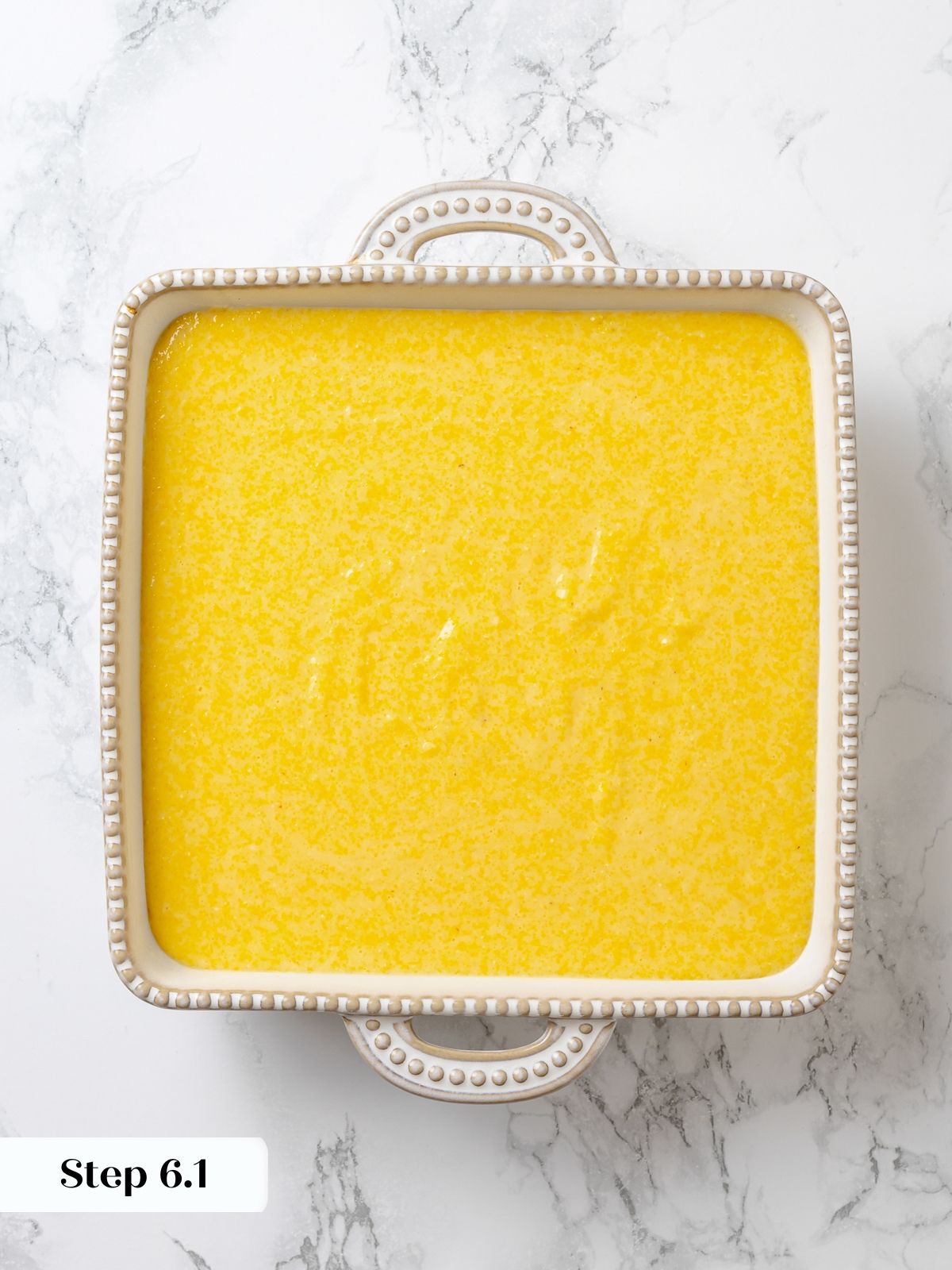
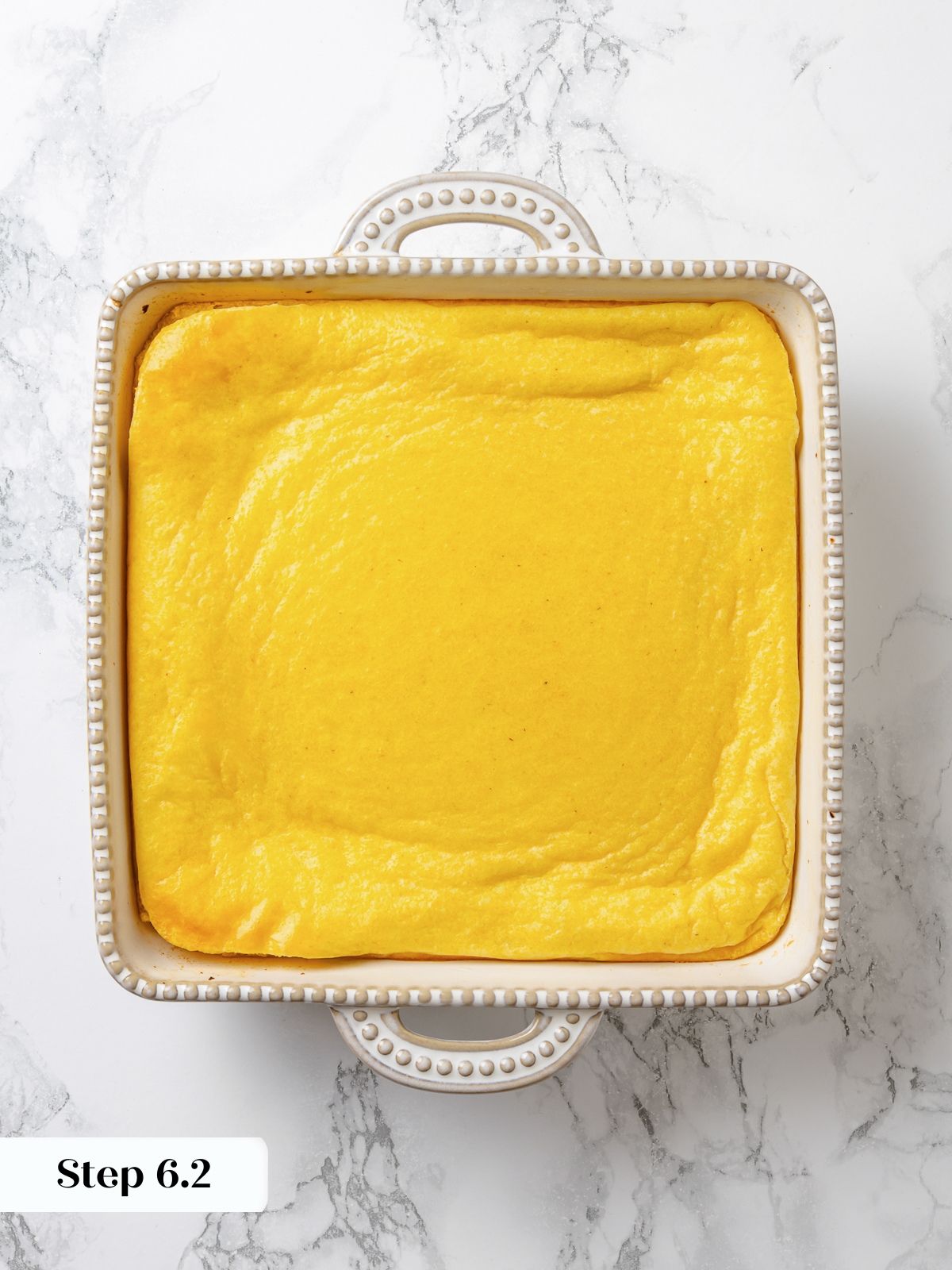
Step 6: Transfer and bake. Pour the batter into the prepared baking dish (photos 6 & 7). It will be fairly loose and pourable, which is exactly right. Slide the dish into the preheated 350°F oven and bake for 35 to 40 minutes, until the center puffs up and jiggles like a fully set cheesecake or Jello when you gently nudge the pan. The edges will be set and lightly golden while the center still has a soft, custardy wobble.
Do not overbake. Once the center looks dry and firm rather than softly set, the texture shifts from custardy to dense. Pull it when it still has that gentle jiggle in the middle.
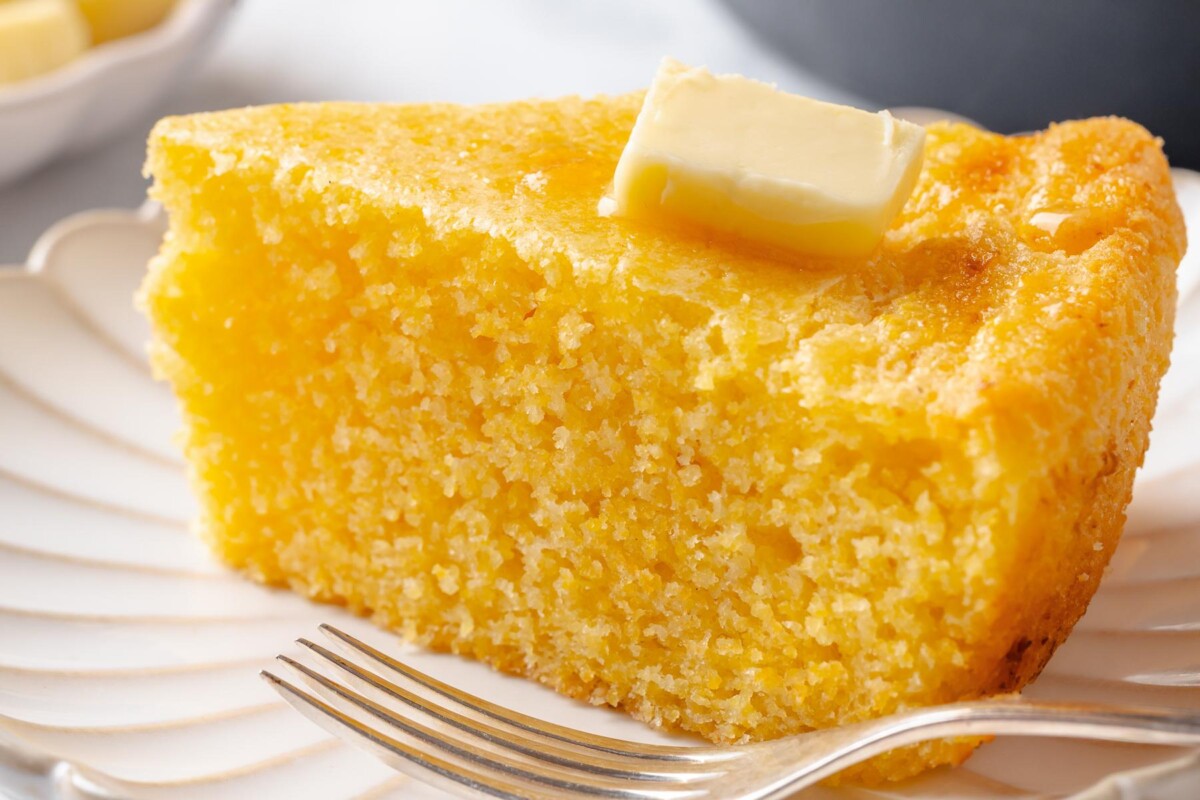
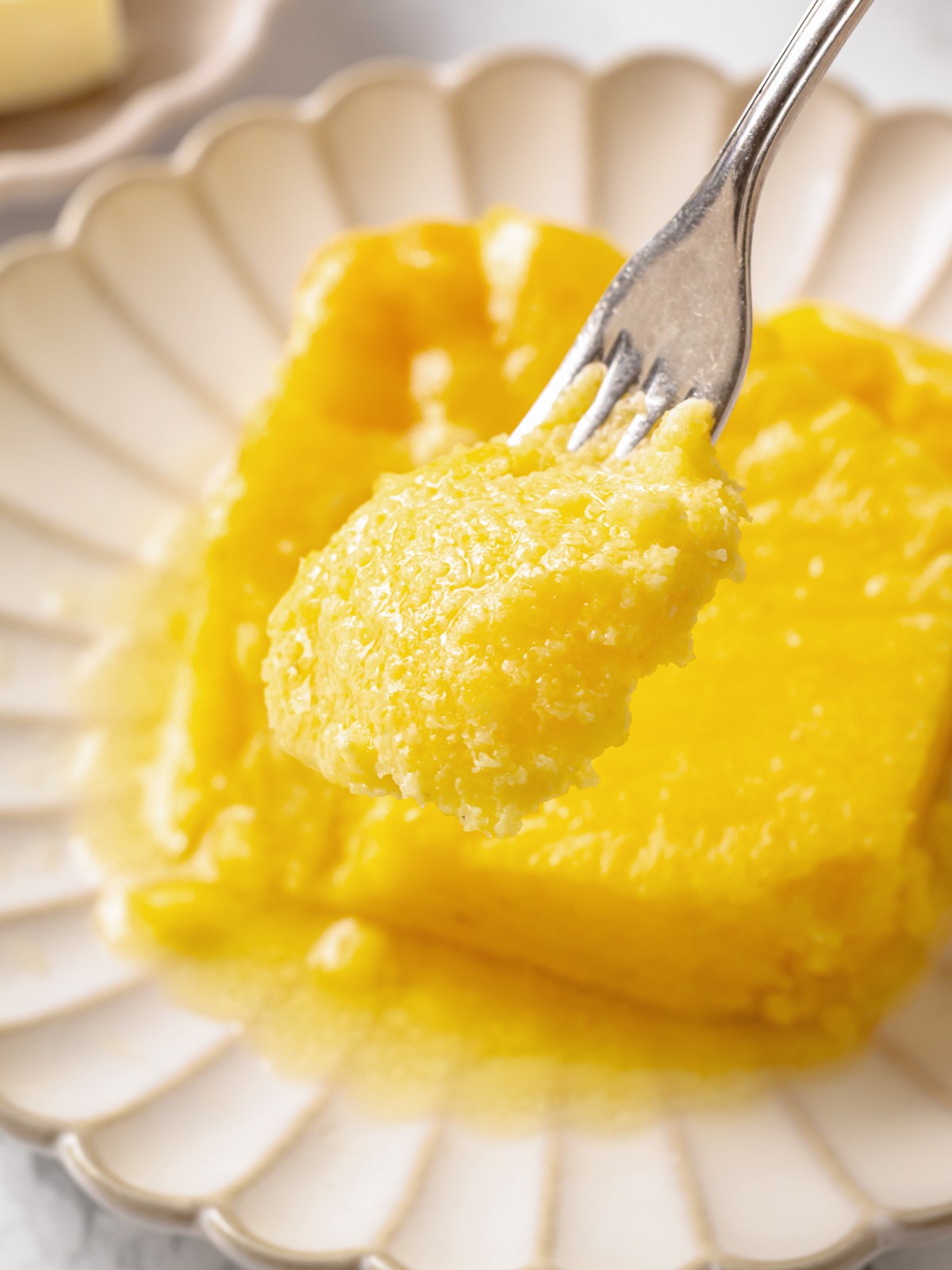
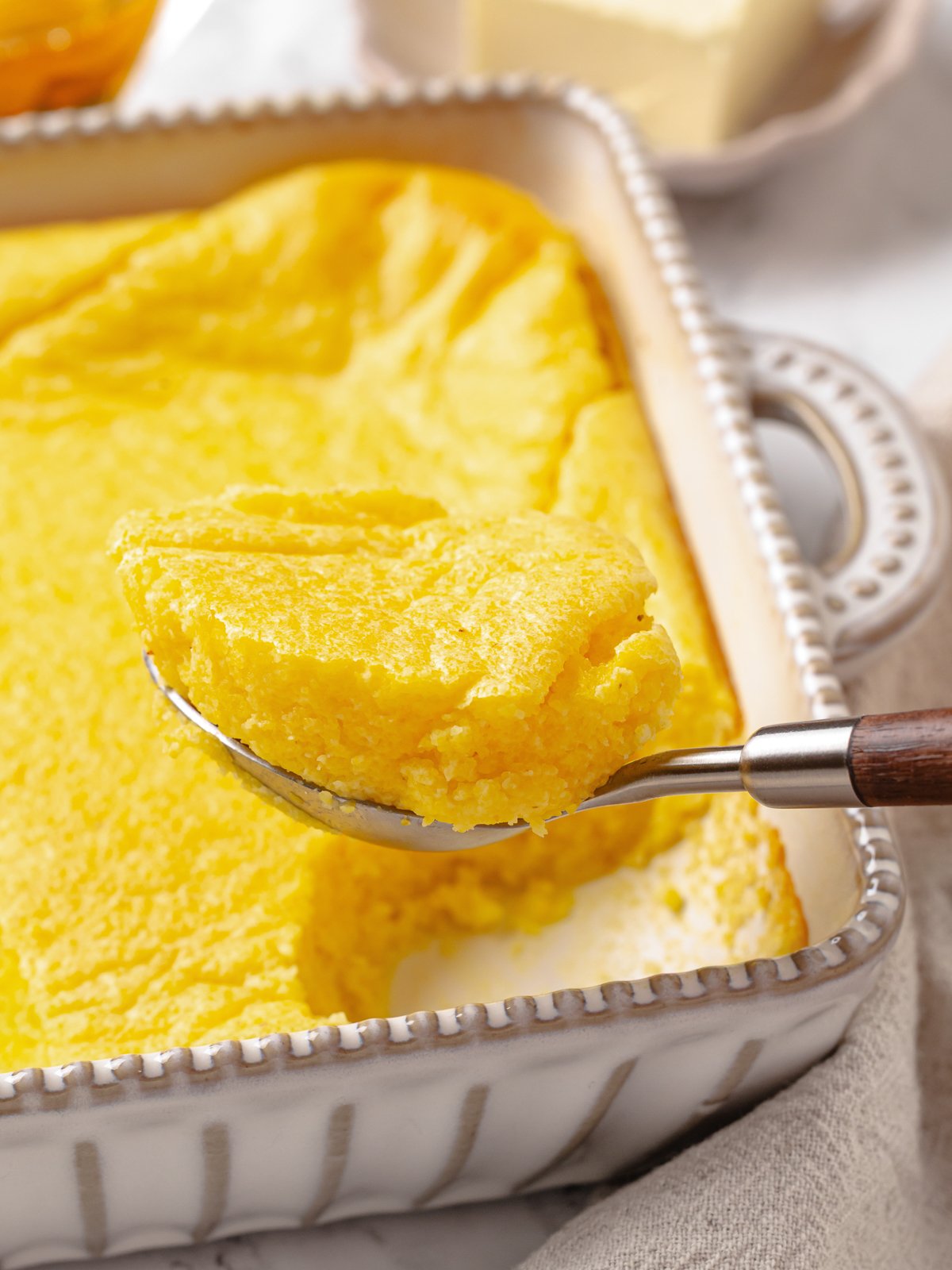
Step 7: Serve warm! Remove the dish from the oven and serve immediately with a pat of butter on top (photo 8). Spoon bread falls and the surface begins to dry as it sits, so get it to the table while it is still puffed and steaming. Like I do, spoon it directly from the dish while it is warm for the best texture.
Recipe FAQs
Spoon bread is best the day it is made. If you have leftovers, cover the dish and refrigerate for up to 2 days. Reheat individual portions in the microwave in 30-second bursts until warmed through, or cover the whole dish with foil and warm it in a 325°F oven for about 10 minutes. The top will dry out a bit as it sits, but a pat of butter melted over the surface before serving helps considerably.
This is not an ideal make-ahead dish. Like a soufflé, it falls and the top dries out the longer it sits after baking, so there is no great way to bake it in advance and serve it at its best. You can prep your ingredients ahead of time! The whole process from pot to oven is under 20 minutes, which makes day-of cooking very manageable.
The two most likely culprits are under-beaten eggs and overbaking. If the eggs are not thoroughly beaten before they go into the hot mush, they do not distribute evenly, and the dish cannot rise the way it should. Overbaking dries it out and collapses the texture. Pull it from the oven while the center still jiggles like cheesecake, not after it looks completely firm.
This version follows the traditional method: no flour, no sugar, just cornmeal cooked into a mush with milk before the eggs go in. My spoon bread recipe from the Joy of Cooking includes all-purpose flour and sugar, which produces a slightly sturdier, sweeter result with a texture closer to a soft cornbread. This Nana version is lighter and more savory, closer to a corn soufflé, which makes it a better match alongside rich or spicy dishes.
A whisk is the right tool here, and I would not skip it. The cornmeal mush needs constant agitation as it cooks to prevent scorching and lumps, and the beaten eggs need to be dispersed fast into the hot mixture so they emulsify rather than scramble. A wooden spoon can manage the mush in a pinch, but it will not move fast enough when the eggs go in. If you only have a fork for beating the eggs, beat longer than you think you need to, like I do when I am working without much equipment, until they are completely uniform and slightly frothy.
Recommended Quick Bread Recipes

Lunch & Dinners

Quick Breads

Quick Breads

Quick Breads
If you enjoyed this recipe, please leave a star rating and let me know how it goes in the comments below! I love hearing from you and your comments make my day!
Spoon Bread
Ingredients
- 1 ¼ cups cornmeal
- 3 cups milk
- 1 teaspoon salt
- 2 tablespoons salted butter
- 3 large eggs, well beaten
- 1 ¾ teaspoons baking powder
Instructions
- Preheat the oven to 350°F (not convection). Butter a 9-inch square or round baking dish.
- In a large saucepot, gradually stir the cornmeal into the milk. Bring to a boil, whisking occasionally to prevent the cornmeal from sticking or the milk from scorching.
- Remove from heat. Whisk in the salt and butter until the butter is fully melted and no lumps remain.
- Add the well-beaten eggs and baking powder. Whisk well to incorporate completely.
- Transfer to the prepared baking dish. Bake for 35-40 minutes, until the center puffs and jiggles like a fully set cheesecake or Jello.
- Serve warm with butter.
Notes
- Serve immediately. Like a soufflé, spoon bread looks its best right out of the oven. It will begin to fall and the top will dry out as it sits, so bring it to the table as soon as it comes out.
- Technique: Whisk the cornmeal into the milk gradually and keep whisking as it comes to a boil. Scorching the milk or letting the cornmeal clump at this stage affects both flavor and texture.
- Mixing order matters. Pre-cooking the cornmeal in the milk before adding the eggs and baking powder is what gives this spoon bread its exceptionally light, almost soufflé-like texture. Do not skip this step.
- Storage: Spoon bread is best eaten the day it is made. If you have leftovers, cover and refrigerate for up to 2 days. Reheat gently in a low oven and brush the top with melted butter to refresh the surface.
Nutrition
Nutrition information is automatically calculated, so should only be used as an approximation.
 Like this recipe? Rate & comment below!
Before You Go
If this spoon bread recipe has a place at your table, there is plenty more where it came from. Browse our quick bread recipes for more to try.


I made this for Thanksgiving and everyone kept asking what it was. The texture surprised me because I expected something dense like regular cornbread, but it came out light and almost custardy. I will absolutely be making this every year.
Great pics! And that scoop is lovely 🙂