
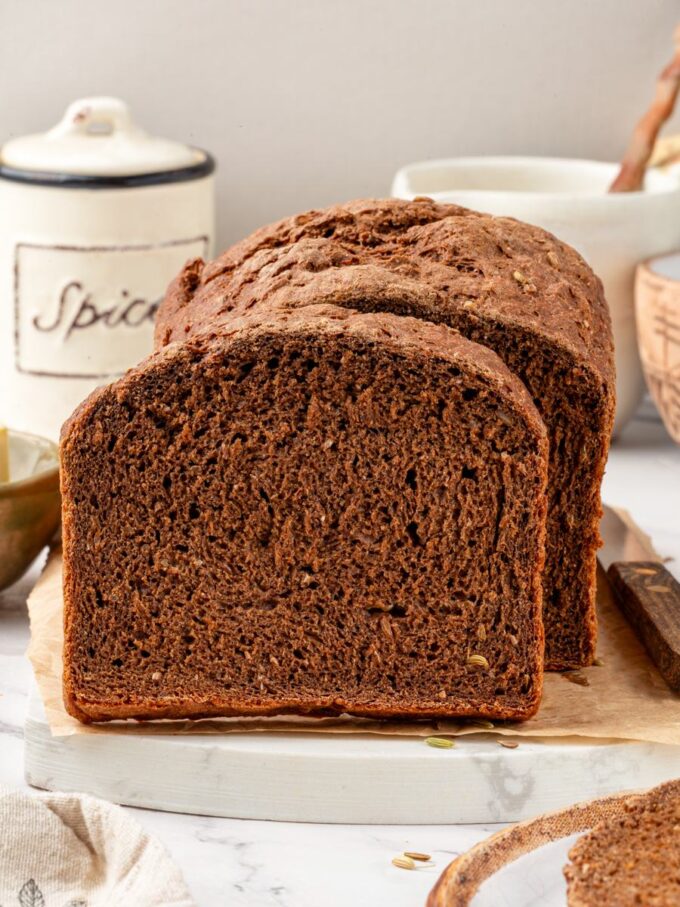
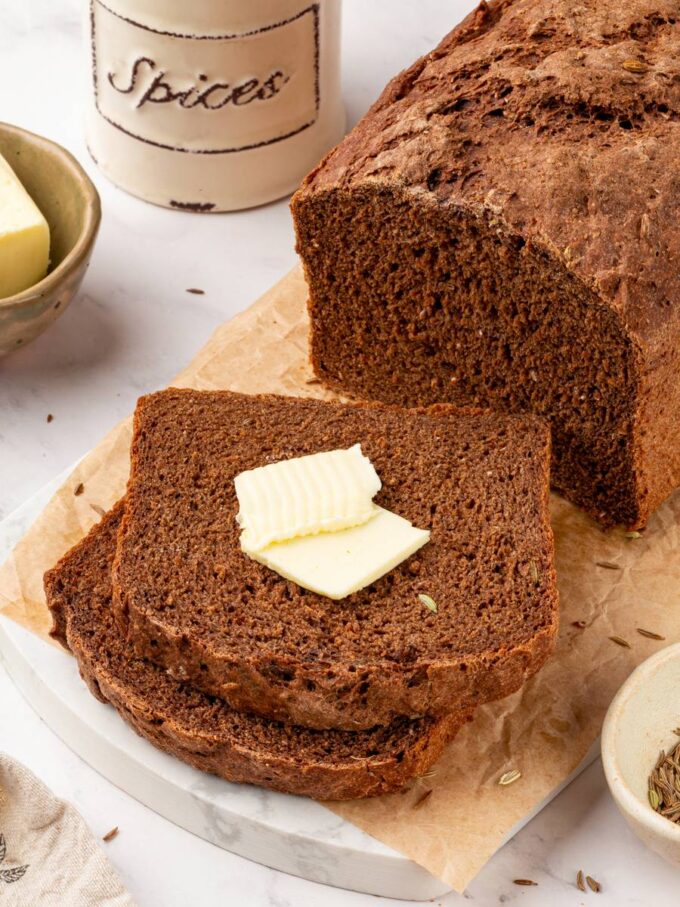
Russian black bread is one of those loaves that looks dramatic and tastes even better. Dark, dense, and layered with molasses, cocoa, rye flour, and caraway, it’s the kind of bread that makes you slow down and actually taste what you’re eating.
A Quick Look At The Recipe
This is a brief summary of the recipe. Jump to the recipe to get the full details.
Prep Time
15 minutes
Cook Time
50 minutes
Proof/Rest Time
3 hours 45 minutes
Total Time
4 hours 50 minutes
Servings
12 slices
Difficulty
Intermediate
Calories *
149 kcal per serving
Technique
Yeasted, stand mixer kneaded, oven baked
Flavor Profile
Deep, earthy, mildly bitter, faintly sweet
* Based on nutrition panel
I made this as a sandwich loaf and the color and smell had my whole family crowding around the cooling rack waiting for a slice. I used it to make Rubens and they were so good! The molasses and caraway combination is unlike anything I’ve baked before — so complex and deeply satisfying.
⭐⭐⭐⭐⭐
Lucas
Why You Will Love This Recipe
- The flavor is complex without being complicated. Molasses, cocoa, caraway, fennel, and espresso powder all go into one dough, and the result is a loaf with real depth in every slice. Each ingredient plays a specific role, and you don’t need to do anything special to bring it all together.
- It uses rye and whole wheat flour together. That combination gives the bread its characteristic density and earthy flavor without making it heavy or gummy. The all-purpose flour keeps the crumb workable and the texture sliceable.
- You can bake it as a round or a sandwich loaf. For a round, place it on a parchment-lined baking sheet and slash an X on top before baking; for a sandwich loaf, put it straight into a greased loaf pan. Same dough, same flavor, just different shapes depending on how you want to use it.
- It pairs naturally with other hearty soups and stews!
I first came across Russian black bread in a cookbook and could not stop thinking about how something so dark and dense could also be so deeply flavored. It is the kind of loaf that feels completely different from the bread that usually comes out of my oven, and once you make a sandwich with it, you understand why it has been baked for centuries.
It is especially good alongside a bowl of hearty soup or sliced thick with a little salted butter, and it holds up beautifully next to bold flavors that might overwhelm a lighter loaf. If you love baking with rye and whole grains, try my Irish Brown Bread and this Steakhouse Style Pumpernickel Bread next!
Ingredients & Substitutions
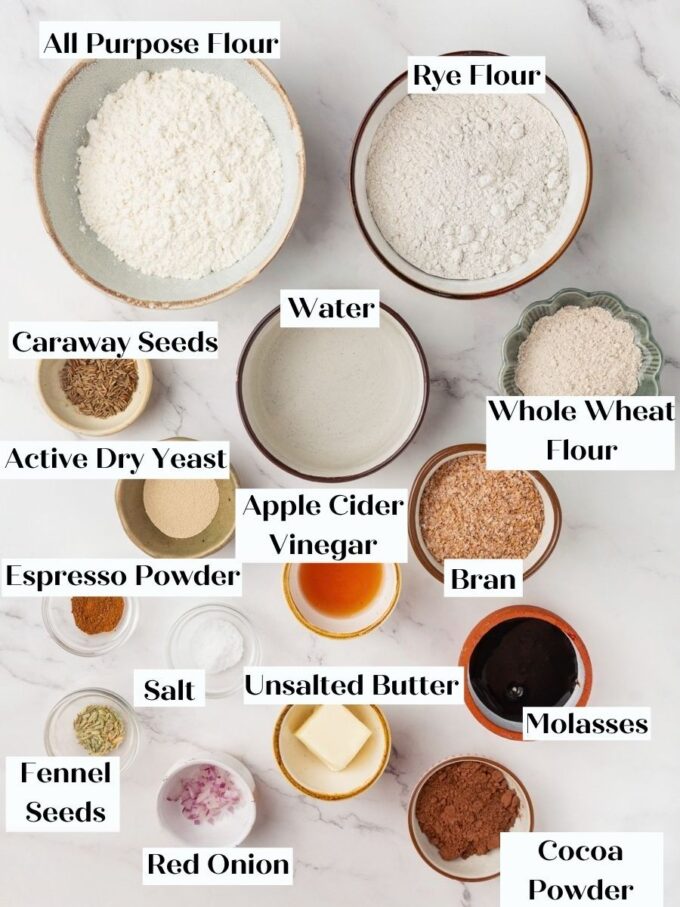
- Active Dry Yeast: This leavening agent gives the bread structure and lift during the two rises. Make sure your water is warm but not hot (around 100 to 110°F) when you proof it — water that’s too hot will kill the yeast before it ever gets started.
- Molasses: This gives the bread its deep, almost bittersweet flavor and its characteristically dark color. Don’t substitute honey or maple syrup; molasses’s bold, slightly bitter depth is what makes this bread taste like itself.
- Apple Cider Vinegar: A small amount of vinegar adds a mild tang and helps replicate the sour edge you’d find in a traditionally fermented black bread. It’s subtle, but you’d notice if it wasn’t there.
- Unsweetened Cocoa Powder: This doesn’t make the bread taste like chocolate. It deepens the color and adds a faint, earthy bitterness that rounds out the molasses and rye beautifully.
- Whole Wheat Flour: Whole wheat adds structure, a mild nutty flavor, and a denser texture that’s characteristic of dark European-style breads. If you want a softer loaf, my Whole Wheat Bread Recipe offers great technique guidance on how whole-grain flour behaves differently than all-purpose.
- Rye Flour: Rye is what gives Russian black bread its signature flavor: earthy, slightly tangy, and complex. The recipe was originally written with medium rye, but I used dark rye because that’s what I had on hand, and honestly, the bread didn’t lack anything. Dark rye will give you a slightly more intense flavor; either works here. Then you can make this rye bread recipe!
- Bran: Bran adds a slightly chewy, earthy texture and boosts the loaf’s whole-grain character. Wheat bran is the most common and easiest to find; oat bran can substitute if needed.
- Instant Espresso Powder: Like the cocoa, this doesn’t make the bread taste like coffee. It intensifies the dark, roasted qualities of the other ingredients and deepens the crumb’s overall color.
- Minced Shallots or Red Onion: These add a savory, slightly sweet depth you won’t consciously taste in the finished loaf but would miss if you left them out. Shallots are milder and a little more refined; red onion works equally well and is usually easier to find.
Variations for Russian Black Bread
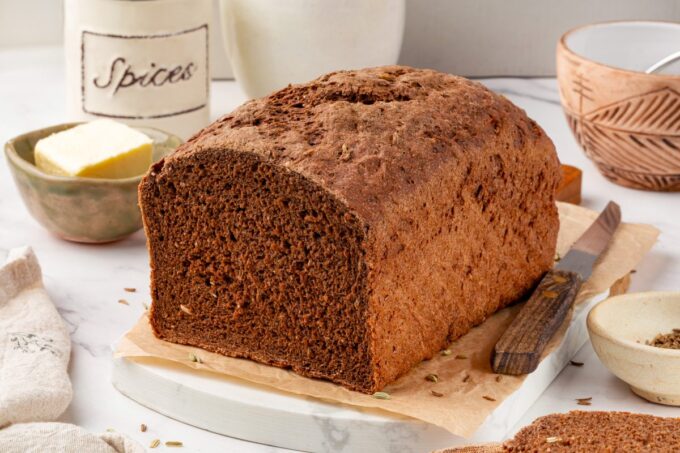
- Sandwich Loaf: Shape the dough into a log and bake it in a greased loaf pan instead of a round for cleaner, uniform slices. It’s ideal if you’re planning to use this bread for open-faced sandwiches or a simple ham and Swiss!
- Seeded Crust: Before baking, brush the top of the loaf with water and press a generous handful of caraway seeds, fennel seeds, or a mix of both into the surface. The seeds toast as the bread bakes and give you an even more pronounced, aromatic crust, just like with this whole grain seeded bread!
- Extra-Dark Rye: Use dark rye flour in place of medium rye if that’s what you have on hand. The flavor is a little more intense and earthy, but the loaf holds together beautifully, and nothing is lost.
- Add some mix-ins for texture and flavor: Omit the caraway seeds and add some raisins, dried cherries, or cranberries, as I did in my walnut raisin pumpernickel bread or these fruit and nut crackers. Add some of your favorite nuts for texture and crunch.
Professional Tips for Perfect Russian Black Bread
- Proof until truly doubled. Both rises matter in this recipe, and rye- and whole wheat-heavy doughs can feel sluggish compared to white bread doughs. Don’t cut the first rise short because an hour has passed — wait until the dough has genuinely doubled in size, which can take closer to two hours in a cool kitchen.
- Add flour gradually during kneading. The instruction to add all-purpose flour a half cup at a time during the initial mix, then a teaspoon at a time during kneading, is there for a reason. The dough should be tacky but not sticky, and it’ll take less flour than you expect. Stop adding flour as soon as the dough pulls cleanly away from the sides of the bowl.
- Use a thermometer. This bread bakes to a very deep brown, which means color alone won’t tell you when it’s done. Insert an instant-read thermometer into the bottom center of the loaf and pull it from the oven when it reads between 200 and 210°F.
- Cool completely before slicing. I know it’s hard to wait, but cutting into a rye-heavy loaf while it’s still warm gives you a gummy, compressed crumb. The interior continues to set as the bread cools, so let it rest on the rack for at least an hour before you cut the first slice.
How to Make Russian Black Bread
Use these step-by-step instructions to make a deeply flavored, hearty loaf with a dark, glossy crumb and a beautifully complex crust. Find further details and measurements in the recipe card below.
Make the Dough
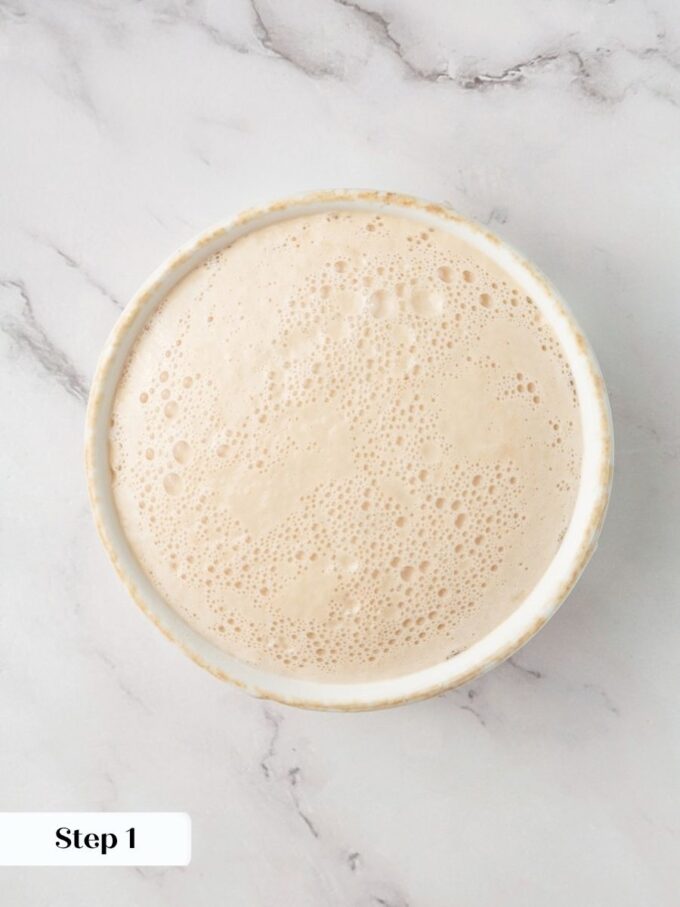
Step 1: Proof the yeast. Whisk the yeast, a pinch of sugar, and warm water together in a small bowl. Set it aside for about 10 minutes. Look for a visibly foamy, slightly domed surface, which shows the yeast is active and ready to work. (photo 1)
If the mixture stays flat and smells like nothing, the yeast may be expired or the water may have been too hot, and it’s worth starting fresh before you invest time in the rest of the dough.
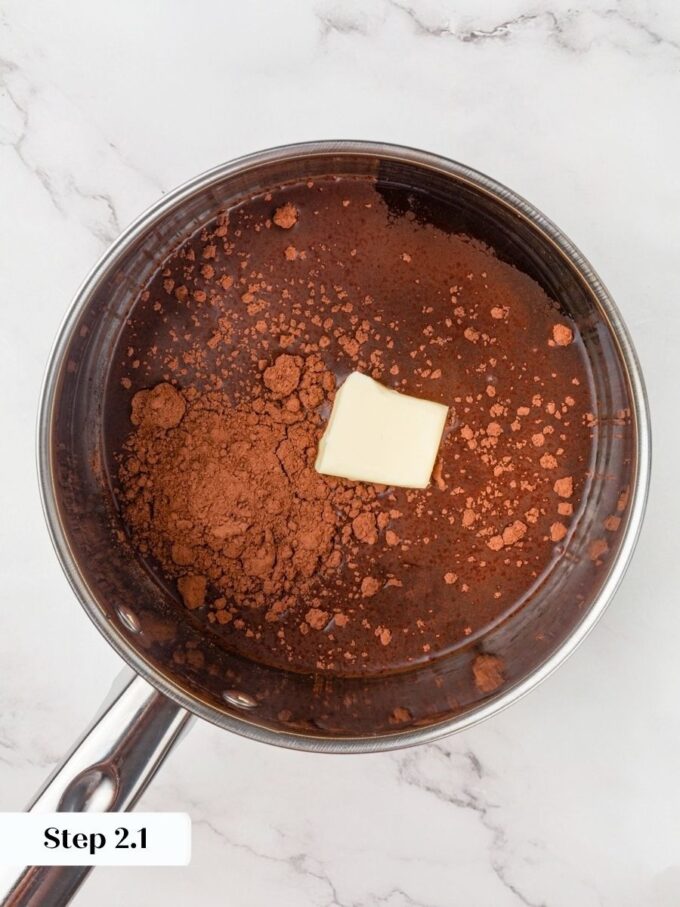
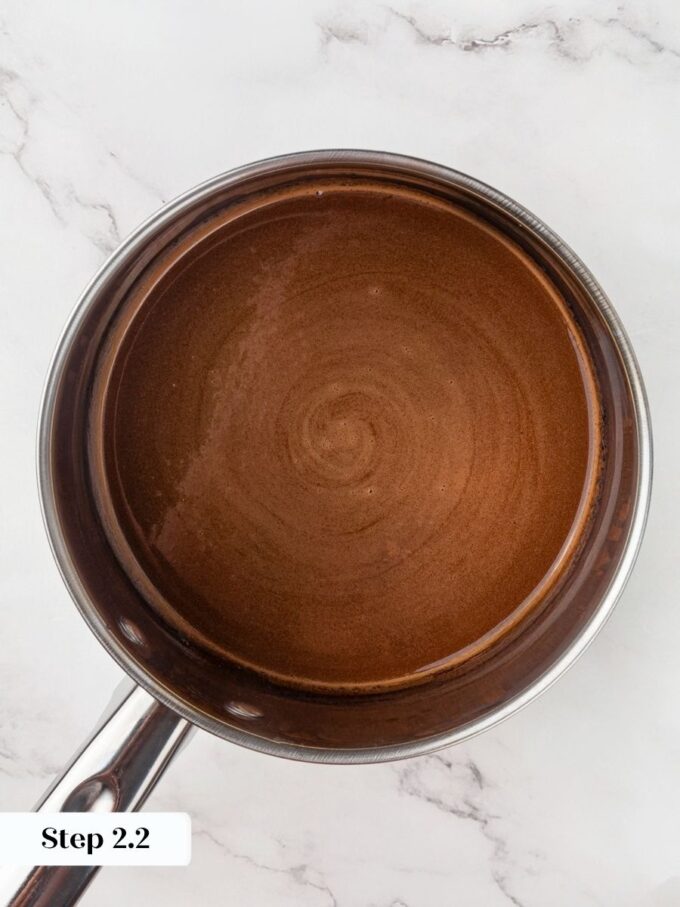
Step 2: Warm the wet ingredients. Combine the water, molasses, apple cider vinegar, butter, and cocoa powder in a small saucepan over low heat. Stir gently until the butter fully melts and the cocoa fully dissolves into the liquid. The mixture will be dark and glossy, almost like a thin chocolate sauce, and that’s exactly what you want. Set the pan aside to cool slightly while you prepare the flour mixture. (photos 2 & 3)
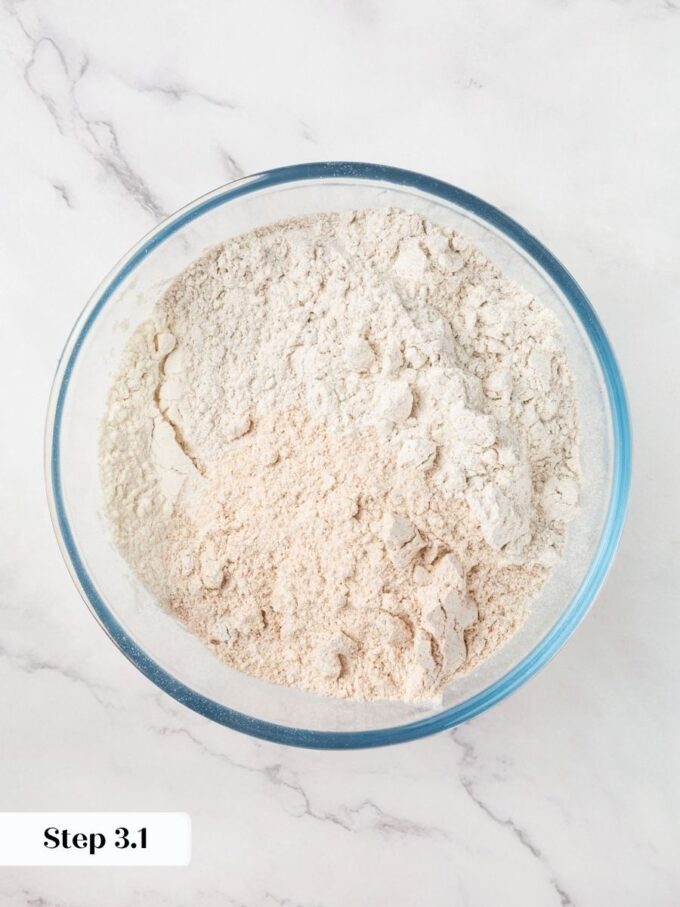
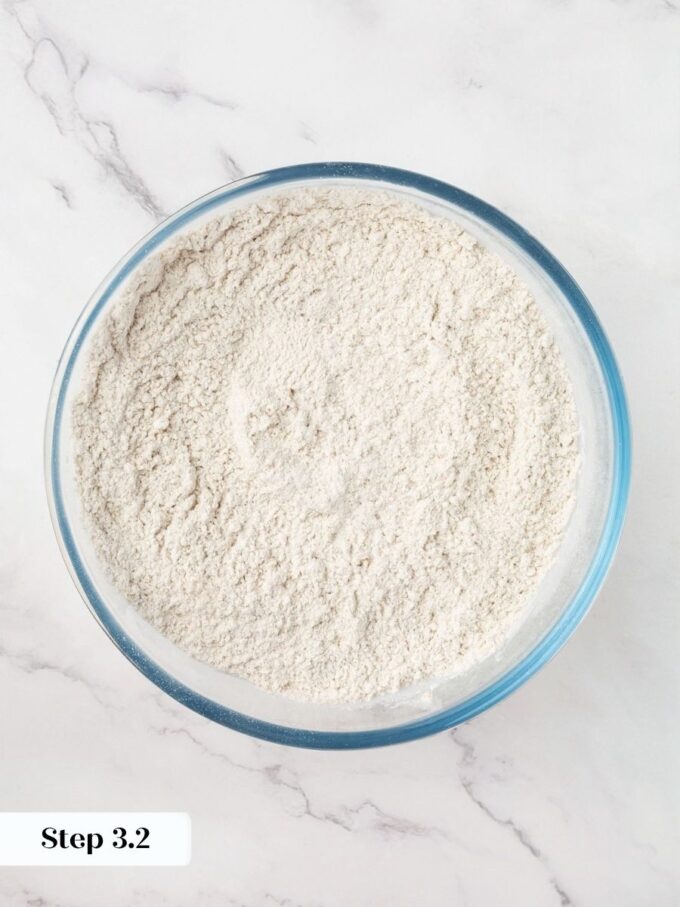
Step 3: Whisk the flours. In a large separate bowl, whisk together the whole wheat flour, rye flour, and all-purpose flour until they’re evenly combined. Doing this now means you won’t have to measure and add three different flours on the fly while the mixer is running, which keeps the process cleaner and more controlled. (photos 4 & 5)
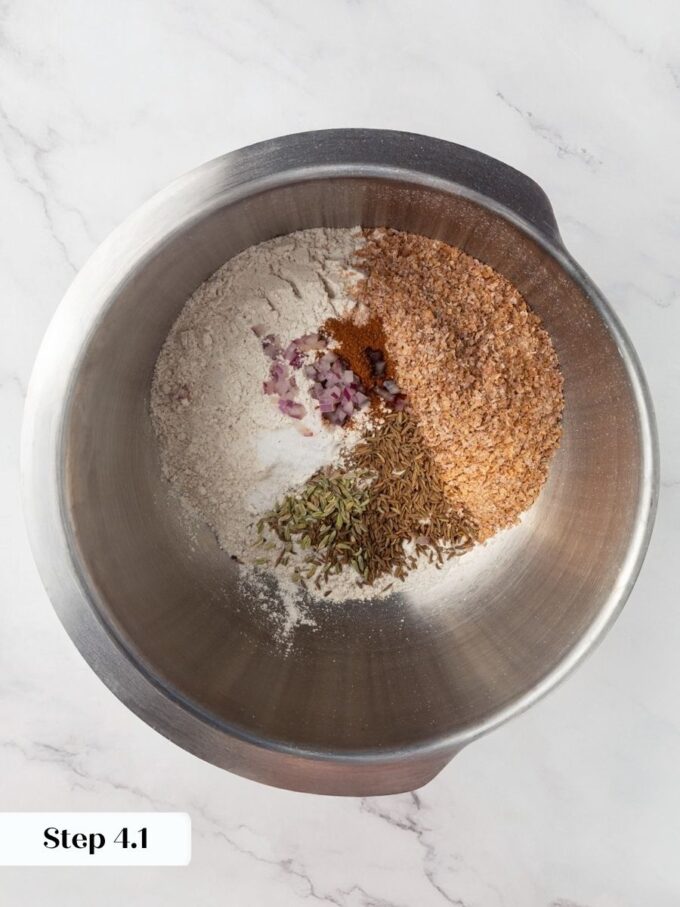
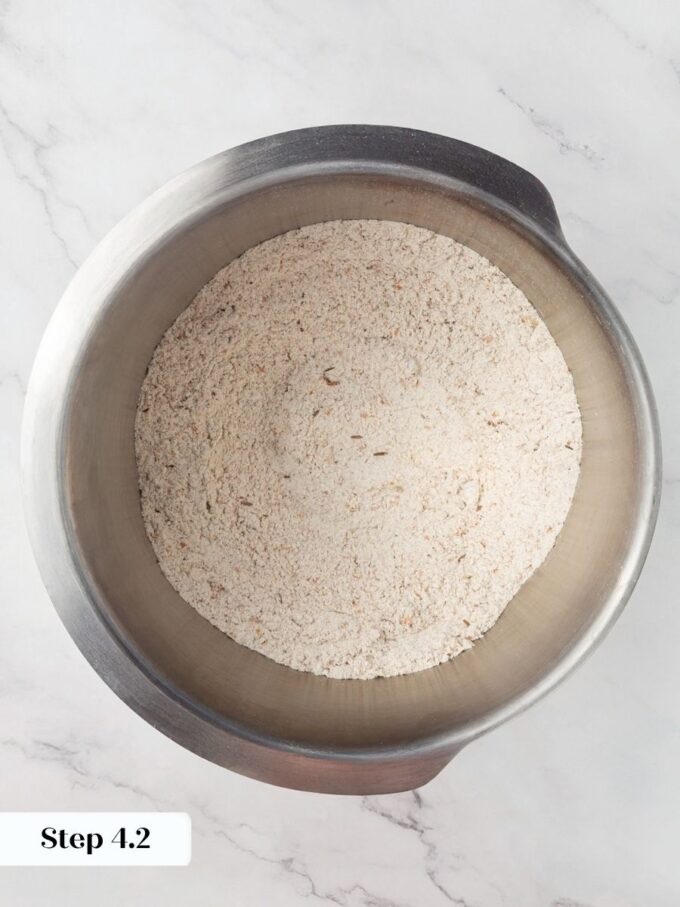
Step 4: Combine the dry ingredients. In a stand mixer fitted with the paddle attachment, combine 2 cups of your flour mixture with the bran, caraway seeds, fennel seeds, salt, instant espresso powder, and minced shallots or red onion. Mix briefly on low speed just to bring everything together. The bowl will look dry and very crumbly at this point, and that’s completely fine. (photo 6 & 7)
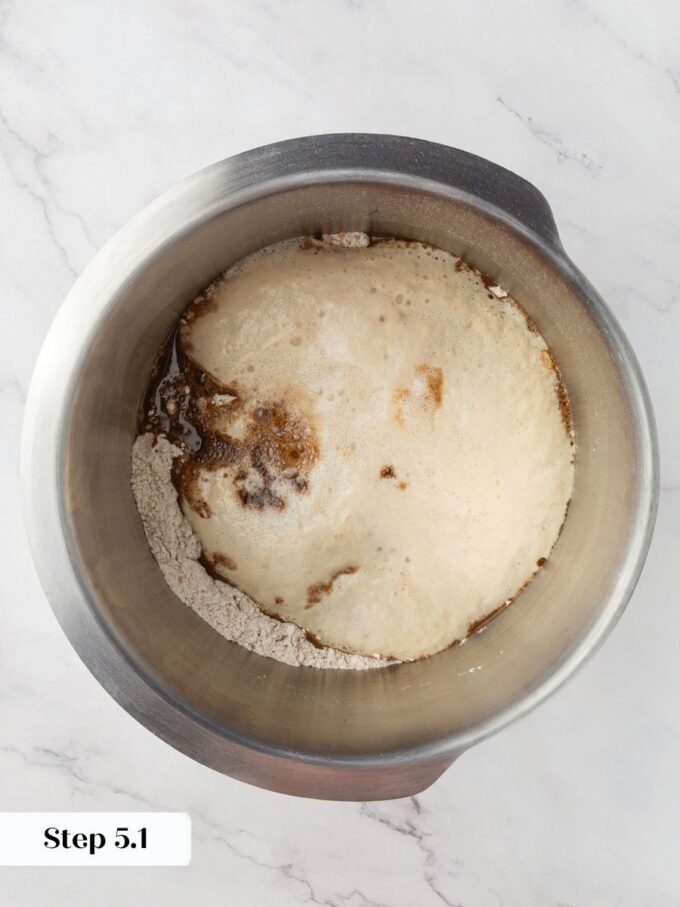
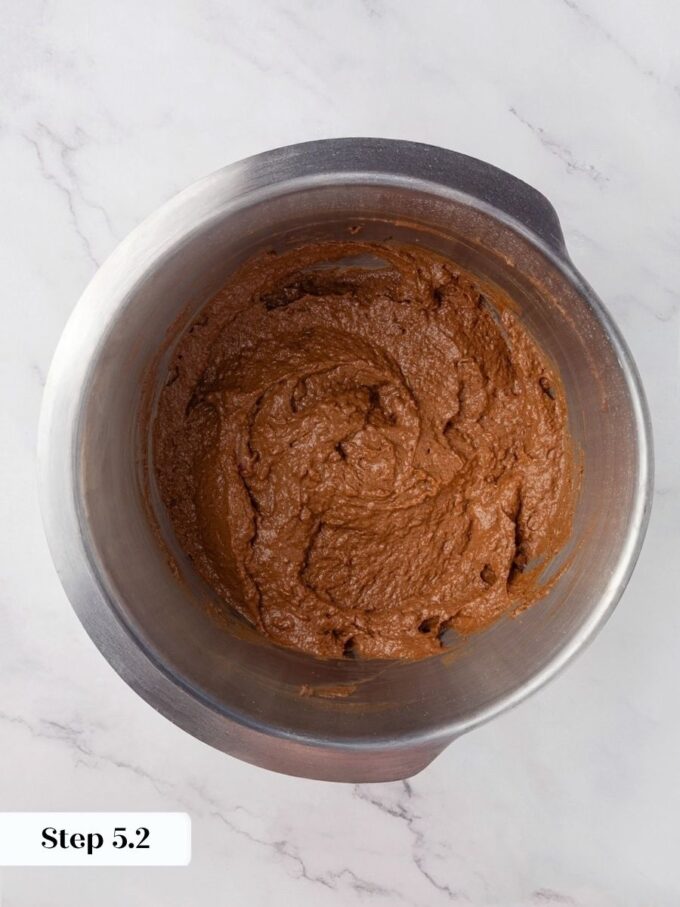
Step 5: Add the yeast and chocolate mixtures. With the mixer running on low, add the proofed yeast mixture, then the warm chocolate mixture. Increase to medium speed and mix for about 3 minutes, until the dough is smooth and cohesive. What starts as a shaggy, dark mass will come together into a sticky, deeply colored dough with a faint, earthy aroma from the caraway and espresso. (photos 8 & 9)
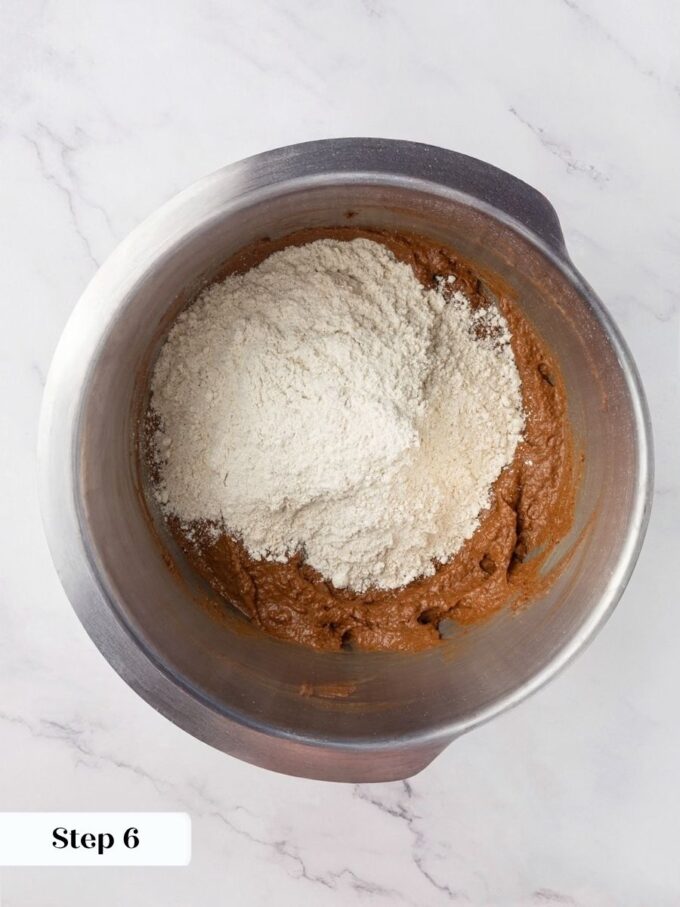
Step 6: Add the remaining flour. Reduce the mixer to low speed and begin adding the remaining flour mixture a half cup at a time, using a spatula to scrape any flour clinging to the sides of the bowl back into the dough between additions. Keep adding just until the dough begins to pull away from the sides of the bowl. (photo 10)
It’s easy to overshoot here, so slow down toward the end and add the last of the flour in smaller increments. The dough should feel tacky but shouldn’t be sticking aggressively to your hands.
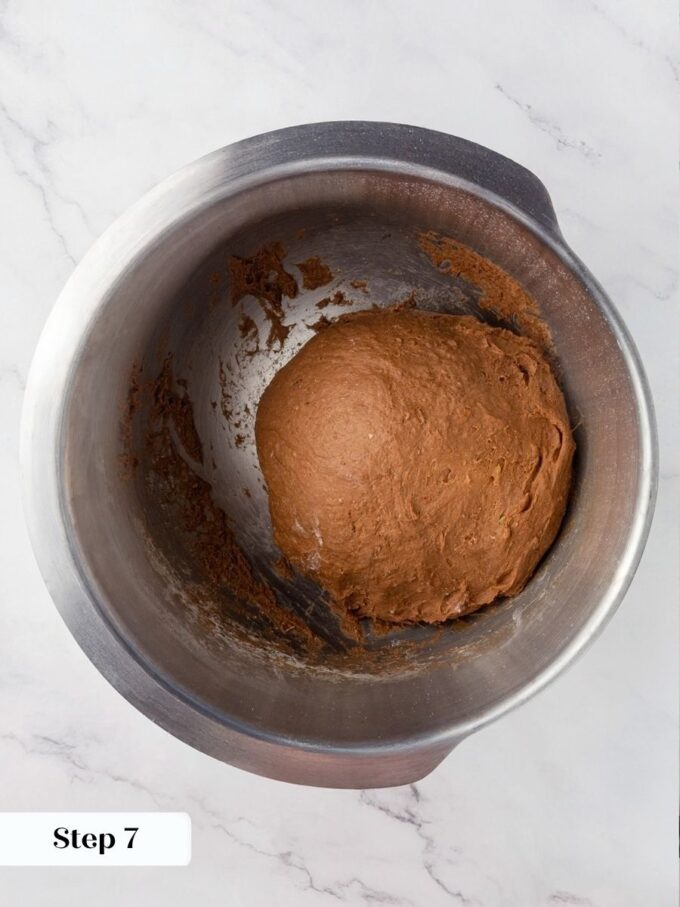
Step 7: Knead until smooth and elastic. Switch to the dough hook and knead on medium speed for 5 to 8 minutes. If the dough keeps clinging to the sides of the bowl during this stage, add all-purpose flour just one teaspoon at a time until it clears. Rye and whole wheat doughs don’t develop gluten as dramatically as a white bread dough, so it won’t feel quite as springy, but after kneading you’re looking for a dough that’s smooth, slightly tacky, and holds its shape when you pull off a piece. (photo 11)
If you prefer to knead by hand, turn the dough out onto a lightly floured countertop and knead for about 10 minutes, until it reaches the same stage.
First Rise
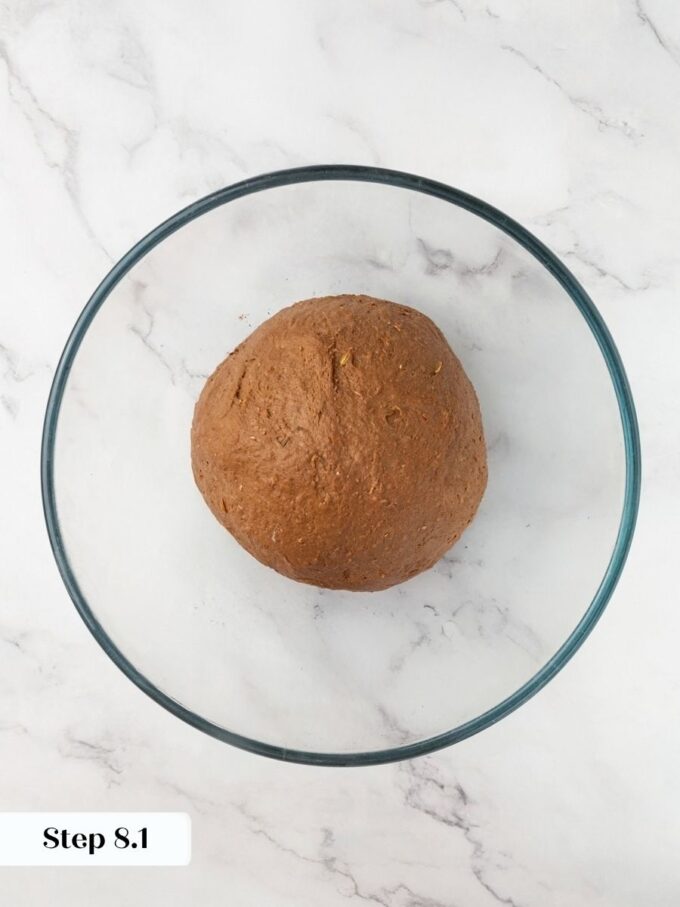
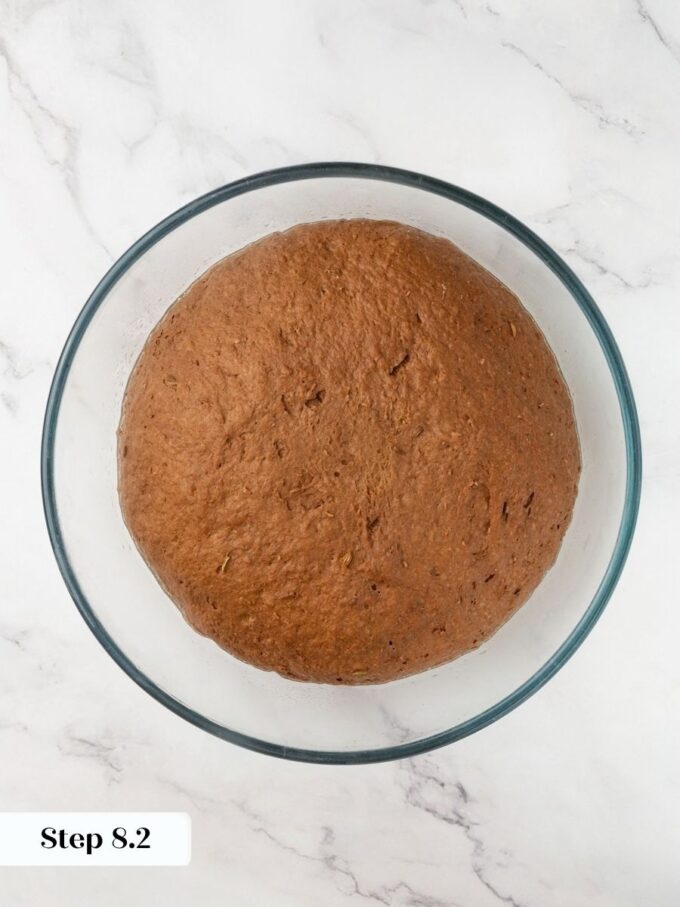
Step 8: Shape the dough into a smooth ball and place it in a lightly greased bowl, turning once to coat all sides. Cover the bowl with plastic wrap and set it somewhere warm. Let the dough rise until it has genuinely doubled in size, which will take 1 to 2 hours depending on your kitchen temperature. A cool kitchen will push this closer to the longer end, and that’s fine. Don’t rush this rise — an underproofed dough will give you a dense, tight crumb that doesn’t do justice to all the flavor you’ve built into this loaf. (photos 12 & 13)
Shape the loaf
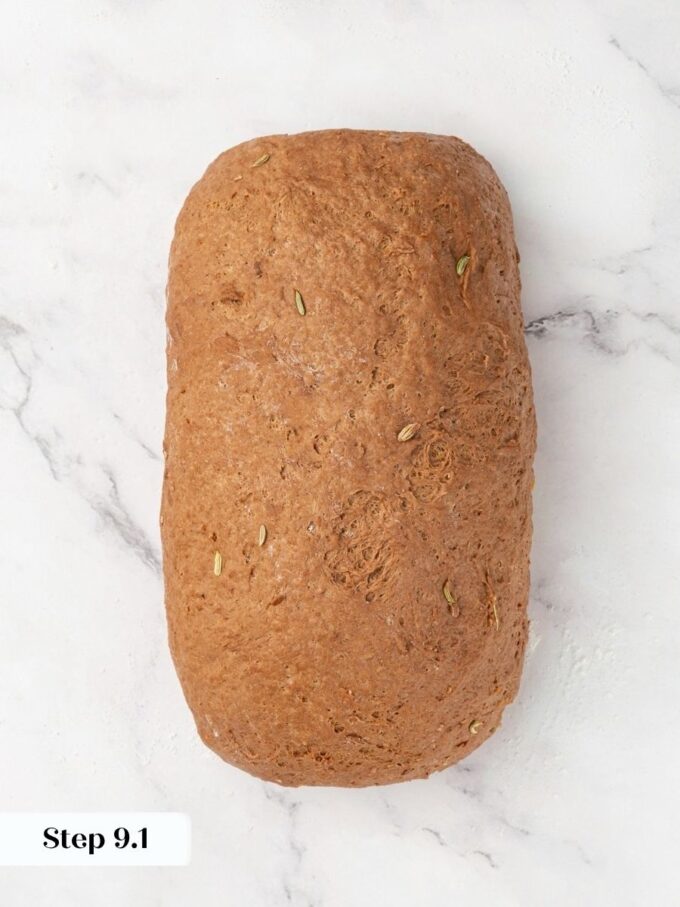
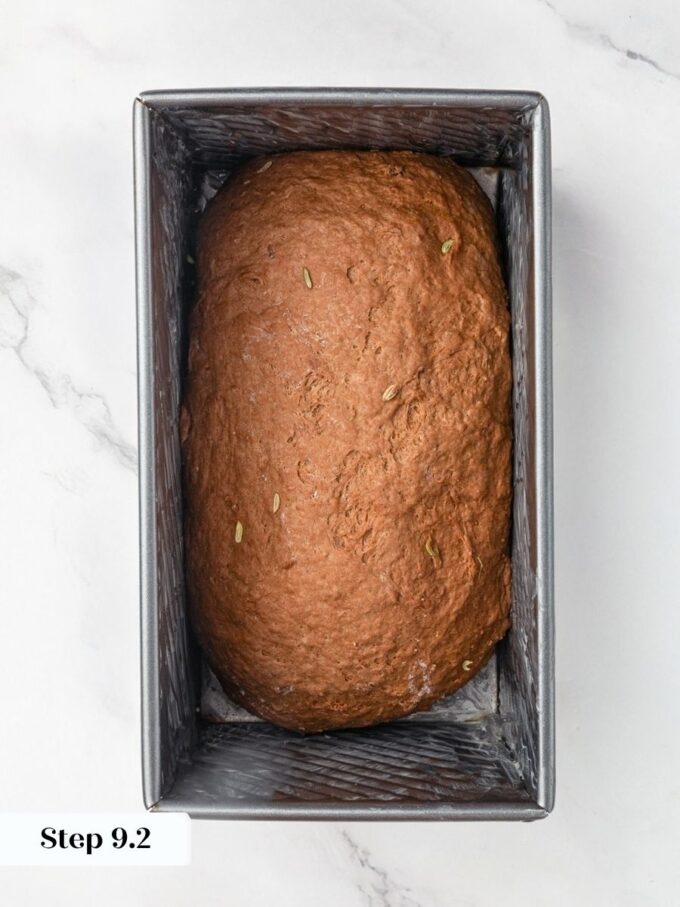
Step 9: Turn the risen dough out onto a lightly floured surface and gently press it down to deflate it. Decide whether you want a round or a sandwich loaf — a round goes on a parchment-lined baking sheet, and a sandwich loaf goes into a lightly greased loaf pan. Either way, pull the dough edges toward the center, flip it seam-side down, and use your hands to tighten the surface into a smooth, taut shape. The dough will feel denser and slightly stickier than an all-white bread dough, which is normal for a rye and whole wheat blend. (photos 14 & 15)
Second rise
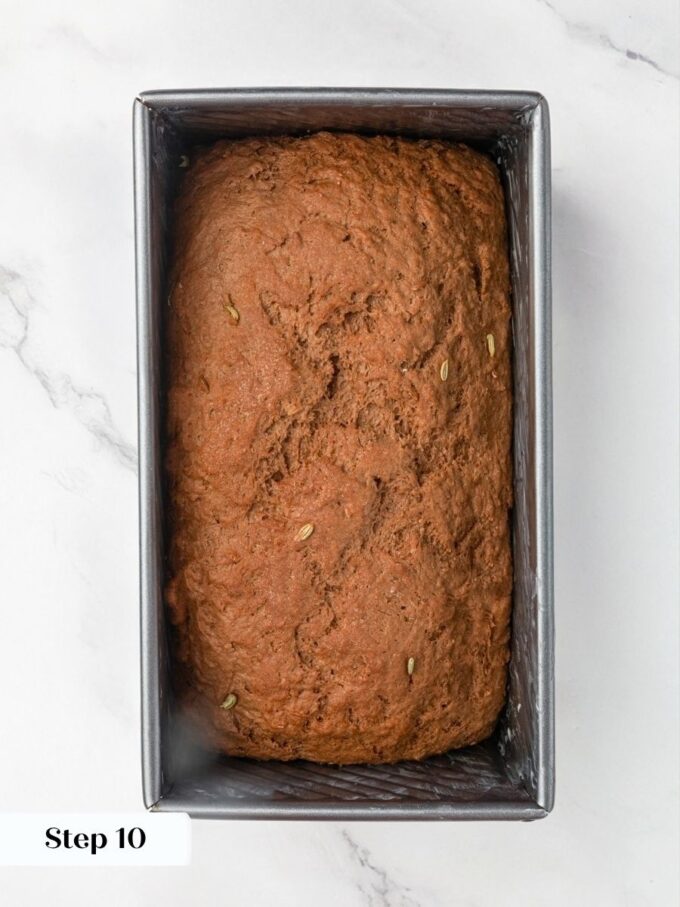
Step 10: Cover the shaped loaf lightly and set it aside to rise again until it has genuinely doubled in size, which takes about 45 minutes to 1 hour. The loaf should look visibly puffed and feel airy and soft when you gently press a finger into the side — the indent should spring back slowly but not snap back immediately. While the dough finishes rising, preheat your oven to 350°F. (photo 16)
Step 11: Score the round. If you’re baking a round loaf, use a sharp knife or bread lame to slash an X across the top before it goes into the oven, like when making Irish soda bread. This isn’t just decorative — it gives the loaf room to expand without cracking unevenly across the crust. If you’re baking a sandwich loaf in a pan, you can skip this step entirely.
Bake
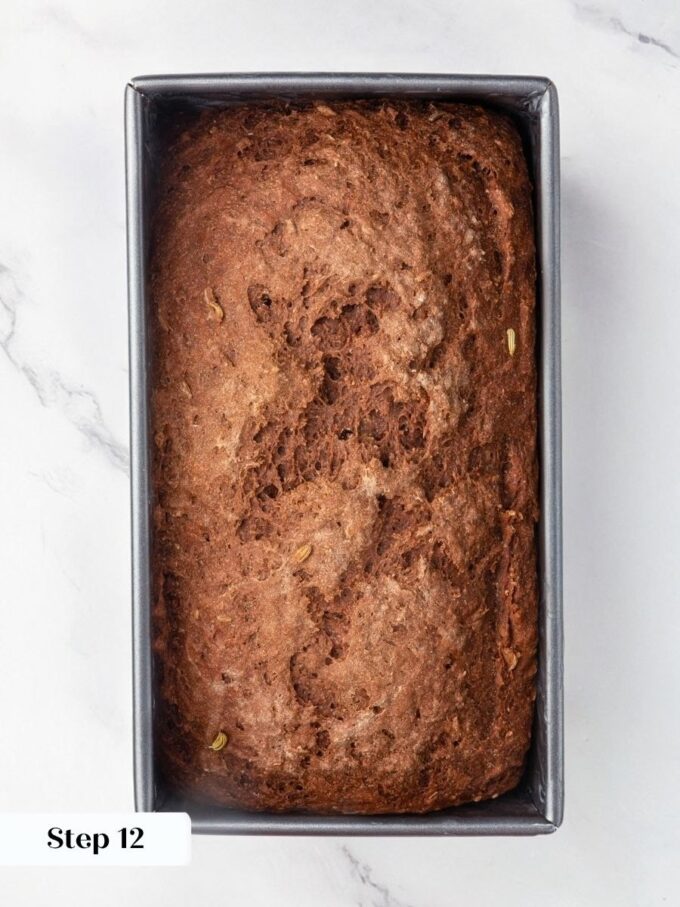
Step 12: Slide the loaf into the preheated 350°F oven and bake for 45 to 50 minutes. The bread is done when the crust is deeply browned all over and an instant-read thermometer inserted into the bottom center reads between 200 and 210°F. The loaf will smell extraordinary by the 30-minute mark, dark and slightly bitter from the cocoa and espresso with a warm, sweet undercurrent from the molasses, but hold off — this loaf needs the full bake time to set properly in the center. (photo 17)
Step 13: Cool completely. Transfer the baked loaf to a wire cooling rack and let it cool completely before slicing. Most bakers want to skip this step, but cutting into a hot rye and whole wheat loaf will give you a gummy, compressed crumb rather than the firm, cohesive slices this bread is known for. Give it at least an hour, and the structure will finish setting, and the flavor will deepen as it cools.
Recipe FAQs
Once it’s completely cool, wrap the loaf tightly in plastic wrap or store it in an airtight bag at room temperature for up to 3 days. For longer storage, slice the loaf first and freeze the slices in a zip-top freezer bag for up to 3 months. Reheat slices in a toaster or a low oven until warmed through.
The most likely cause is underproofing. Because this dough uses rye and whole wheat flours, it can feel heavy even when it’s properly risen, making it tempting to move on too soon. Wait until the dough has genuinely doubled during both the first and second rise before moving to the next step.
Both use dark, earthy flavors from rye flour, molasses, and cocoa, but Russian black bread is a full sandwich or round loaf with a softer, more open crumb, while pumpernickel bagels are chewy and dense with a tight structure. The loaf also includes seeds and espresso, giving it a more complex, layered flavor. If you love that dark, slightly bitter depth, both are worth making.
Recipes Using Rye Flour
Bread
Yeast Breads

Breakfast & Brunch

Yeast Breads
Russian Black Bread
Ingredients
- 2 ¼ tsp active dry yeast
- 1 pinch sugar
- ¼ cup warm water
- 1 cup water
- 2 tbsp molasses
- 2 tbsp apple cider vinegar
- 2 tbsp unsalted butter
- ½ oz unsweetened cocoa powder
- ¼ cup whole wheat flour
- 1 ½ cups rye flour
- 1 ½ cup unbleached all-purpose flour
- ½ cup bran
- 1 tbsp caraway seeds
- ¼ tbsp fennel seeds
- ½ tbsp salt
- ½ tbsp instant espresso powder
- ½ tbsp shallots, or red onion, minced
Instructions
- Whisk together the yeast, sugar, and warm water in a small bowl. Let sit about 10 minutes until foamy.
- Combine the 1 cup water, molasses, vinegar, butter, and cocoa powder in a small saucepan over low heat, stirring until the butter melts and everything is smooth. Set aside.
- Whisk together the whole wheat, rye, and all-purpose flours in a large bowl and set aside.
- In the bowl of a stand mixer fitted with the paddle attachment, combine 2 cups of the flour mixture with the bran, caraway seeds, fennel seeds, salt, espresso powder, and shallots. With the mixer on low, add the yeast mixture and the cocoa mixture. Increase to medium speed and mix until smooth, about 3 minutes.
- With the mixer on low, add the remaining flour 1/2 cup at a time, scraping the sides of the bowl as needed, until the dough pulls away from the sides. Switch to the dough hook and knead on medium speed for 5 to 8 minutes, adding 1 tsp all-purpose flour at a time if needed, until the dough is smooth and elastic. Alternatively, knead by hand on a lightly floured surface for about 10 minutes.
- Shape the dough into a ball and place it in a lightly greased bowl, turning once to coat. Cover with plastic wrap and let rise until doubled, about 1 to 2 hours.
- Turn the risen dough out onto a lightly floured surface and shape it into a round or sandwich loaf. Place on a parchment-lined baking sheet or in a lightly greased loaf pan, cover lightly, and let rise until doubled, about 45 minutes to 1 hour.
- If making a round loaf, slash an X in the top before baking. Bake in a 350°F oven for 45 to 50 minutes, until deeply browned and an instant-read thermometer inserted in the bottom center reads 200 to 210°F. Cool completely on a wire rack before slicing.
Notes
Technique: Do not rush either rise. Because rye and whole wheat dough feels heavy even when properly proofed, it’s tempting to move on too soon. Wait for a genuine double in size both times before continuing.
Flour: Dark rye flour works well here if you can’t find medium rye. The flavor is slightly more assertive but nothing is lacking in the finished loaf.
Storage: Once completely cool, wrap the loaf tightly in plastic wrap or store in an airtight bag at room temperature for up to 3 days. To freeze, slice first and store in a zip-top freezer bag for up to 3 months. Reheat slices in a toaster or a low oven until warmed through.
Nutrition
Nutrition information is automatically calculated, so should only be used as an approximation.
 Like this recipe? Rate & comment below!
Before You Go
If Russian black bread earns a regular spot in your kitchen, I hope it brings you back to this style of baking again and again. Browse our Bread Recipes or make this rieska next!.



I don’t know where you got your recipe for Russian black bread but it is not correct. Russian black bread does not use molasses. As a matter of fact you can’t even find molasses in Russia. You can look up the translation but they are bot the same. Russian “molasses” is made from Kvas, which is a drink made from black bread. Also, Russian black bread has a very strong flowery taste to it and is much denser than pumpernickel.
I can only assume your recipe and similarity in taste that you describe comes from a take on Russian black bread from Eastern Europeans who immigrated to the U.S.
As an American whonhas lived and traveled around Russia for the past 27 years and a lover of pumpernickel, I can honestly say there is nothing here that remotely resembles pumpernickel
Hi Frank! Thanks for sharing your insights about traditional Russian black bread! You’re totally right that this is an adaptation. The ingredients mimic the traditional flavor, but using things like molasses makes it more accessible to folks to might not be able to travel to Russia for their ingredients. Thanks for being in the conversation, we love talking bread! ~gvd team
The bread is a Dark German Rye Bread. A baker somewhere along the line added raisins. The German word for raisin is Rosine. When non Germans heard it they mistook it as Russian. Overtime it became Russian black bread even though it was German (with or without the raisins)
Dave, Interesting!!
Pumpernickel is different to black bread in texture, usability and making. Unfortunately many people, particularly Americans don’t know the difference between pumpernickel and black bread and even flour is sold or marketed as pumpernickel even though you use whole or cracked rye grains
Yuuk ! I am sorry, but Yuuk ! You need to put Russian Black bread back on your list. Yes, I happen to be a bread snob, and I have also baked thousands of loaves…
You did not have enough water in your recipe, and you did not autolize the loaf long enough, and you baked it for too short a time, on too low heat.
Now, what you need to do, is get a good Russian rye bread recipe, then rest the dough in the frig for about 4 days ,( autolize it ) under cold, so it cannot rise ! Next, take it out of the frig, let it rise by double or a tad less.
Heat the over to HOT ! When the light blinks off, after about 30 minutes,( full heat ) put the bread into an oiled pot, slash the top, and add the lid. To the oven, let it bake under full heat, till the light blinks off, and bake it at 425f for a total of 1 hour, and 1hour, 15 minutes.
Remove the loaf from the heat, and put it into a turkey roasting bag, close it tight, and let it cool, when room temp, break out the butter.
You will have a loaf to be proud of ! If you want some advice go to; The Fresh Loaf, ( on the internet ) or e mail me..
I hate to disappoint you, but it is not a Russian bread at all. Raisa has already explained why, but I’d like to add that Russian rye bread is always made with sourdough, not even yeast. It helps keep the dough acidic enough to manage rye flour enzyme activity.
Raisa and Helen — Thanks for the comments! I didn’t label it as “Russian” with the intention of claiming it to be the type — I simply followed suit from the original recipe’s name (see here). Russian or not Russian, it’s delicious.
I`ve seen this recipe before and I always wander why people call this kind of bread “russian”? Really. I live in Russia and can assure you that traditional black (rye) bread never contains such ingredients like vinegar, cocoa powder or espresso. The most popular kind of rye bread here is called “Borodinsky”. It contains water, rye and wheat flours, yeast, salt, molasses (or more often sugar), rye malt and coriander seeds – that`s all.
But I`m such a bore now, sorry)) Anyway I think this bread looks very tasty, I should try the recipe)