
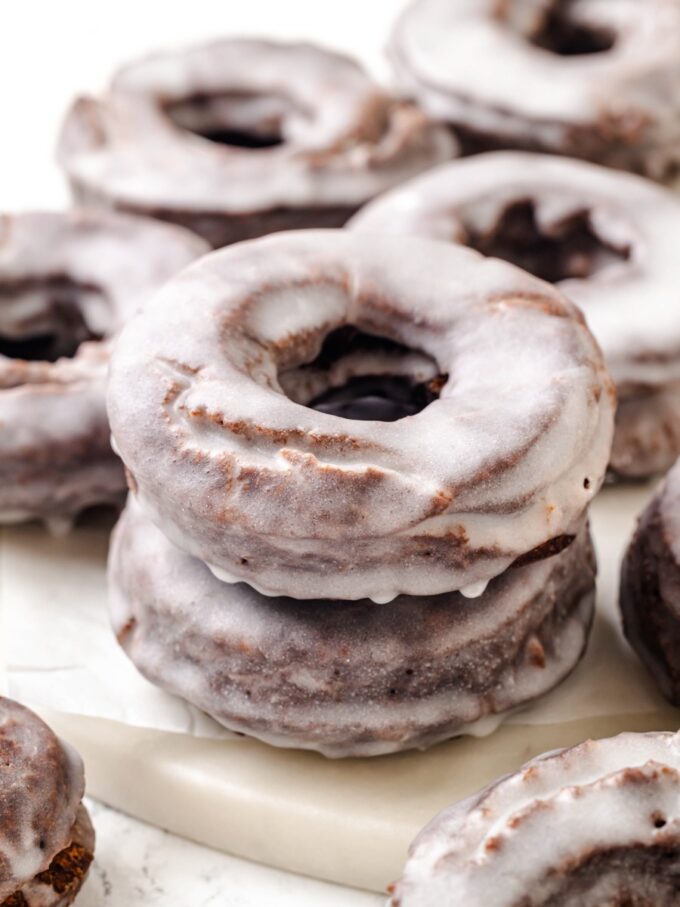
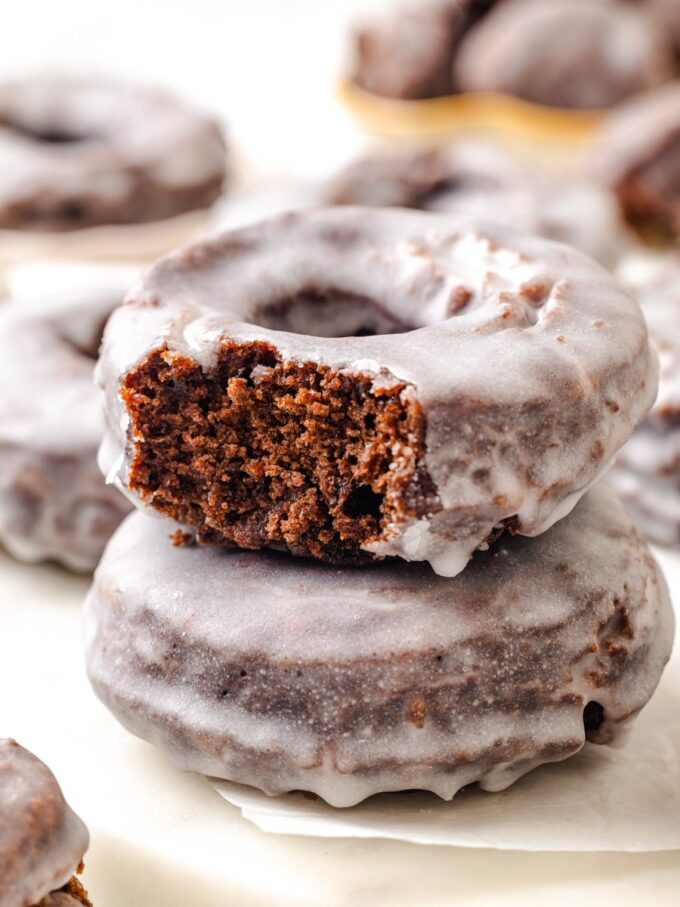
Chocolate old fashioned donuts have a crackly, craggy exterior and a dense, moist crumb that holds up to a thin glaze without turning soggy. These are the ones worth frying at home.
A Quick Look At The Recipe
This is a brief summary of the recipe. Jump to the recipe to get the full details.
Prep Time
30 minutes
Cook Time
30 minutes
Proof/Rest Time
1 hour
Total Time
2 hours
Servings
12 Donuts
Difficulty
Intermediate
Calories *
463 kcal per serving
Technique
Fry and glaze
Flavor Profile
Rich chocolate, sweet glaze, subtle coffee
* Based on nutrition panel
I was nervous about frying at home but the dough came together beautifully and the craggy edges got perfectly crisp in the oil. The glaze set up glossy and thin, exactly like the photos. My family demolished the whole batch in one sitting.
⭐⭐⭐⭐⭐
Kimberly
Why You Will Love This Recipe
- Deep chocolate flavor in every bite. Dutch processed cocoa powder and espresso powder work together to give these donuts a rich, rounded chocolate flavor. The espresso powder amplifies the cocoa without making the donuts taste like coffee.
- The texture is tender. Sour cream keeps the crumb soft and moist, and the technique of alternating dry ingredients with sour cream during mixing limits gluten development on purpose. If you want to see what the same chocolate flavor looks like in a baked version, my baked chocolate donut recipe is a great comparison.
- The glaze sets up beautifully on a hot donut. Dipping while the donuts are still very warm gives you an even, thin glaze that clings without pooling. It hardens just enough as it cools to give you that classic crackly finish.
Table of Contents
These old-fashioned chocolate cake donuts are light and tender with a soft, cakey crumb and deep chocolate flavor from Dutch-processed cocoa and a hint of espresso powder. A thick vanilla glaze, dipped on while the donuts are still warm, adds just the right amount of sweetness.
They’re fried fresh, so they have a delicate crisp outside and a melt-in-your-mouth inside that beats any drive-thru donut. These are the kind of treat that genuinely deserve a cup of coffee alongside them, and they are worth making on a slow Saturday morning when you have the time to do it right. They are perfect next to these baked donuts or these buttermilk pancakes!
Ingredients & Substitutions
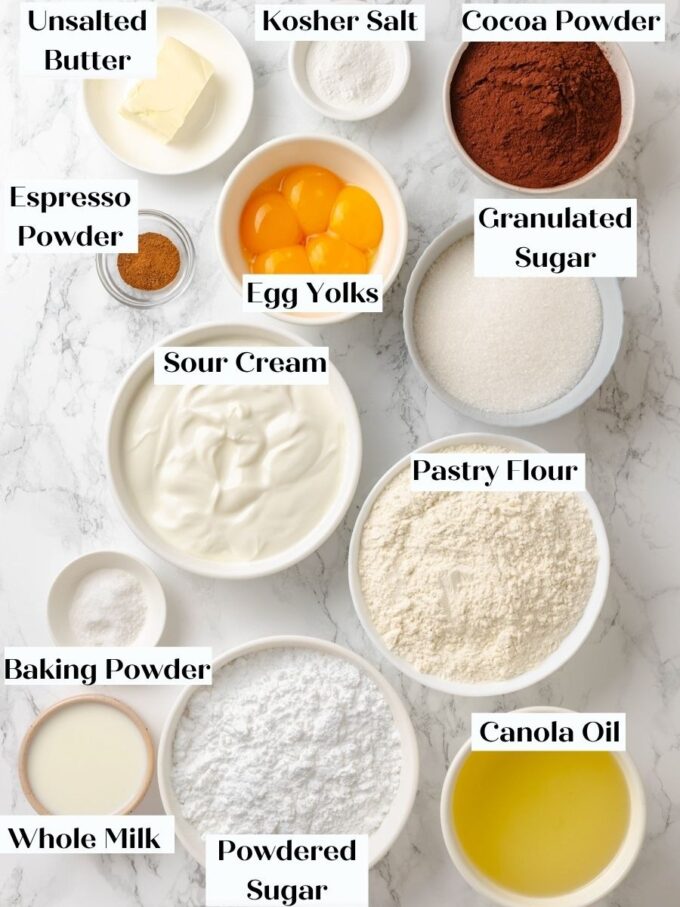
- Egg Yolks: Yolks keep the dough tender and give it a rich, moist texture. The whites would add too much protein and toughen the crumb.
- Sour Cream: Adds moisture, richness, and acidity to the dough, which reacts with the baking powder to create a light crumb. Full-fat yogurt can be substituted, but use only full-fat to maintain the right moisture level.
- Dutch Processed Cocoa Powder: Provides the deep, rich chocolate color and flavor that defines this donut. Substituting natural cocoa will slightly alter both the flavor and the rise.
- Espresso Powder: Deepens the chocolate flavor without adding any coffee taste to the finished donut. It is a small amount, but it makes a real difference.
- Baking Powder: The leavening agent responsible for the donuts puffing and splitting in the oil. Keeping the dough cold before frying prevents it from reacting too early and ensures the best rise when it hits the hot oil.
- Oil for Frying: Canola oil works well here because of its neutral flavor and high smoke point. Another neutral high-smoke-point oil works, but avoid anything with a strong flavor, which will compete with the chocolate.
- Powdered Sugar: The base of the glaze. Whisk it thoroughly with the milk and salt to ensure a smooth, lump-free finish.
Variations for Chocolate Old Fashioned Donuts
- Mocha Glaze: Dissolve a teaspoon of espresso powder into the warm milk before whisking it into the powdered sugar and salt. The glaze picks up a roasted, slightly bitter edge that plays well against the chocolate crumb.
- Sugar Finish: Skip the glaze entirely and toss the hot donuts in a mixture of granulated sugar right out of the oil. The sugar clings to the warm surface and gives you a crackly outside.
- Stout Chocolate Variation: Substitute two tablespoons of the sour cream with a reduced stout beer for a deeper, more complex chocolate flavor. If you love what stout does for chocolate, my Guinness chocolate cake recipe uses the same pairing to great effect.
- Donut Holes Only: Cut the entire batch into holes using only the small cutter and skip the ring donuts altogether. They fry faster and are easier to glaze in bulk, which is useful when you are making a large batch.
Professional Tips for Perfect Chocolate Old Fashioned Donuts
- Use a clip-on candy thermometer. A candy thermometer clipped to the side of your Dutch oven lets you monitor the oil temperature continuously without stopping to check, which matters because the temperature drops every time cold dough goes in. A spider or slotted spoon and a wire rack set over a baking sheet are also essential: the rack keeps the bottoms crispy rather than soggy from pooling oil.
- Heat the oil to 360°F before adding each batch. The cold dough drops the temperature immediately, and your target range during frying is 350°F to 360°F. Chocolate donuts are especially sensitive here: oil that runs too hot gives the exterior a slightly bitter, over-roasted flavor before the inside has finished cooking.
- Test one donut before committing to a fry time. After making these dozens of times, I still poke the first donut with a cake tester before pulling the rest. It should come out clean with no streaks of dough, just like testing a cake. Fry times in this recipe are guidelines, not guarantees, because every stove and every pot behaves a little differently.
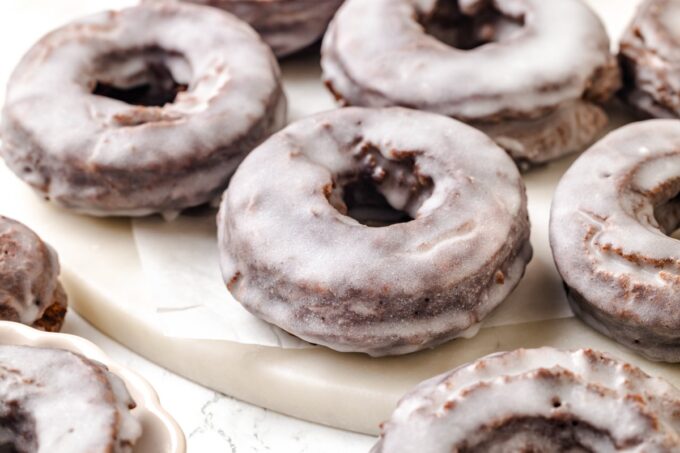
- Dip the donuts while they are still very hot. Waiting until they are fully cool gives you a glaze that pools at the bottom and never fully sets. A hot donut pulls the glaze into a thin, even coat that hardens slightly as it cools to that classic crackly finish, and it takes only a few seconds per donut. I use gloved hands for this step, but chopsticks work just as well if you prefer.
How to Make Chocolate Old Fashioned Donuts
Use these instructions to make deeply chocolatey, tender old-fashioned donuts with craggy edges and a thin, crisp glaze. Further details and measurements are in the recipe card below.
Make the Dough
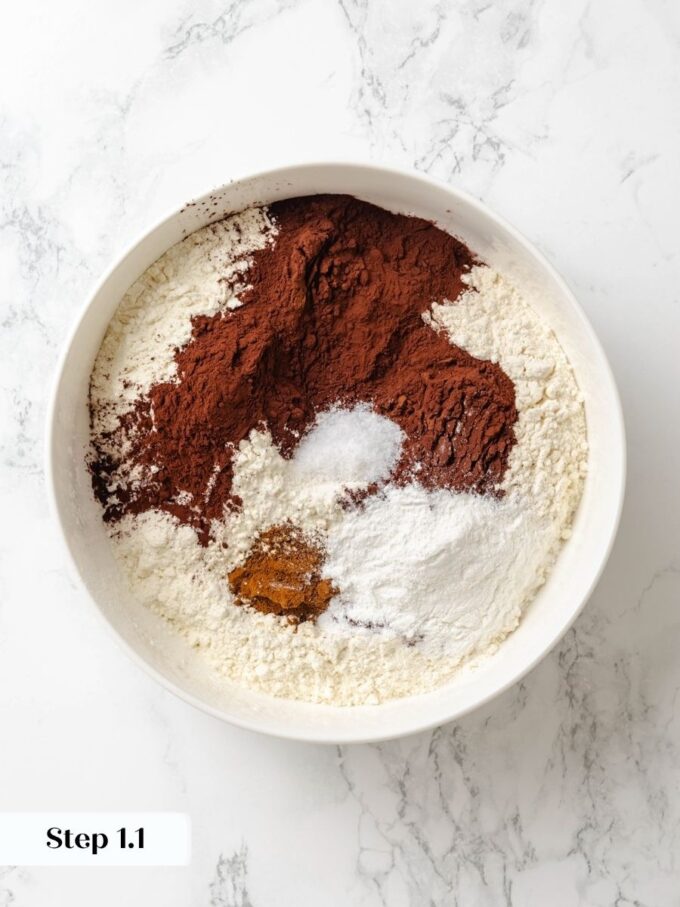
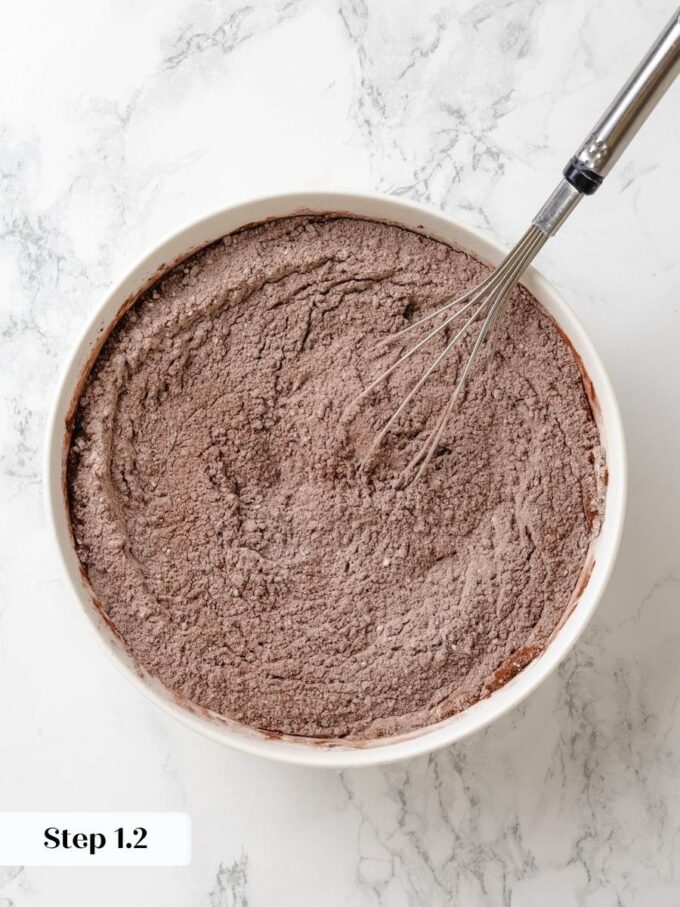
Step 1: Whisk the Dry Ingredients. Whisk together the flour, Dutch-processed cocoa powder, and baking powder in a large bowl until evenly combined, then whisk in the kosher salt and espresso powder. (photos 1 & 2)
Step 2: Prepare Your Pan. Either line a baking sheet with plastic wrap and dust the surface generously with all-purpose flour, or spray the inside of a large mixing bowl with nonstick spray. Set this aside so it is ready the moment your dough is mixed.
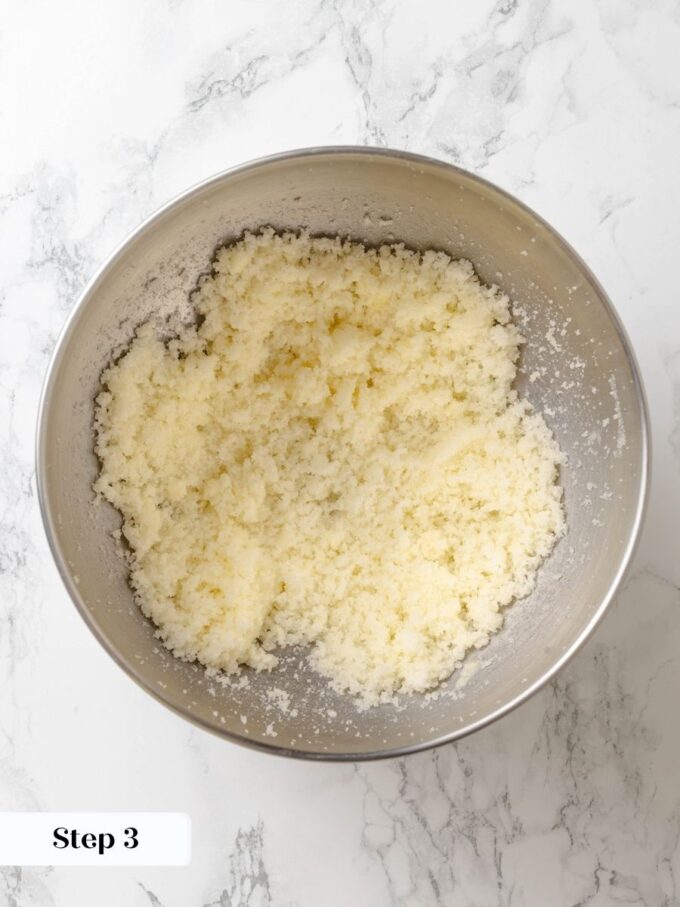
Step 3: Cream the Sugar and Butter. In the bowl of a stand mixer fitted with the paddle attachment, beat the granulated sugar and room-temperature butter together on high speed until the butter has fully incorporated into the sugar. (photo 3) The mixture will not look light and fluffy, and that is completely normal. There is simply too much sugar relative to the butter for that to happen here.
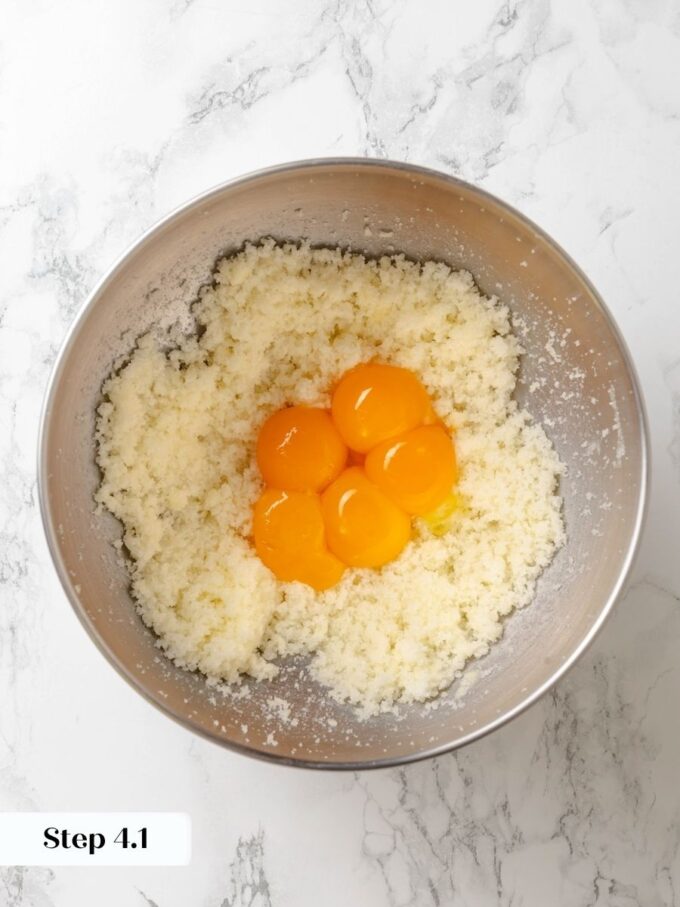
Step 4: Add the Egg Yolks. Add the egg yolks and continue beating on high speed until the mixture lightens in color and increases noticeably in volume, about 2 minutes. Stop and scrape down the bowl a few times during this step to make sure everything is evenly incorporated before you move on. (photos 4 & 5)
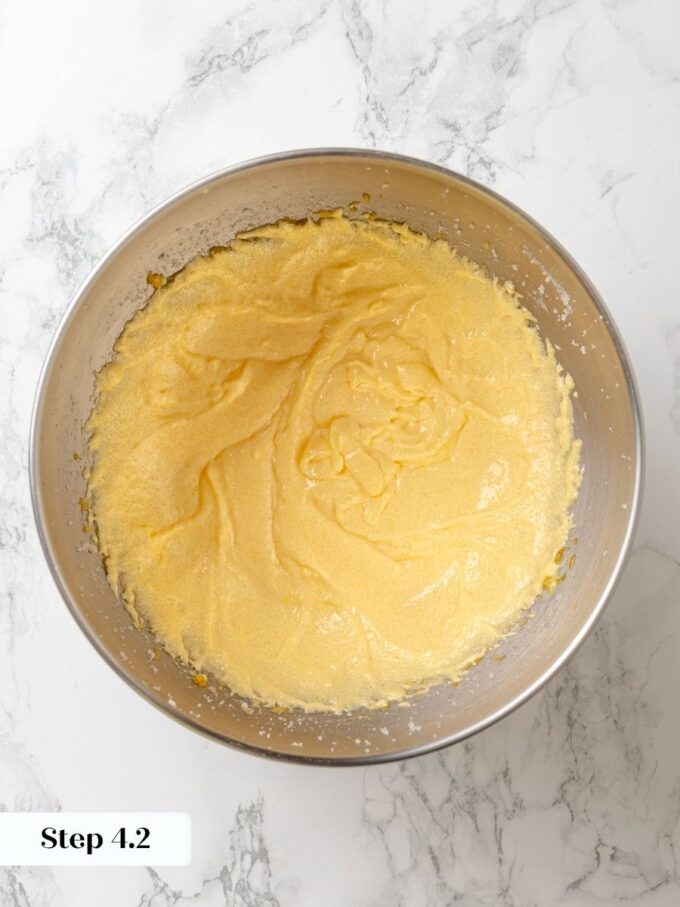
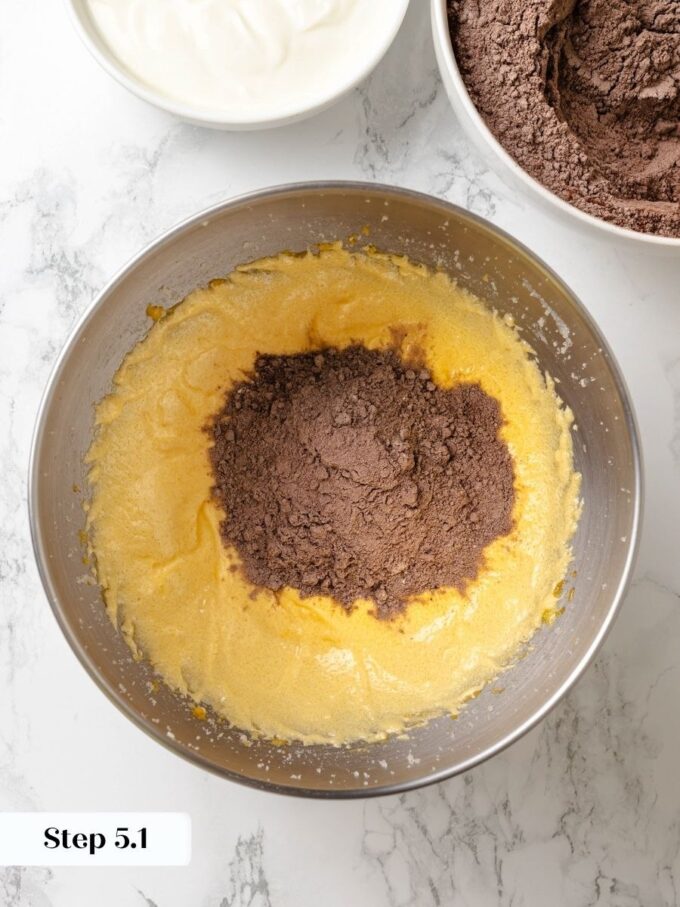
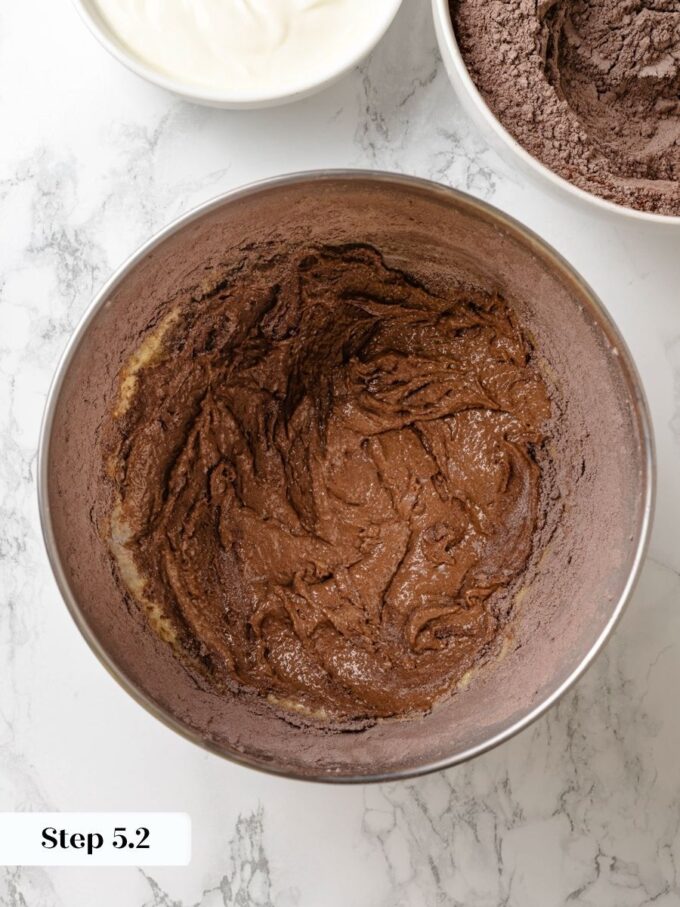
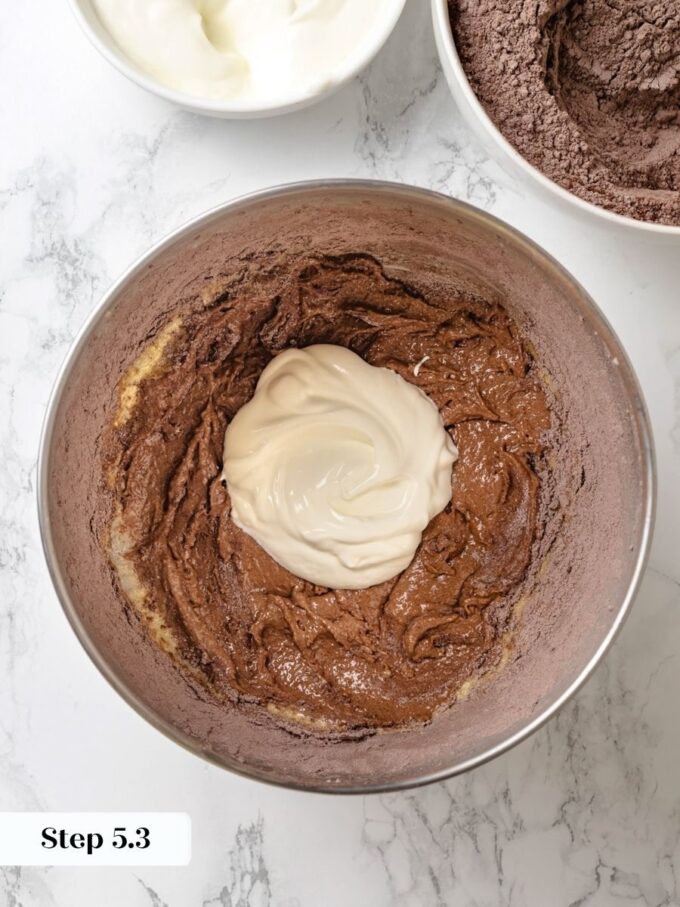
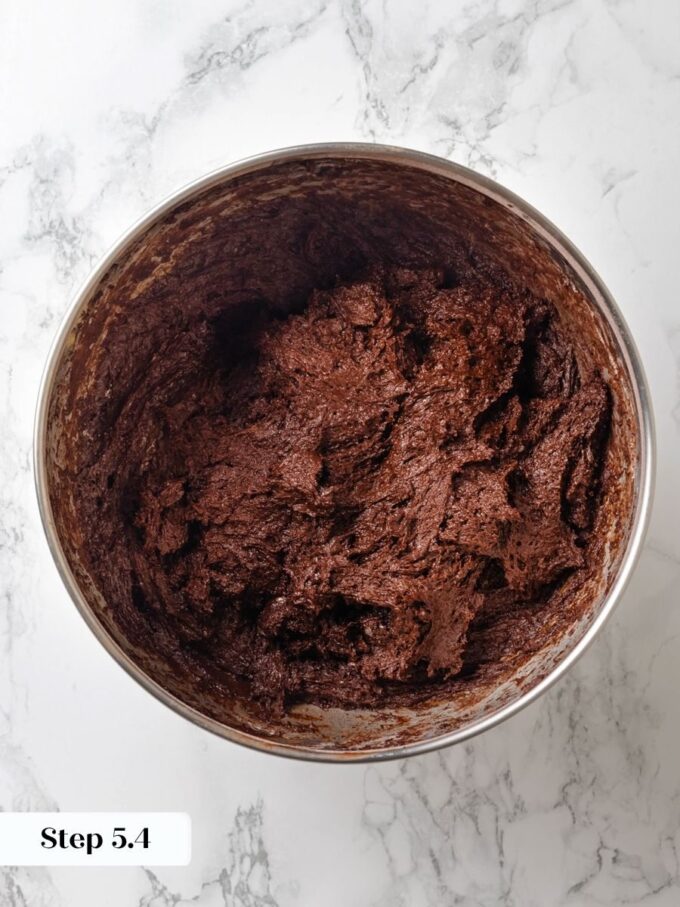
Step 5: Alternate dry and wet ingredients. With the mixer on low, add the dry ingredients a large spoonful at a time, alternating with spoonfuls of sour cream, moving between the two almost nonstop. Stop the mixer to scrape in the last of the sour cream, then mix only until the dry ingredients are fully incorporated. The dough will be thick and look somewhat rough, which is fine. (photos 6-9)
Overmixing here develops gluten that creates tunnels and toughens the finished donut, so stop as soon as you no longer see streaks.
Chill the Dough
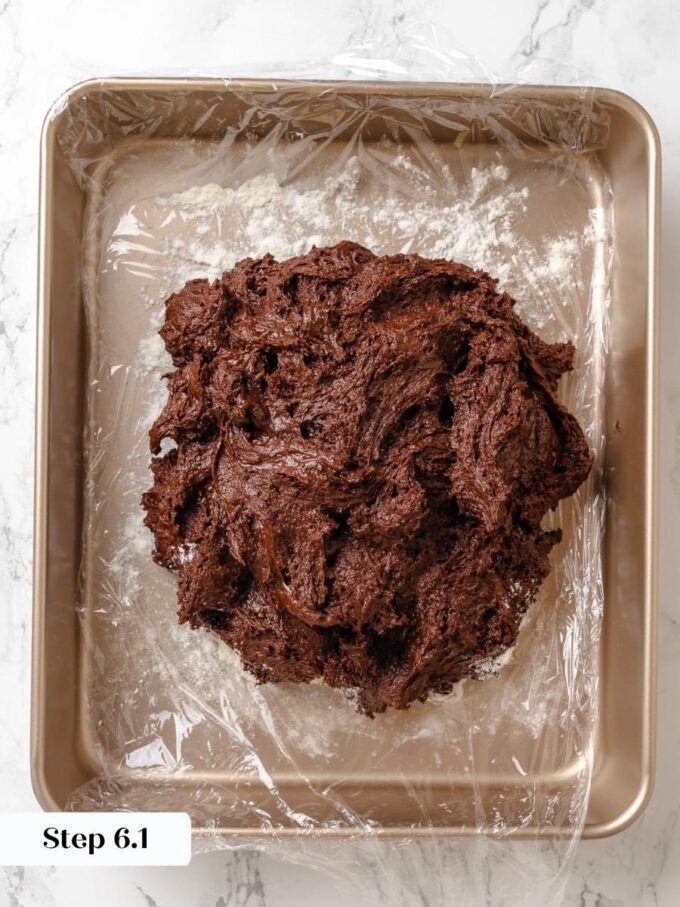
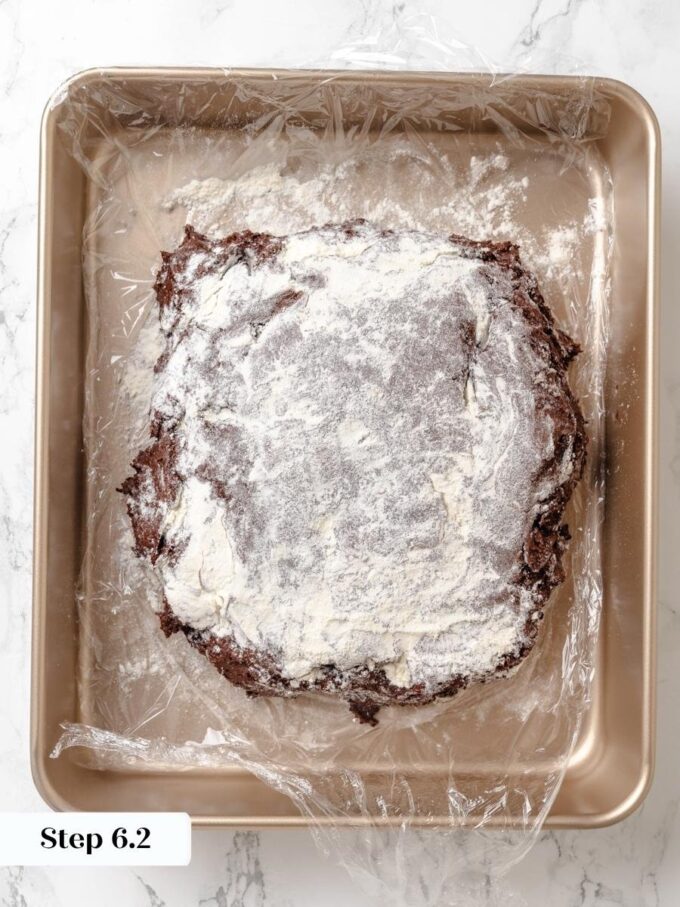
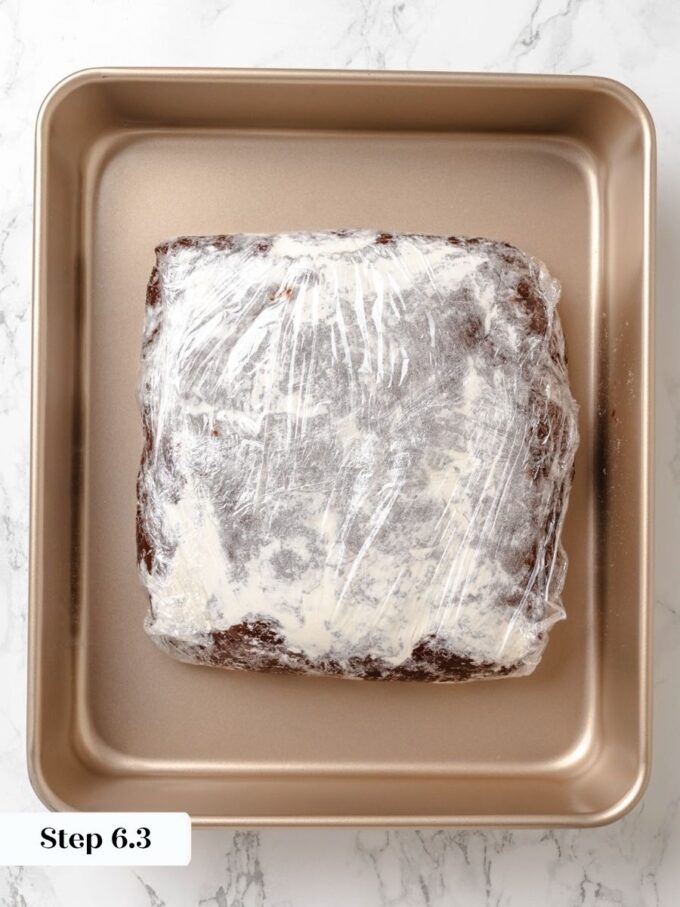
Step 6: Transfer the dough to your prepared bowl or plastic-wrapped baking sheet. Sprinkle the top with all-purpose flour, then fold the plastic wrap over to cover it completely. Refrigerate for at least 60 minutes. (photos 10-12)
The cold rest firms the dough so it rolls cleanly, slows gluten development, and holds the baking powder back so you get the fullest rise when the donuts hit the hot oil. At this point, the dough can be held in the refrigerator for up to 2 days.
Roll and Cut the Donuts
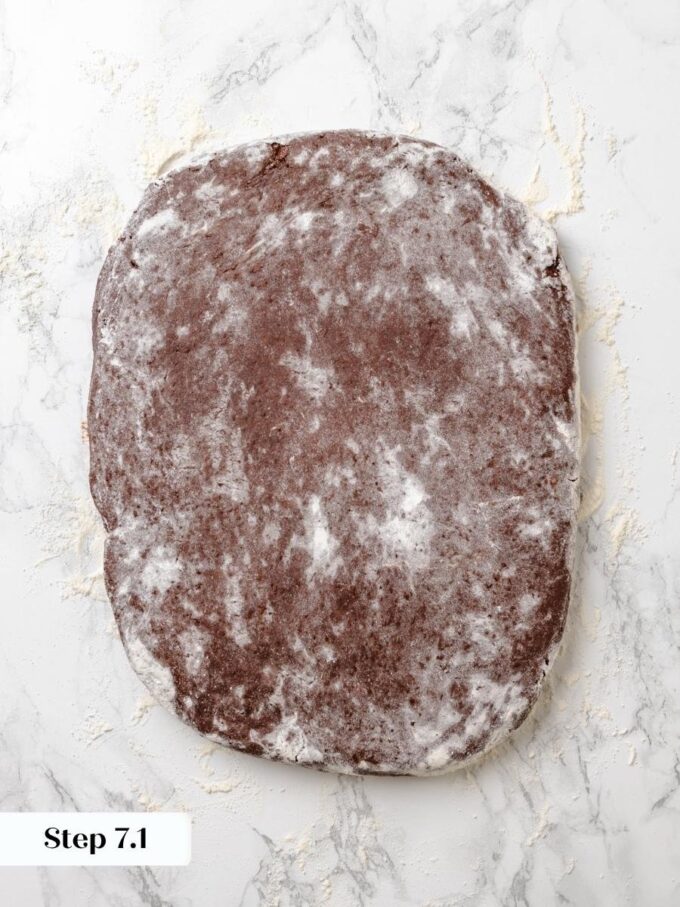
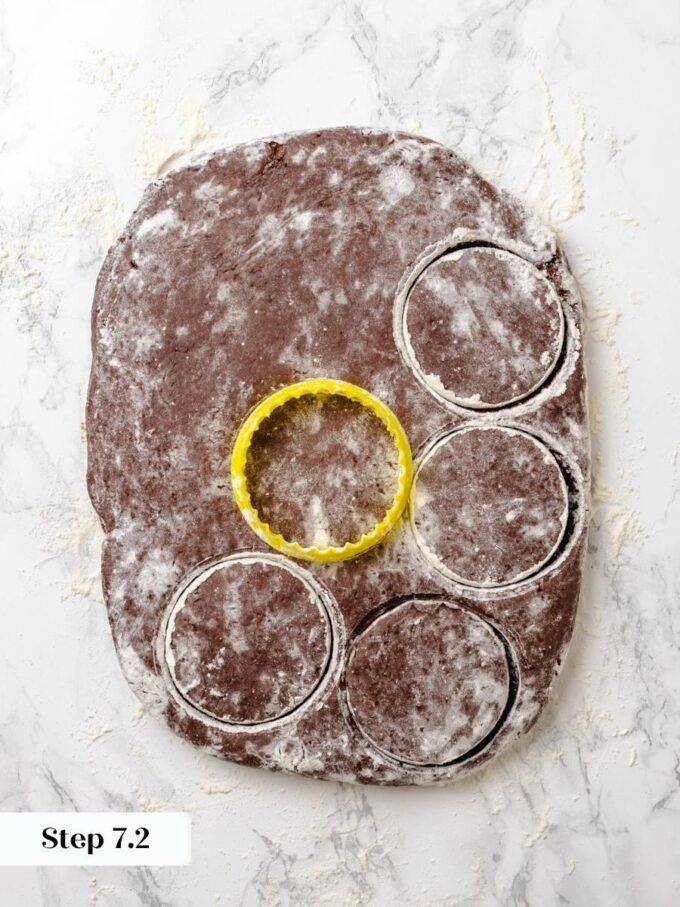
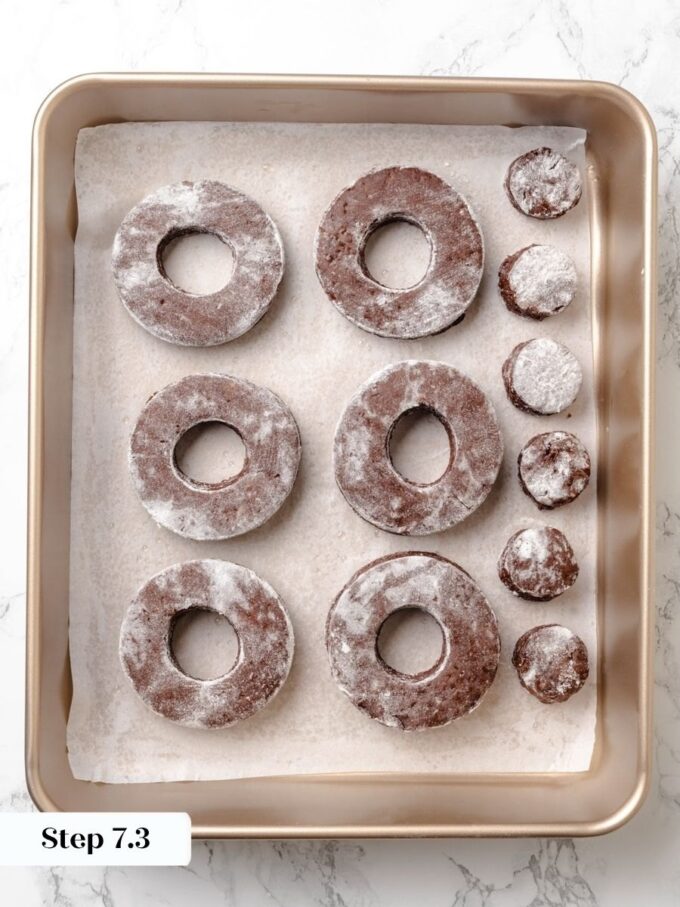
Step 7: Line a half-sheet baking pan with parchment paper and spray the paper with nonstick spray. Set it aside. Lightly dust your work surface with flour, then turn the chilled dough out onto it, floured side down. Lightly dust the top of the dough with more flour if you did not flour the plastic wrap during the chill. Working quickly to keep the dough cold, roll it out to ½ inch thick. Brush any excess flour from the top with a dry pastry brush. Lightly tap your 3-inch and 1¼-inch ring cutters in flour before each cut, then press straight down through the dough without twisting. Brush away any excess flour from the cut surfaces with the dry pastry brush, then transfer the donuts and holes to the prepared sheet pan. (photos 13-15)
This dough can be sticky, and a generously floured surface will work wonders for your ability to manipulate it. Keep extra flour close by and use it freely.
Step 8: Chill the Cut Donuts. Cover the sheet pan loosely with plastic wrap, making sure the plastic does not touch the tops of the donuts. Refrigerate for at least 30 minutes and up to overnight. The second chill re-firms the cut edges, helps the donuts hold their shape in the oil, and keeps the baking powder from reacting too early so you get the fullest puff when they hit the heat.
Make the Glaze
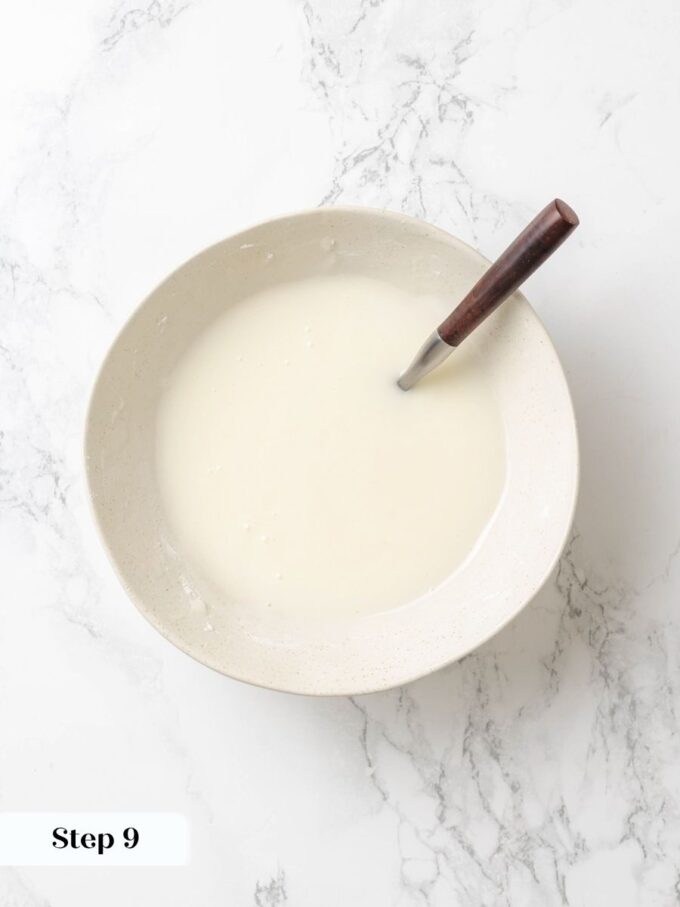
Step 9: Whisk together the whole milk, powdered sugar, and kosher salt in a medium bowl until completely smooth. Cover the surface directly with plastic wrap to prevent a skin from forming. If the glaze thickens before you are ready to dip, set the bowl over a pot of simmering water and stir gently until it loosens. Since the donuts go straight from the fryer to the glaze, you may not need to warm it at all.(photo 16)
Step 10: Heat the Oil and Fry. Pour the canola oil into a Dutch oven or fryer until it is at least 2 inches deep. Clip a candy thermometer to the side of the pot and heat the oil to 360°F before you add the first batch, since the cold dough will pull the temperature down immediately. Adjust your heat throughout frying to keep the oil between 350°F and 360°F.
Chocolate donuts are less forgiving than plain ones here: oil that runs too hot will make the cocoa taste bitter, so watch that thermometer closely.
Fry the Donuts
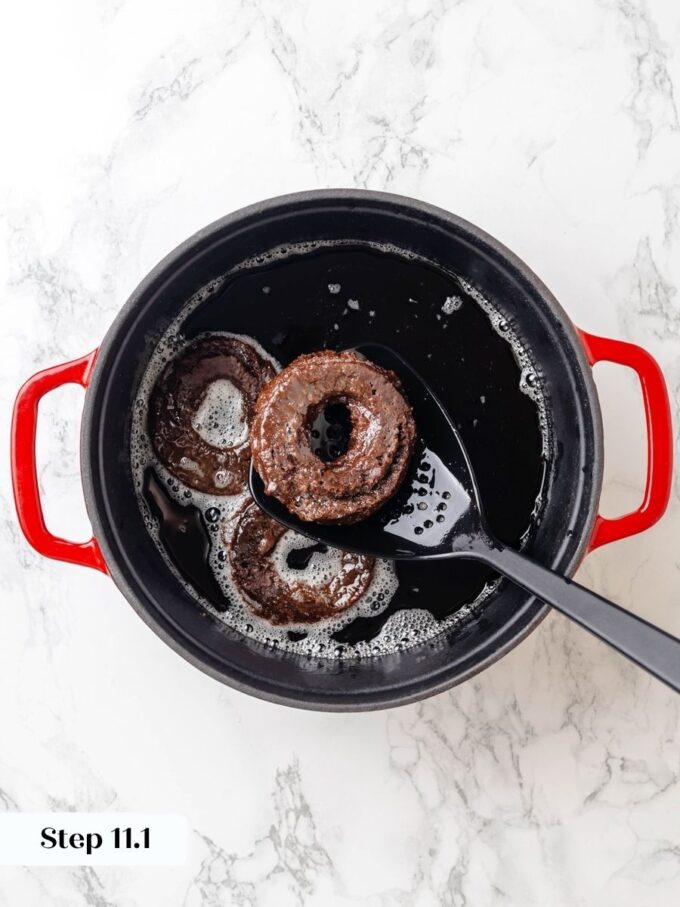
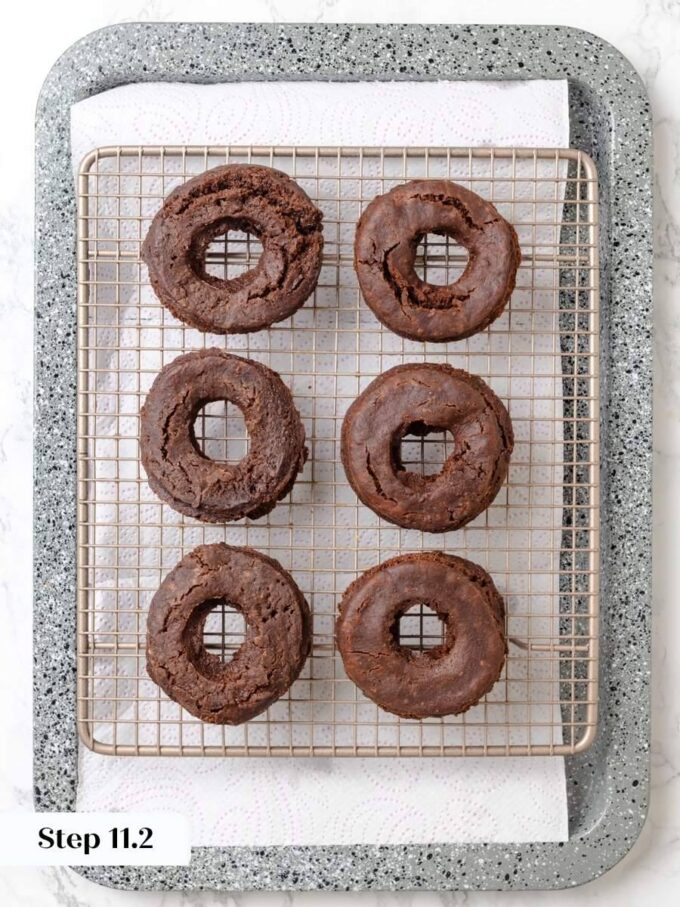
Step 11: Remove the donuts from the refrigerator and keep the sheet pan in the fridge between batches. Gently lower 3 donuts into the hot oil at a time, giving them enough room to puff and move. Once they float to the surface, cook for about 30 seconds, then flip them with a slotted spoon or spider. Fry for about 80 seconds until they begin to puff and the edges start to crack and split open, then flip once more and fry for another 80 seconds. Before you commit to a full batch at a set time, test the first donut by poking it with a cake tester or skewer: it should pull out completely clean, just like a finished cake. Transfer the fried donuts to a wire rack set over a sheet pan or paper towels to catch the drips and keep the bottoms crisp. (photo 17 & 18)
Step 12: Fry the Donut Holes. For donut holes, fry for 30 seconds, then flip. Fry for another 60 seconds, flip again, then fry for a final 40 to 60 seconds. They will puff up and turn an even golden brown all over when they are done.
Glaze and Serve
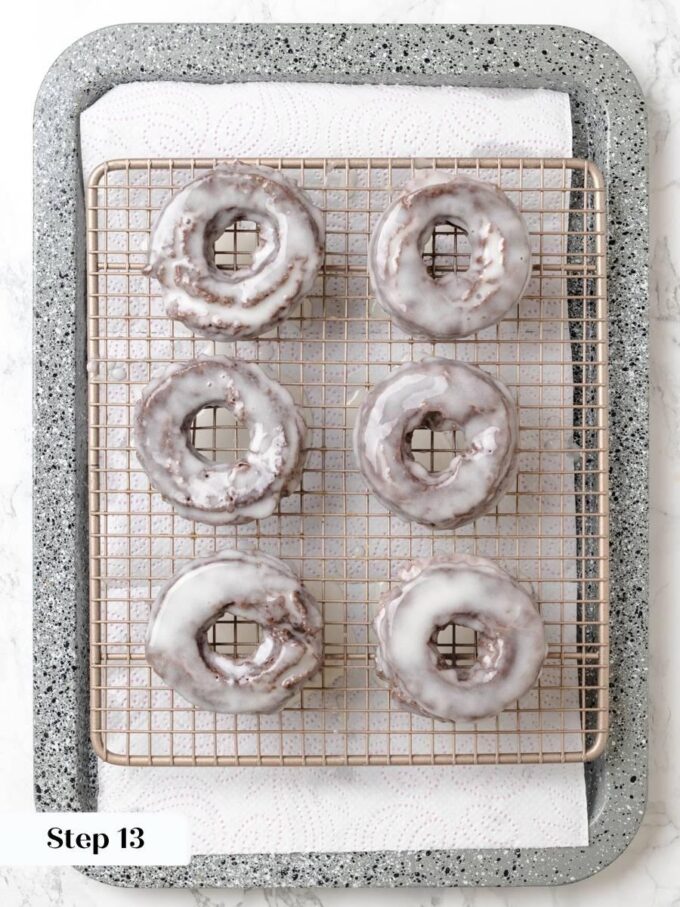
Step 13: The moment each donut is just barely cool enough to handle, dip it face-down into the glaze and set it back on the wire rack. A hot donut drinks in the glaze evenly, giving you a thin, smooth coat that isn’t too thick or gummy. Do not wait until the donuts are fully cooled or the glaze will sit on the surface rather than setting into it. (photos 19 & 20)
Recipe FAQs
These are genuinely best the day they are fried, which I know is not the most convenient answer. If you have leftovers, store them at room temperature in a container with the corner cracked open overnight so condensation does not collect and soften the glaze. I would not recommend refrigerating them, as the cold makes the crumb tight and the glaze weep.
Yes, and honestly I prefer it. After mixing, the dough can rest in the refrigerator for up to 2 days before you roll and cut it. You can also chill the cut donuts on their sheet pan overnight before frying, which is the best stopping point if you want to fry fresh in the morning.
The most common culprit is overmixing. The moment you see no more streaks of flour in the dough, stop the mixer. Every extra turn of the paddle develops more gluten, which closes up the crumb and makes the finished donut chewy instead of tender. Dough that warmed up too much before frying can also cause this, so if your kitchen runs warm, work quickly during the rolling and cutting steps and return the cut donuts to the refrigerator promptly.
Other Donut Recipes!

Yeast Breads

Breakfast & Brunch

Breakfast & Brunch

Breakfast & Brunch
Chocolate Old Fashioned Donuts
Ingredients
For the Donuts:
- 1 ⅛ cups granulated sugar
- 3 tablespoons unsalted butter, room temperature
- 5 egg yolks
- 1 ¾ cups sour cream , one 16 oz container
- 3 ¾ cups pastry flour , all-purpose flour works too
- 1 cup Dutch-processed cocoa powder
- 1 teaspoon espresso powder
- 1 tablespoon baking powder
- 4 teaspoons kosher salt
- 96 oz neutral oil , canola recommended for frying
For the Glaze:
- ⅓ cup whole milk
- 3 ¼ cups powdered sugar
- 1 teaspoon kosher salt
Instructions
- Whisk together the flour, cocoa powder, and baking powder in a large bowl. Whisk in the kosher salt and espresso powder to distribute evenly. Set aside. Line a baking sheet with plastic wrap and dust the surface with all-purpose flour, or spray a large bowl with nonstick spray. Set aside.
- In a stand mixer fitted with the paddle attachment, beat the granulated sugar and butter on high speed until fully incorporated. The mixture will not look light and fluffy like cake batter — that is normal with this ratio of sugar to butter.
- Add the egg yolks and beat on high for about 2 minutes, stopping to scrape down the bowl a few times, until the mixture lightens and increases in volume.
- With the mixer on low, add the dry ingredients and sour cream in alternating spoonfuls. Add the next spoonful when only a few large streaks of flour remain. Alternate almost nonstop. Stop the mixer to scrape in the last of the sour cream. Mix only until the dry ingredients are fully incorporated — do not overmix.
- Transfer the dough to the prepared bowl or plastic-lined pan. Dust the top with flour, cover, and refrigerate for 60 minutes. The dough can be held in the fridge for up to 2 days at this point.
- Line a half-sheet pan with parchment paper and spray with nonstick spray. Lightly dust a work surface with flour. Turn the chilled dough out floured side down and dust the top lightly with flour.
- Working quickly, roll the dough to ½ inch thick. Brush off any excess flour. Dip 3-inch and 1 ¼-inch ring cutters in flour before each cut. Cut out the donuts and holes, brushing off any excess flour with a dry pastry brush, and place them on the prepared pan.
- Cover the pan loosely with plastic wrap, keeping the wrap from touching the tops of the donuts. Refrigerate for at least 30 minutes, or overnight.
- Whisk together the milk, powdered sugar, and salt for the glaze. Press plastic wrap directly onto the surface to prevent a skin from forming. If needed, warm the glaze over a pot of simmering water before dipping.
- Pour oil into a Dutch oven or fryer to at least 2 inches deep. Heat to 360°F. Maintain the oil between 350°F and 360°F throughout frying, using a clip-on candy thermometer to monitor.
- Working in batches of 3, gently lower the donuts into the oil, keeping remaining donuts in the fridge. Once they rise to the surface, cook for 30 seconds, then flip with a slotted spoon. Fry for about 80 seconds until they start to puff and split, then flip again and fry another 80 seconds until evenly colored. Test doneness by poking with a cake tester — it should come out clean with no streaks of dough. Transfer to a wire rack set over a sheet pan.
- Donut holes fry for 30 seconds, then flip; 60 seconds, then flip; then 40 to 60 seconds more until puffed and golden brown all over.
- While the donuts are still very warm, dip them in the glaze and return to the wire rack to set.
Notes
Keep the dough cold: Work quickly when rolling and cutting. Cold dough holds its shape, resists gluten development, and preserves the baking powder’s leavening power for when the donuts hit the oil.
Mixing: Add the dry ingredients and sour cream in alternating spoonfuls on low speed and stop the moment the flour disappears. Overmixing builds gluten, which leads to tunnels inside the donut and a tough crumb.
Storage: These are best eaten the day they are fried. If you need to hold them overnight, store in a container with the lid slightly cracked so condensation does not make the exterior soggy.
Nutrition
Nutrition information is automatically calculated, so should only be used as an approximation.
 Like this recipe? Rate & comment below!
Before You Go
If this chocolate old fashioned donut recipe has you ready to keep frying, there is plenty more waiting for you. Browse our Breakfast & Brunch Recipes or try these sourdough crepes next!

How far in advance can I make the dough? Also, these look amazing!
Lizzy, the dough can chill for up to 4 hours as written, or you can store it in the fridge for up to 3 days. No yeast means no risk of over-proofing. You can also cut the donuts and freeze them. I would defrost them before frying, though. Just be sure to keep them tightly wrapped; let us know how they turn out! ~GVD team
Do I put all the egg in or just the yolk
Hi Anton! Use just the yolks! The yolks keep the donuts rich, tender, and classic old-fashioned style instead of cakey or bready. Enjoy! ~gvd team
I made this recipe 3 times. I made sure not to over mix, not wait too long and checked my baking powder for efficacy and each time I was met with flat donuts. Unfortunately can’t recommend this recipe.
Hi Kyle, I’m so sorry to hear that your donuts didn’t turn out as expected! If they came out flat, it might help to make sure the oil temperature is right around 325°F and that the dough is well chilled before cutting. Sometimes if the oil is too hot or the dough is too soft, the donuts don’t puff properly during frying. I’ve tested these myself, and I didn’t have that trouble, so I hope you’ll give them another go. Thanks again for your feedback, it helps us keep recipes as reliable as possible! ~gvd team
This was a great easy recipe! Chocolate cake donuts are my favorite, and I’ve been wanting to make them for a while. The dough was very easy to handle, and I was worried they’d be dry, but after the addition of the glaze, they had a great texture. The donuts themselves are not sweet, which is perfect because the glaze is pure sugar – I did end up thinning the glaze a bit due to personal preference. The only other thing I would wish is for the recipe to include metric gram measurements, since I like to use a scale to measure my baking ingredients for accuracy. I did translate them myself, but I always wonder if my calculations are a bit off from what the maker intended. I will definitely make these again!
Hi Alex! So glad you loved them! Just a quick tip: you can click the “Metric” button in the recipe card to see all the gram measurements. Makes scaling even easier! Thanks so much for making these and for the thoughtful feedback. ~gvd team