
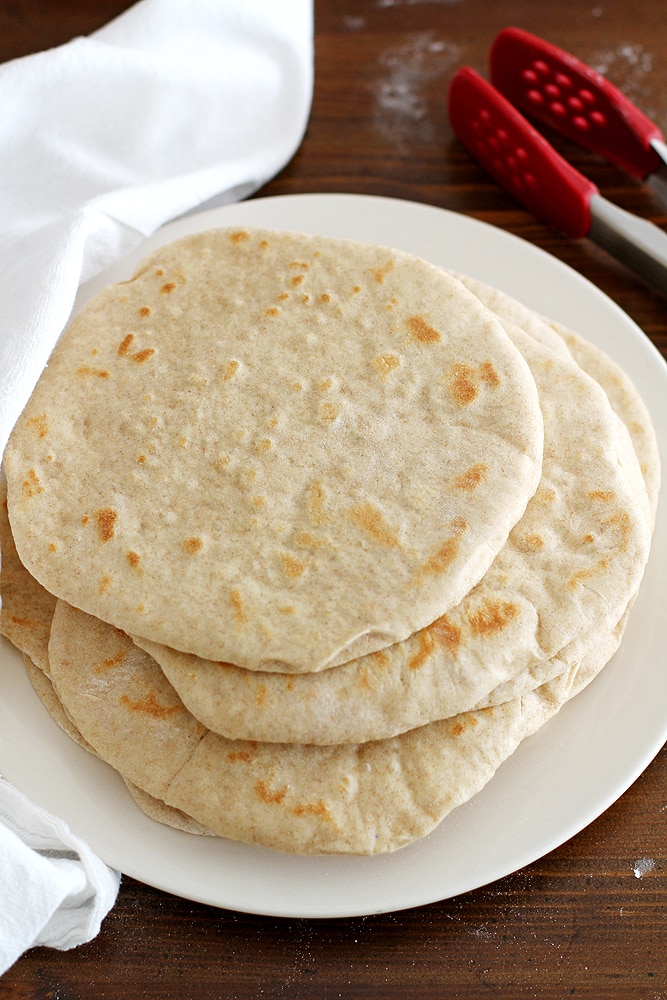
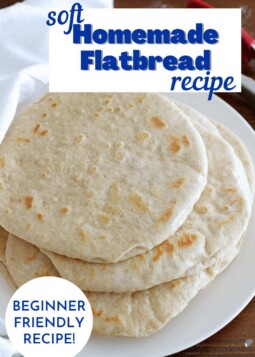
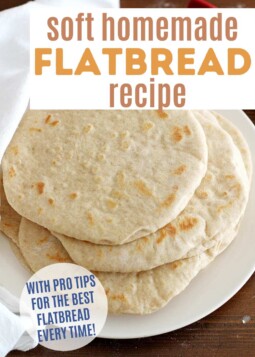
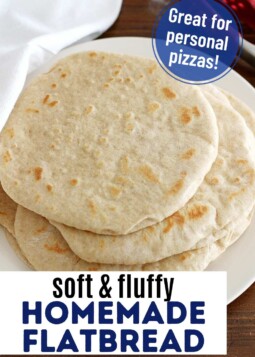
This flatbread recipe creates exceptionally soft, pillowy flatbreads using a forgiving yeast dough cooked on the stovetop. They roll easily, puff beautifully, and stay tender enough for wraps, dipping, or breakfast eggs.
A Quick Look At The Recipe
This is a brief summary of the recipe. Jump to the recipe to get the full details.
Prep Time
30 minutes
Cook Time
10 minutes
Proof Time
1 hour
Total Time
1 hour 40 minutes
Servings
8 flatbreads
Difficulty
Easy — ideal for beginners.
Calories *
193 kcal per serving
Technique
Mix dough, knead until smooth, proof, roll thin, and cook on a hot skillet or griddle.
Flavor Profile
Soft, tender flatbread with mild wheat flavor and perfect chew for wraps or dips.
* Based on nutrition panel
I’ve made this flatbread recipe several times now, and it turns out soft and puffy every single time. Letting the dough rest before rolling made a huge difference — the flatbreads rolled out easily and cooked up beautifully on my griddle. ⭐⭐⭐⭐⭐
Sarah C.
Why This Recipe Works
- Balanced dough hydration creates flatbreads that puff beautifully without drying out on the skillet.
- Brief resting periods relax the gluten, making the dough easy to roll thin without springing back.
- Stovetop cooking delivers fresh, warm flatbreads in minutes — no oven required.
- A touch of whole wheat flour adds flavor and structure without sacrificing softness.
Table of Contents
There are certain meals that linger long after the plate is empty — the kind that send you straight back to the kitchen. That’s how this flatbread recipe earned a permanent place in my rotation, right alongside whole wheat pita bread, whole wheat biscuits, and no knead focaccia.
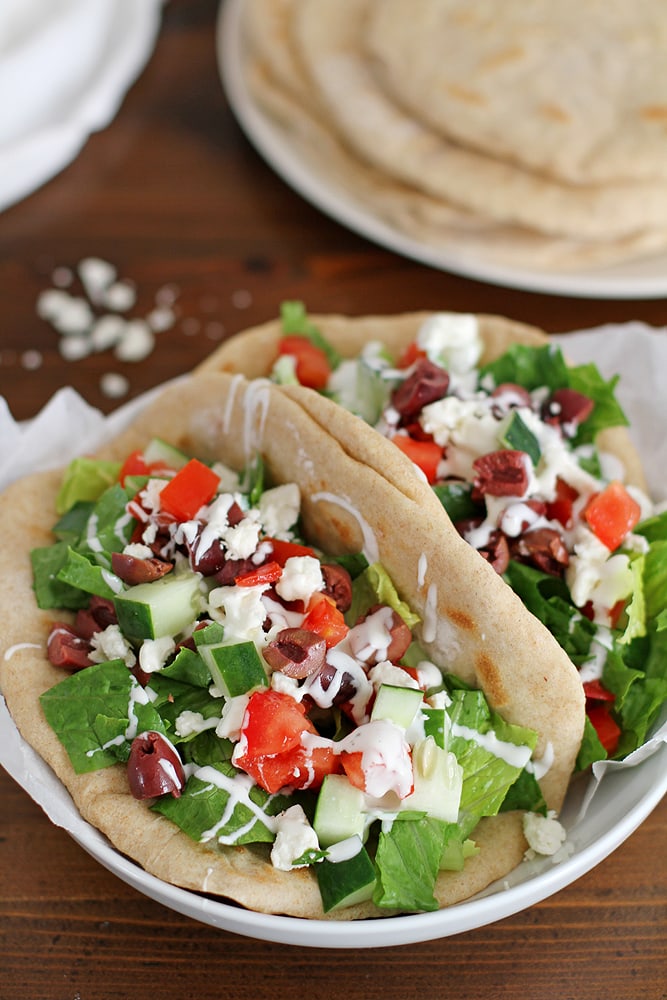
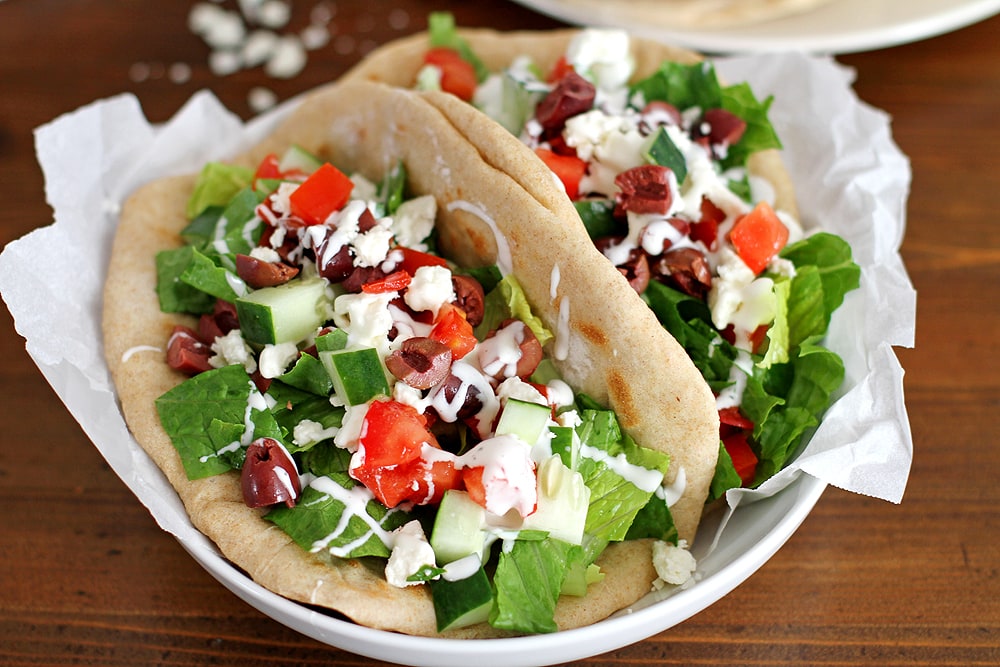
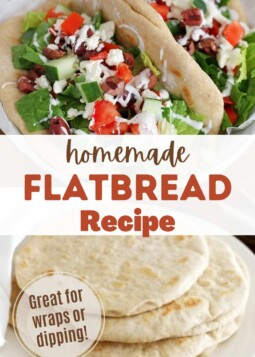
Inspired by an unforgettable gyro-style pita sandwich, these flatbreads are endlessly versatile. My favorite way to eat them is wrapped them around grilled chicken like grilled naan, but i’ve used them to scoop up hummus, layered them with eggs for breakfast, and even warmed one with peanut butter and berries.
Ingredients & Substitutions
- Active Dry Yeast: Provides reliable lift and that signature puff when the yeast flatbread hits the hot griddle.
- Bread Flour: The higher protein content gives these flatbreads their flexible structure and chew, which is why I also rely on it in recipes like homemade bagels.
- Whole Wheat Flour: Adds flavor and a bit of nutrition without making the flat bread dense.
- Milk: Milk acts as the main wet ingredient, softening the dough.
- Olive Oil: Keeps the dough supple and prevents drying during cooking.
See the full recipe card below for full ingredient quantities.
Variations for this Easy Flatbread Recipe
- Make it extra tender. Swap half of the milk for plain Greek yogurt for a slightly tangy, naan-style flatbread with extra softness. Season this variation with extra virgin olive oil and fresh dill!
- Go all white flour. If you don’t have whole wheat flour, use all bread flour — the texture stays soft and pliable, much like the dough used for easy homemade bread bowls or my dinner rolls recipe.
- Turn It Into a flatbread pizza. Roll slightly thicker than traditional pizza dough, cook briefly, then top and finish in a hot oven for quick personal pizzas. Add chopped herbs, fresh garlic, or Italian seasonings and top with sauce and your favorite cheese, roasted vegetables, zucchini, or spinach. If you like bold toppings, this works especially well as a base for something like pancetta pizza.
Professional Tips
- Keep the griddle hot enough that each side cooks in 2–3 minutes; low heat will dry out the flatbread.
- Roll the dough very thin (about ⅛-inch) for proper puffing and flexibility.
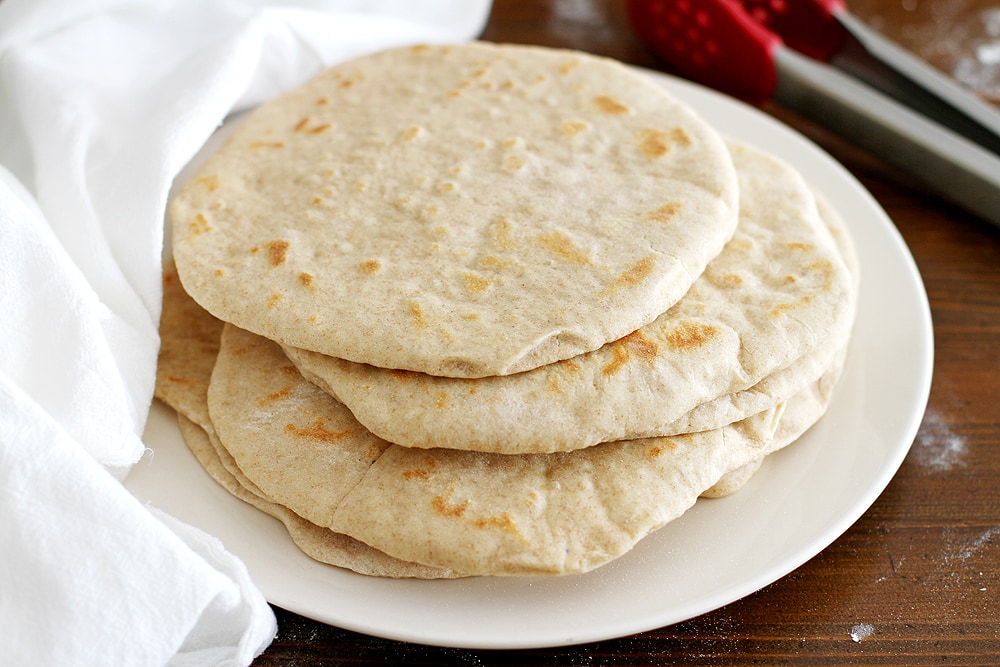
- Stack cooked flatbreads under a towel to trap steam and maintain softness.
How do you make flatbread from scratch?
Use these instructions to make the perfect flatbread recipe every time. Full measurements are in the recipe card below.
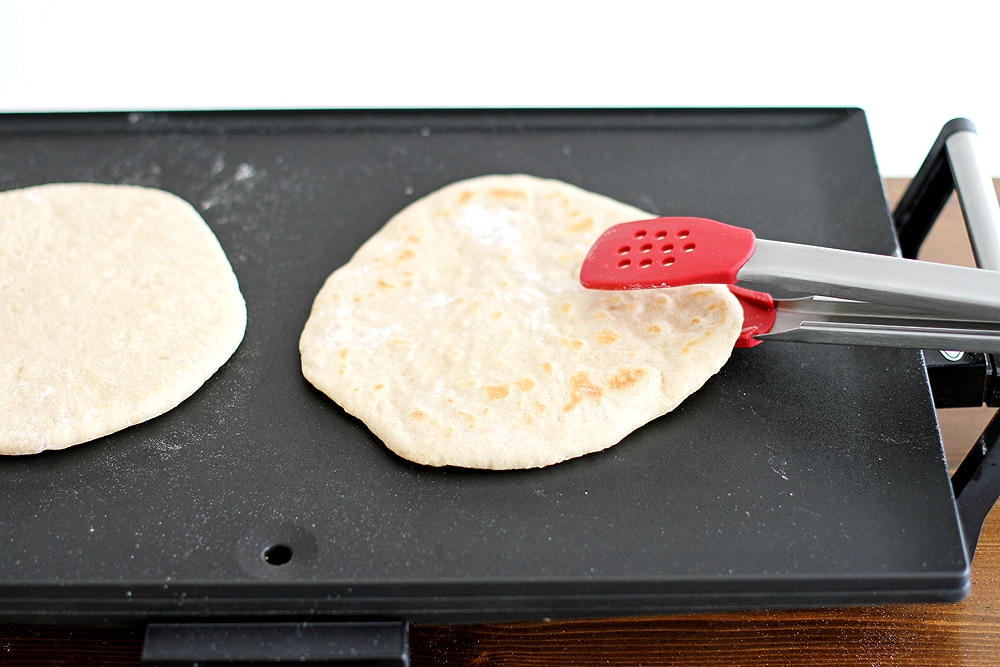
Step 1: Activate the yeast. In a large mixing bowl, dissolve the yeast and sugar in warm water and let it sit until foamy, about 5 minutes.
Step 2: Build the dough. Stir in 1 cup bread flour, whole wheat flour, salt, milk, and olive oil until a shaggy mixture forms.
Step 3: Develop structure. Knead until smooth and slightly sticky (proper kneading develops structure) about 10 minutes by hand or 5 minutes with a dough hook.
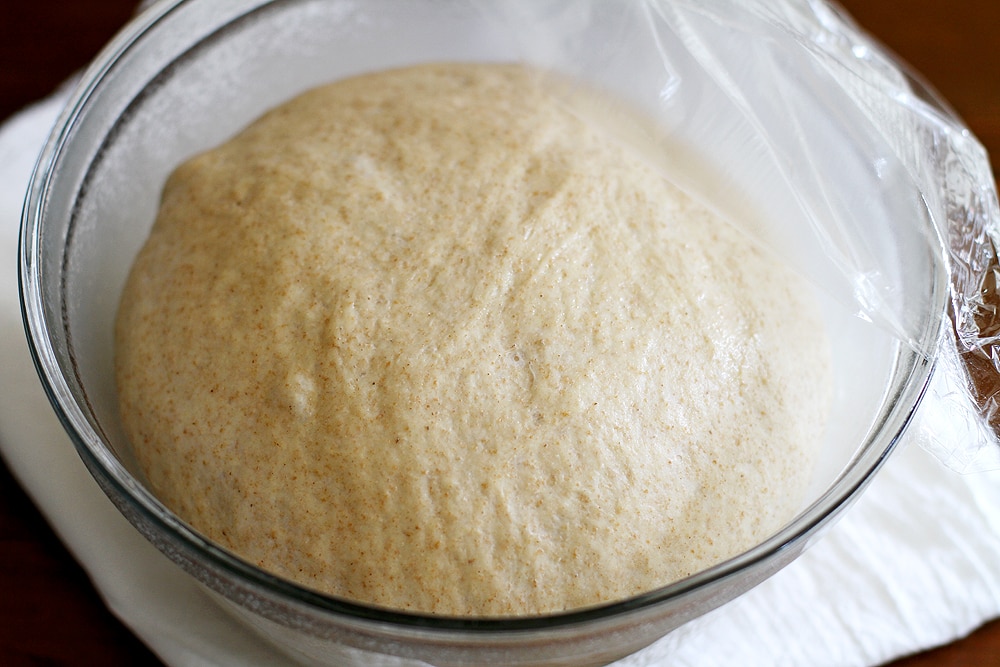
Step 4: First rise. Cover with plastic wrap and let the dough rise in a warm place until doubled, about 1 hour.
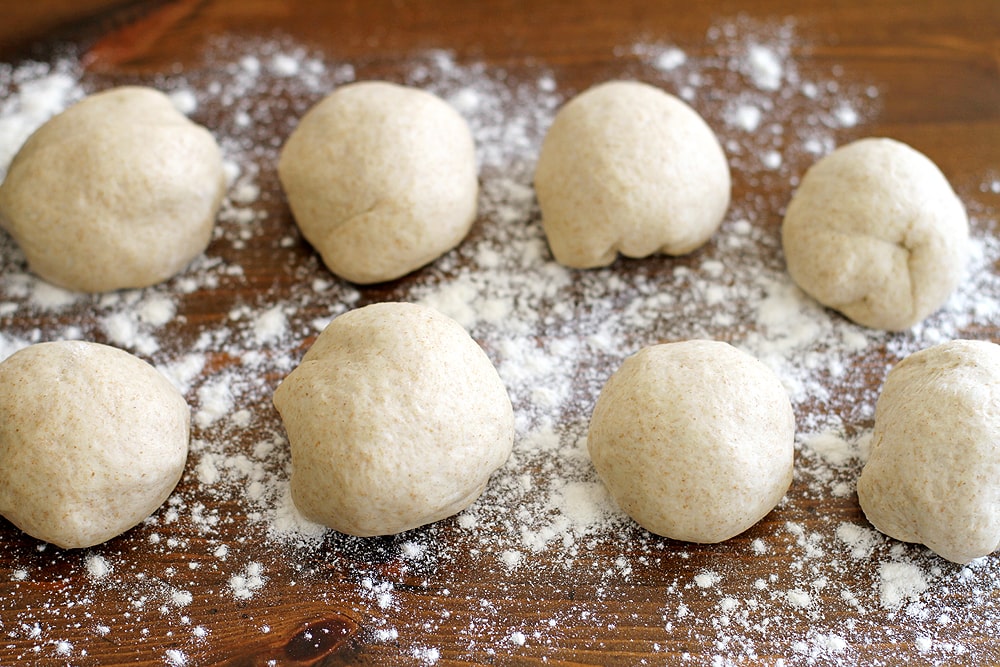
Step 5: Portion and relax. Divide the ball of dough into 8 equal pieces, shape into balls, and rest 10–15 minutes to relax the gluten.
Step 6: Roll and cook. Roll each piece into a thin circle using a rolling pin and cook until air bubbles form on the surface, flipping once.
Use a heavy-bottomed pan or griddle to maintain even heat.
Step 7: Keep warm. Stack and cover cooked flatbreads while finishing the batch.
Step 8: Serve warm or reheat briefly before serving.
Recipe FAQs
This flatbread recipe uses mostly bread flour for structure and chew, with a small amount of whole wheat flour for flavor. Bread flour helps the flatbread stay flexible and puff properly, but you can use all-purpose flour if needed, with slightly less chew.
In this flatbread recipe, flatbread may not puff if the dough is rolled too thick, the griddle isn’t hot enough, or the dough didn’t rest long enough. Roll the dough to about ⅛-inch thick, let it rest before rolling, and cook on a fully preheated griddle so steam can form quickly and create puff.
Store cooled flatbreads tightly wrapped at room temperature for up to 2 days.
Recommended Snack Bread Recipes
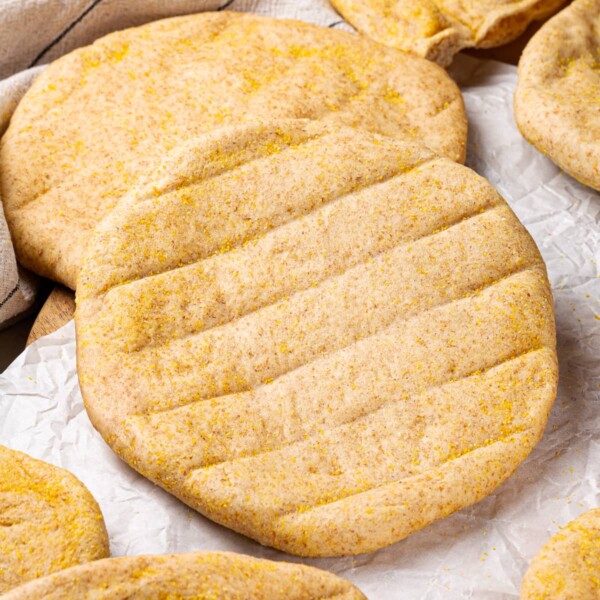
Flatbreads
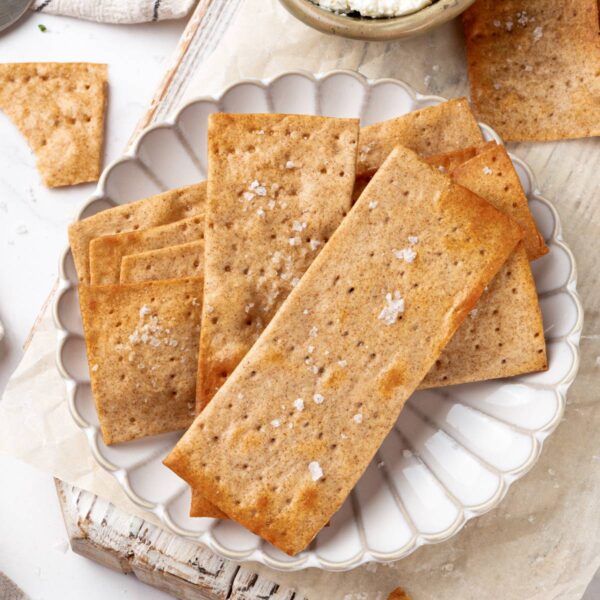
Appetizers & Snacks
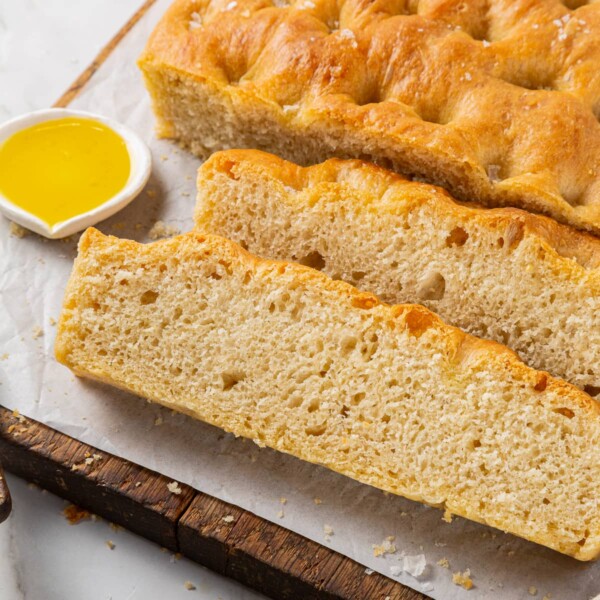
No-Knead Breads

Yeast Breads
If you enjoyed this recipe, please leave a star rating and let me know how it goes in the comments below! I love hearing from you and your comments make my day!
Flatbread

Ingredients
- 2 ¼ teaspoons active dry yeast, 1 packet
- 1 teaspoon granulated sugar
- ⅔ cup water, about 110 degrees F
- 2 cups bread flour, divided
- 1 cup whole wheat flour
- 1 teaspoon kosher salt
- ½ cup milk, about 110 degrees F
- 1 tablespoon olive oil
Instructions
- Dissolve yeast and sugar in warm water. Let stand 5 minutes until foamy.
- Add 1 cup bread flour, whole wheat flour, salt, milk, and olive oil. Stir until combined.
- Knead dough until soft and slightly sticky, adding remaining flour as needed.
- Place dough in a greased bowl, cover, and let rise 1 hour until doubled.
- Divide dough into 8 pieces and rest 10–15 minutes.
- Roll thin and cook on a 350°F griddle, 2–3 minutes per side.
- Stack cooked flatbreads under a towel. Serve warm.
Notes
Variation: Substitute half the milk with Greek yogurt for a tangier flatbread.
Storage: Store wrapped at room temperature up to 2 days; reheat to soften.
Nutrition
Nutrition information is automatically calculated, so should only be used as an approximation.
 Like this recipe? Rate & comment below!
Before You Go
I hope you enjoyed this soft, stovetop flatbread recipe. Be sure to explore our other easy bread recipes for more warm, homemade inspiration — and don’t forget to leave a star rating if you try it!



If you roll it out, doesn’t that deflate the dough and you lose all of the risen dough from the CO2 action?
Jay, though I haven’t made this recipe yet, but I will!, I read a similar recipe, that said to use your hands, fingers, to shape the dough.
Has anyone tried making this gluten free? If so, what flours did you use?
Looks good! I don’t like wheat flour can I use regular flour will it turn out good?
I never thought of using a skillet to cook the flat bread, that makes a lot of sense! I have a big family so it definitely would be much better to cook a couple at a time rather than one. I’m pretty much a menace in the kitchen so if I can’t seem to get the recipe right, I get some from the store. Thanks for sharing this, I can’t wait to give it a try!
Vf — It’s a standard American measurement for a cup.
How big is your cup?
Please can you give a weight for ingredients, not a vague volume?
Thank you
I made this bread recipe this afternoon and it’s wonderful. We all love it. Thank you so much for this recipe, Stephanie! My son tried one on its own first and liked it right away. This is a keeper. :o)
Sandra — Yes, that is correct!
So do you use 3 cups of bread flour if you are not going to use the 1 cup whole wheat flour?
Thank you,
Sandra