
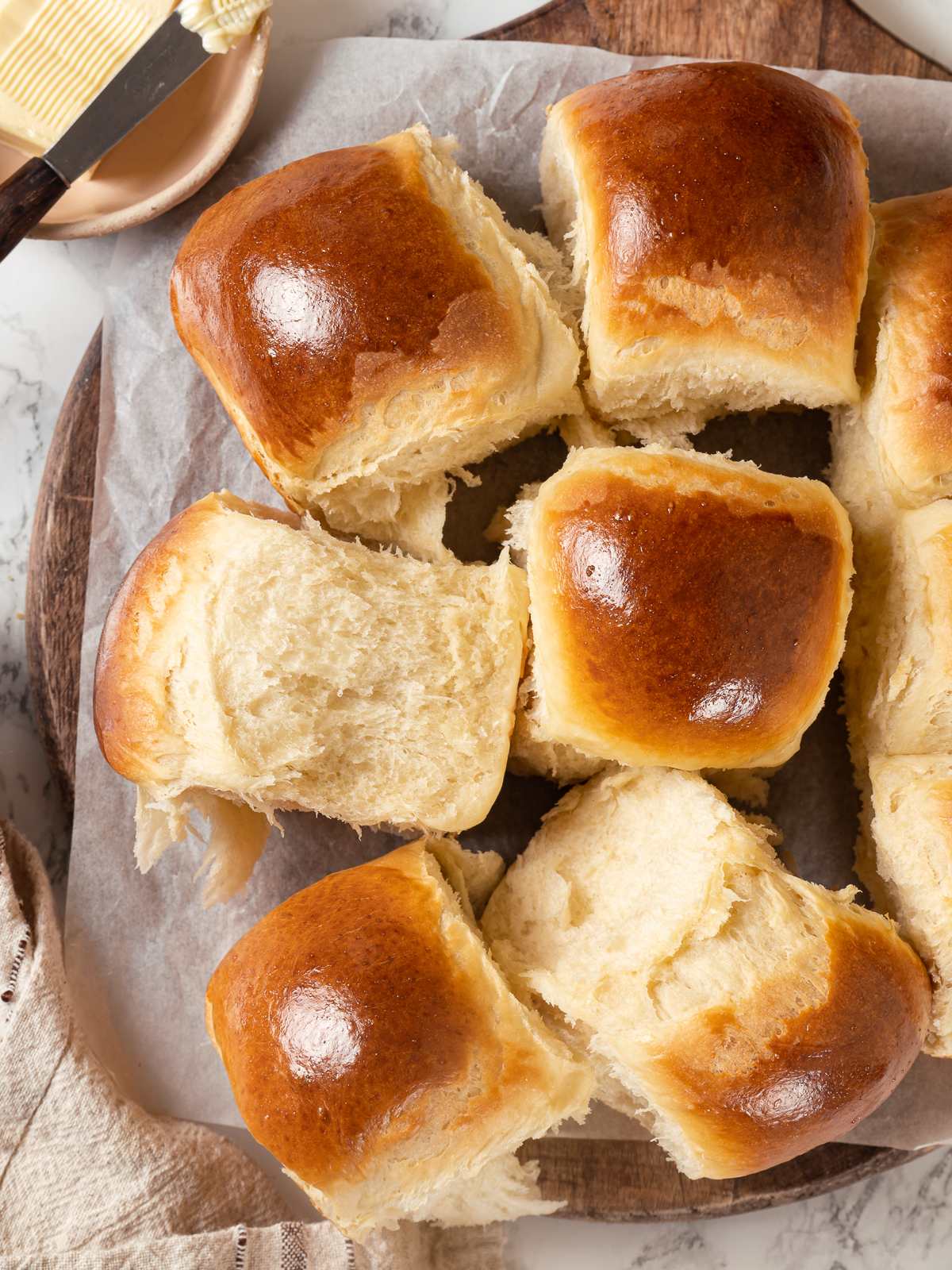
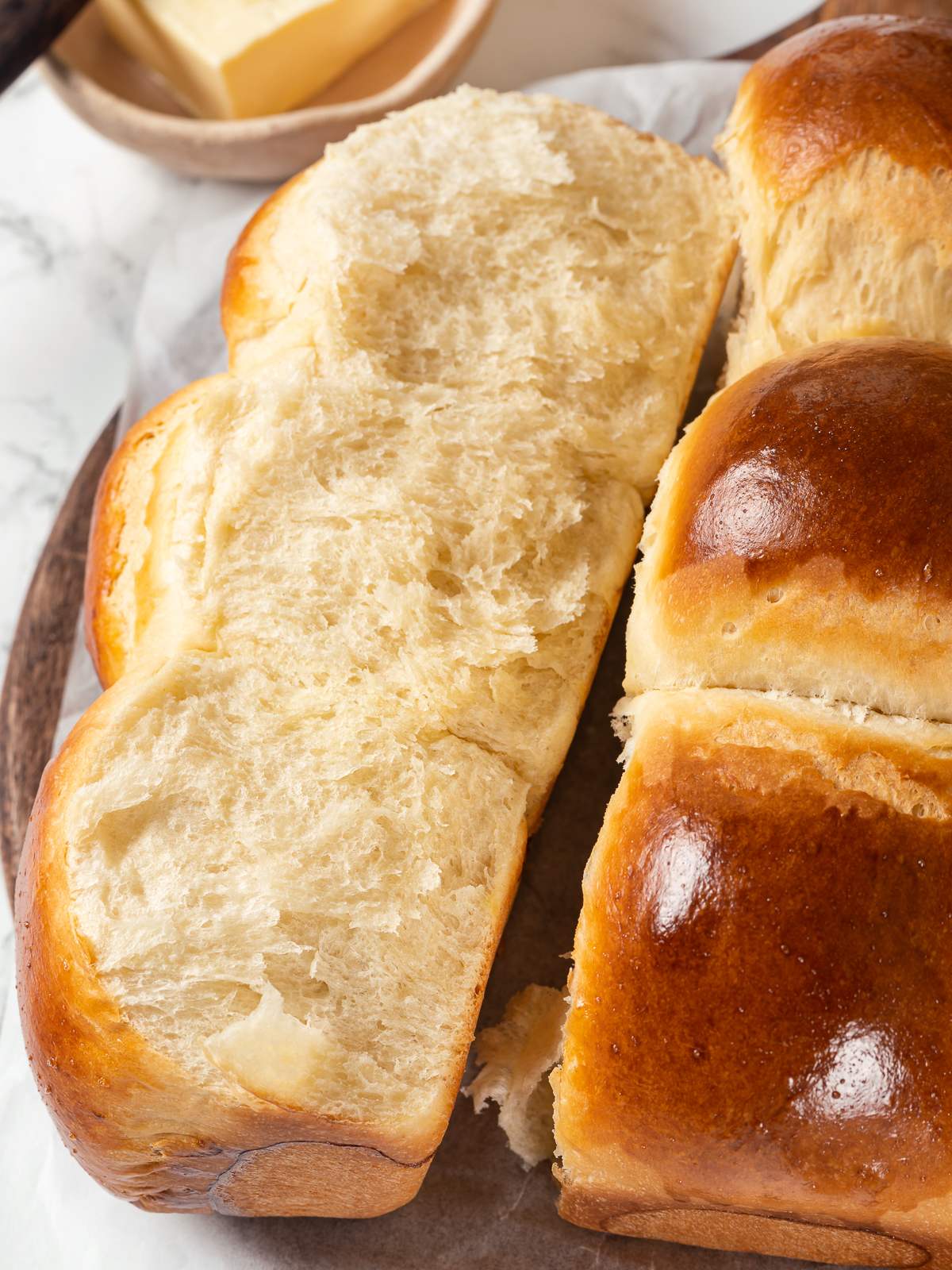
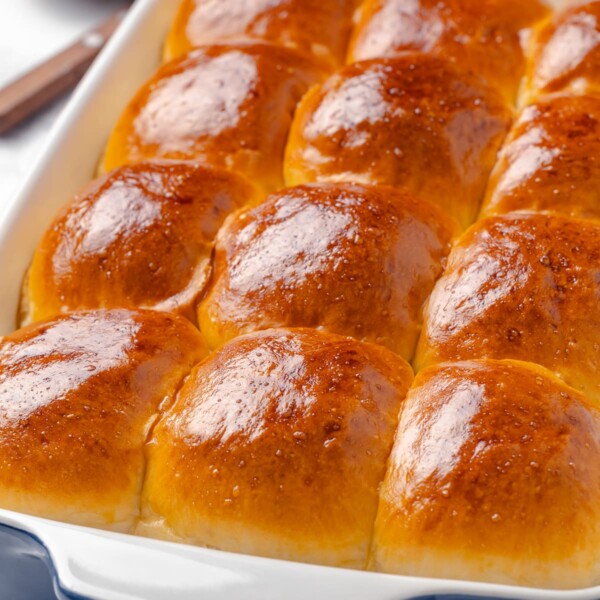
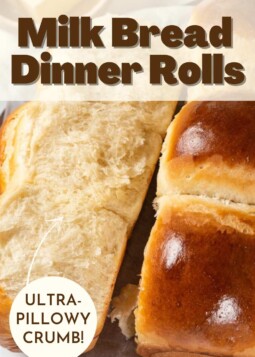
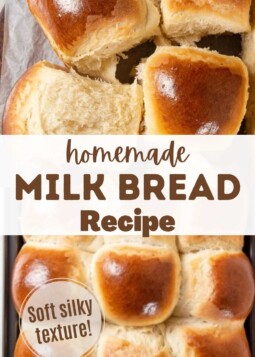
The softest, most pillowy milk bread recipe using the tangzhong technique! These ultra-fluffy rolls have a cloud-like texture and rich, slightly sweet flavor that will make them the star of your dinner table!
A Quick Look At The Recipe
This is a brief summary of the recipe. Jump to the recipe to get the full details.
Prep Time
25 minutes
Cook Time
25 minutes
Proof/Rest Time
2 hours 30 minutes
Total Time
3 hours 20 minutes
Servings
9 large rolls or 12 dinner rolls
Difficulty
Intermediate
Calories *
343 kcal per serving
Technique
Tangzhong method with enriched dough mixing and two-stage proofing.
Flavor Profile
Soft, buttery rolls with a lightly sweet flavor and an ultra-pillowy crumb.
* Based on nutrition panel
These milk bread rolls were unbelievably soft and fluffy. The tangzhong made the texture so pillowy, and they disappeared from the table almost instantly. I’ll definitely be making another batch soon. ⭐⭐⭐⭐⭐
Lauren
Why You Will Love This Recipe
- The most pillowy, cloud-like texture imaginable. I didn’t think bread could be fluffier than my classic dinner rolls, but the tangzhong method creates an almost ethereal softness.
- The tangzhong technique keeps the rolls fresh longer. Unlike regular rolls that can dry out after a day or two, the cooked flour paste helps retain moisture, keeping these rolls soft and fresh for up to 5 days at room temperature.
- Rich, slightly sweet flavor with a silky crumb.
- Easier than you might think! While the tangzhong adds one extra step, it only takes about 3 minutes and the technique is incredibly straightforward. If you’ve ever made ermine frosting, you already know the technique!
Table of Contents
The milk bread we made in culinary school was similar to my parker house rolls recipe, which are made with butter and whole milk. They are soft and very buttery, but I have been so obsessed with my dinner rolls recipe, I decided to see if I could transform it into a signature milk bread recipe.
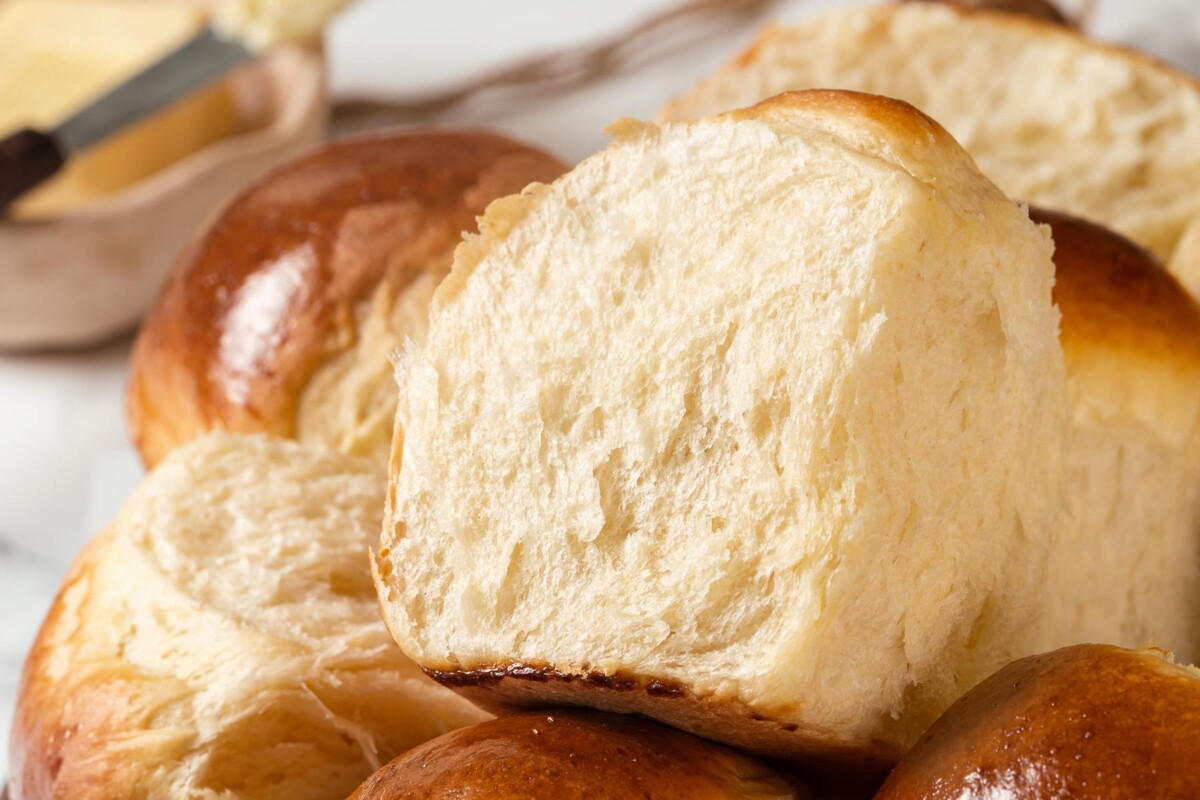
I substituted whole milk for the warm water for added richness, and added a tangzhong, which is a simple Asian bread-baking technique. The resulting rolls are so soft and pillowy they practically float off the plate, with a delicate crumb that stays fresh for days.
What is the Tangzhong Technique
The tangzhong method (also called water roux) is a technique borrowed from Asian bread baking. A small portion of flour is cooked with liquid (I use water and milk) until it forms a thick paste. When this paste is added to bread dough, it results in an incredibly soft, moist crumb that stays fresh longer.
The science is simple: when flour is heated with liquid, the starches gelatinize and can absorb and retain much more moisture. This extra hydration is what gives milk bread its signature pillowy texture without making the dough wet or difficult to handle. It’s the same principle used in ermine frosting, which creates the silkiest, smoothest buttercream you’ve ever tasted!
Ingredients & Substitutions
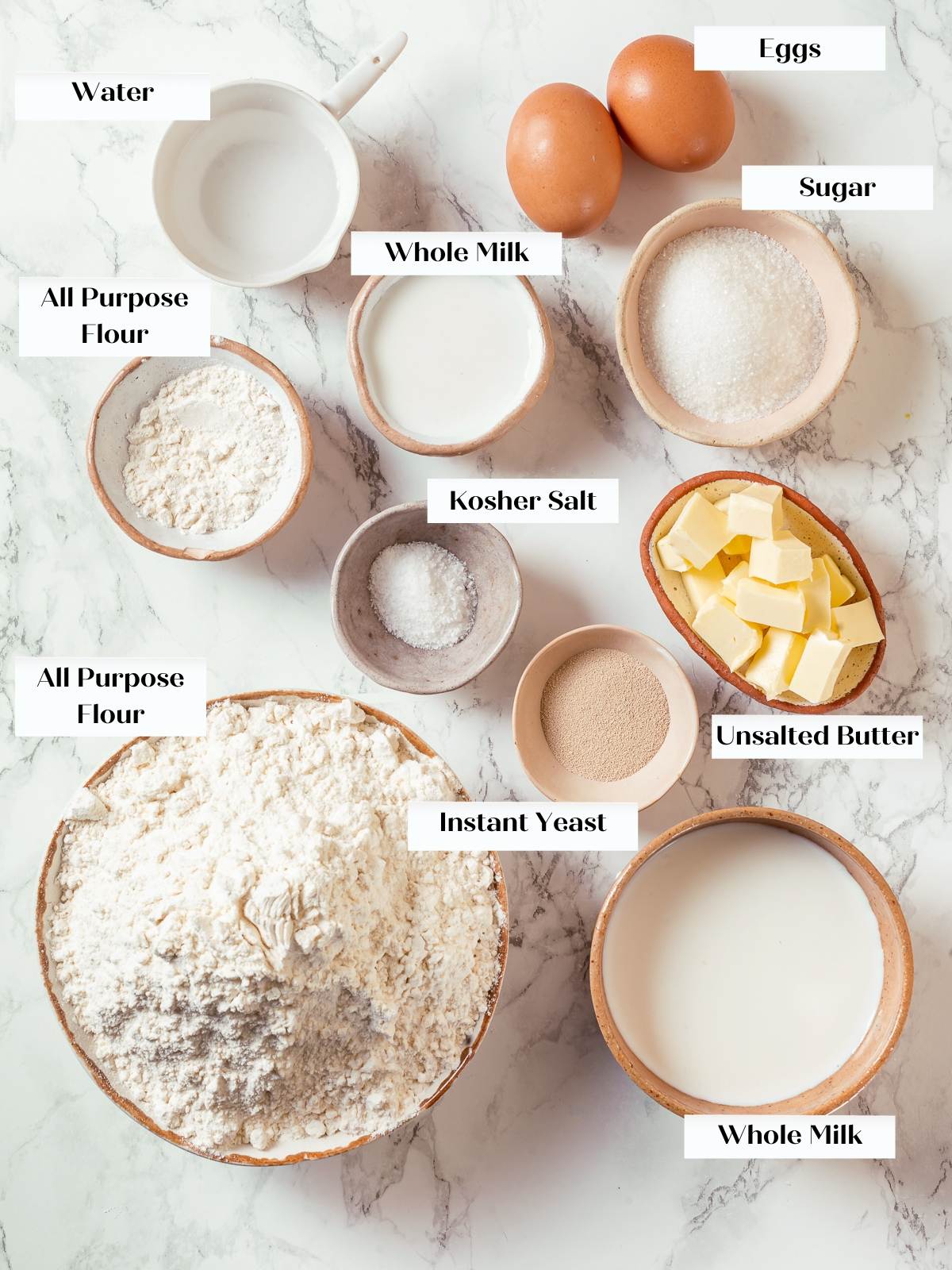
- Water (for the tangzhong): I use a combination of water and milk for the tangzhong, but you can use all water if that is easier.
- Whole Milk: I use whole milk for optimal flavor and texture but you can use water like I do in my whole wheat dinner rolls without adjusting the recipe.
- Granulated Sugar: You can make these rolls sweeter like hawaiian bread by adding more white sugar or substituting some of the milk for pineapple juice. You can also substitute honey.
- Kosher Salt
- Unsalted Butter
- All-Purpose Flour: I prefer all-purpose flour for the most tender texture. Bread flour would work but will create a slightly chewier roll.
- Instant Yeast: Instant yeast can be mixed directly into the flour without blooming. If using active dry yeast, use the same amount but bloom it in the warm milk with a pinch of sugar first.
- Large Egg
See the recipe card for full information on ingredients and quantities.
Professional Tips
- The tangzhong should be thick like mashed potatoes. Cook it until it’s substantially thickened, whisking constantly. This usually takes about 3 minutes total. The consistency is crucial for the proper texture in the final rolls.
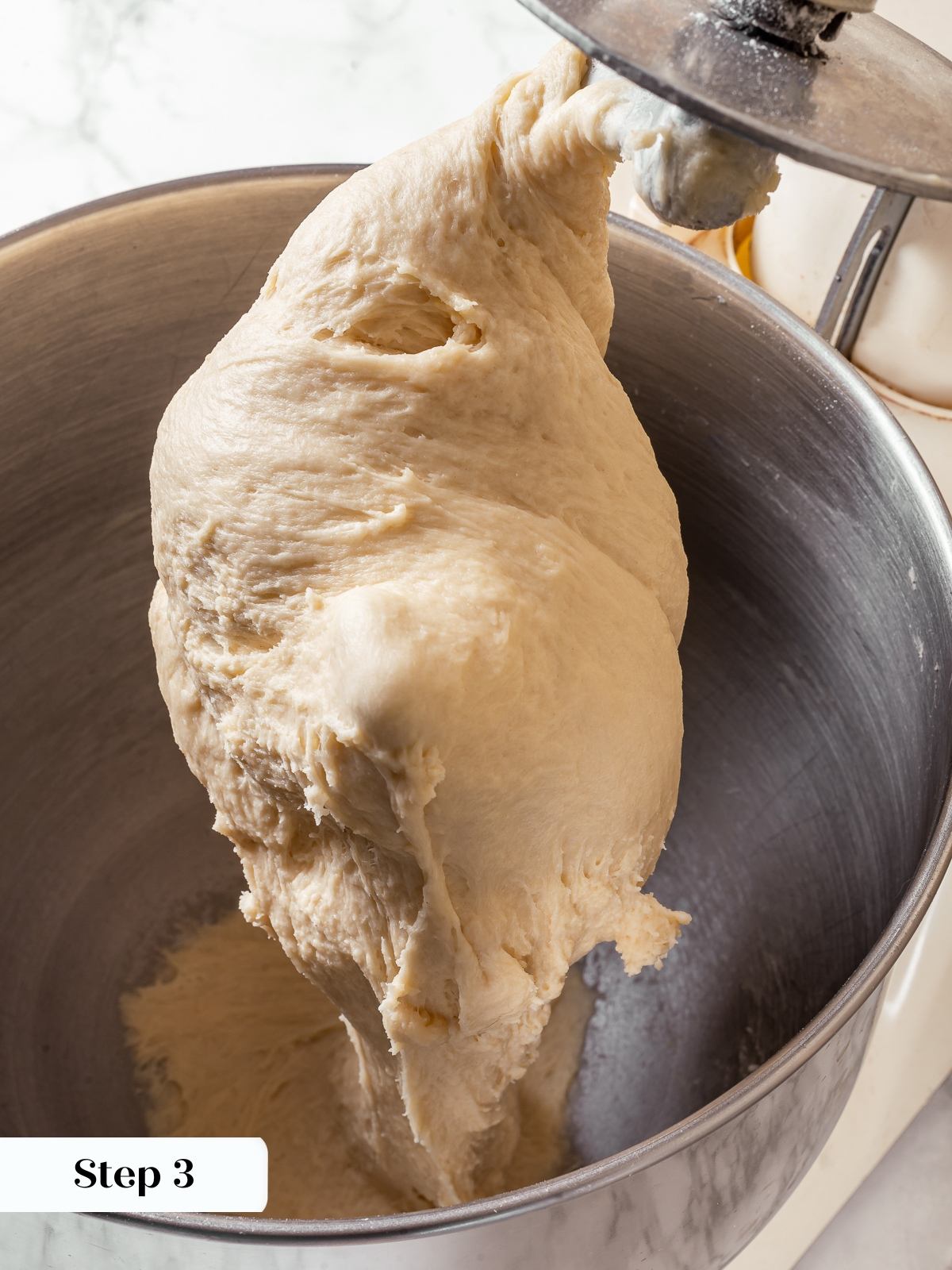
- Don’t worry when the dough sticks to the bottom of the mixer bowl. This is completely normal for milk bread! The dough should clean the sides of the bowl and stretch without tearing when you lift the hook. If it’s pulling cleanly from the bottom, it’s actually too dry.
- Let the rolls proof until they crest over the sides of the pan. This dough needs adequate proofing time to develop that signature cloud-like texture. The tops should be domed and puffed significantly over the edges of your baking dish.
- Don’t overbake these rolls! Even an extra 4 minutes can create an unpleasantly thick crust that detracts from the pillowy texture. Watch them carefully and remove from the oven as soon as they’re golden brown on top.
How to Make Milk Bread Rolls
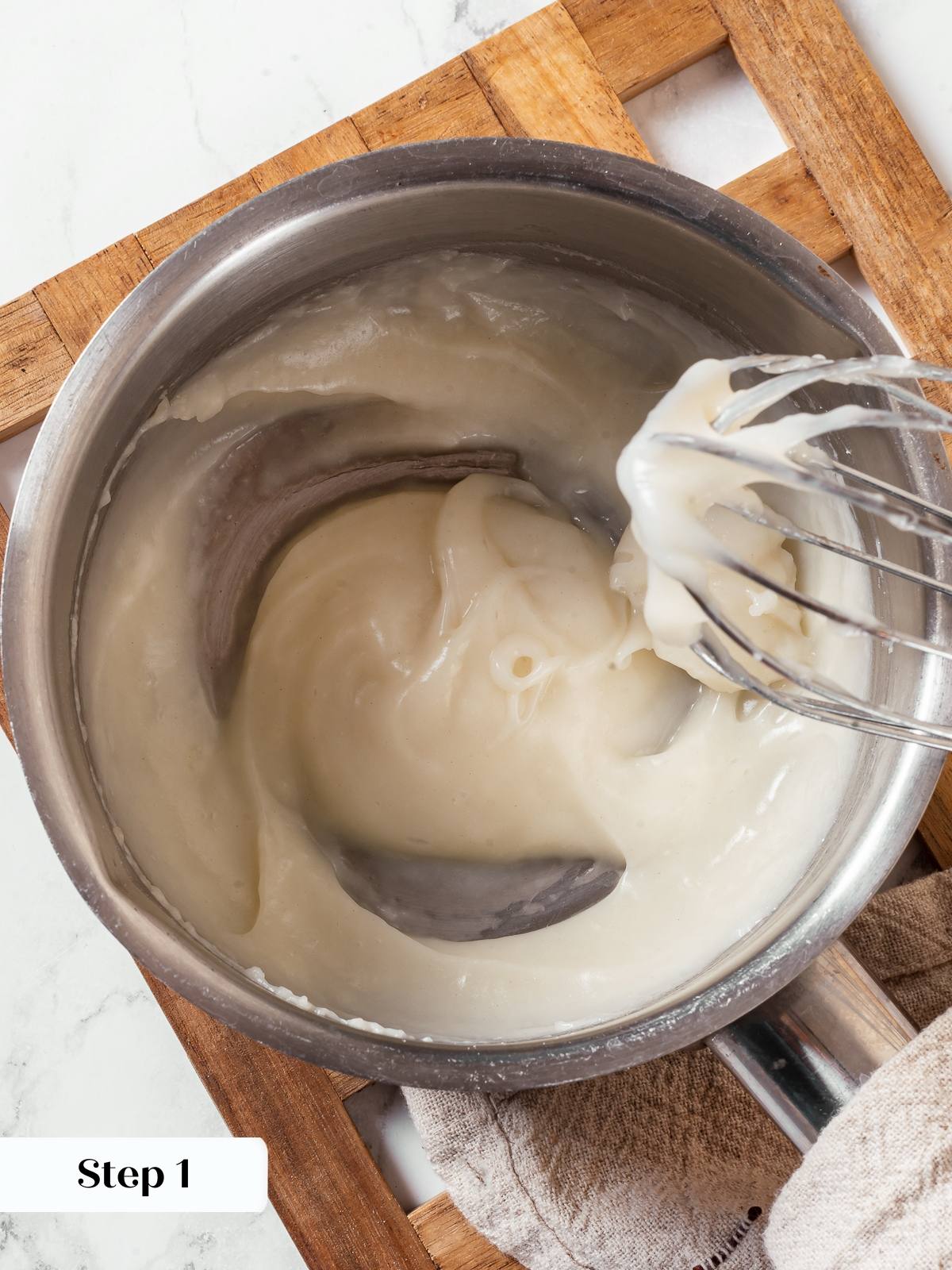
Step 1: Make the Tangzhong. In a small sauce pan, combine water, milk and flour for the Tangzhong. Whisk to combine until no lumps remain and cook on medium heat until the flour hydrates and thickens, whisking constantly. This took about 1 minute. Continue cooking for an additional 1 ½ – 2 minutes to cook out the raw flour taste and also to thicken. Scrape into the bowl of a stand mixer (photo 1).
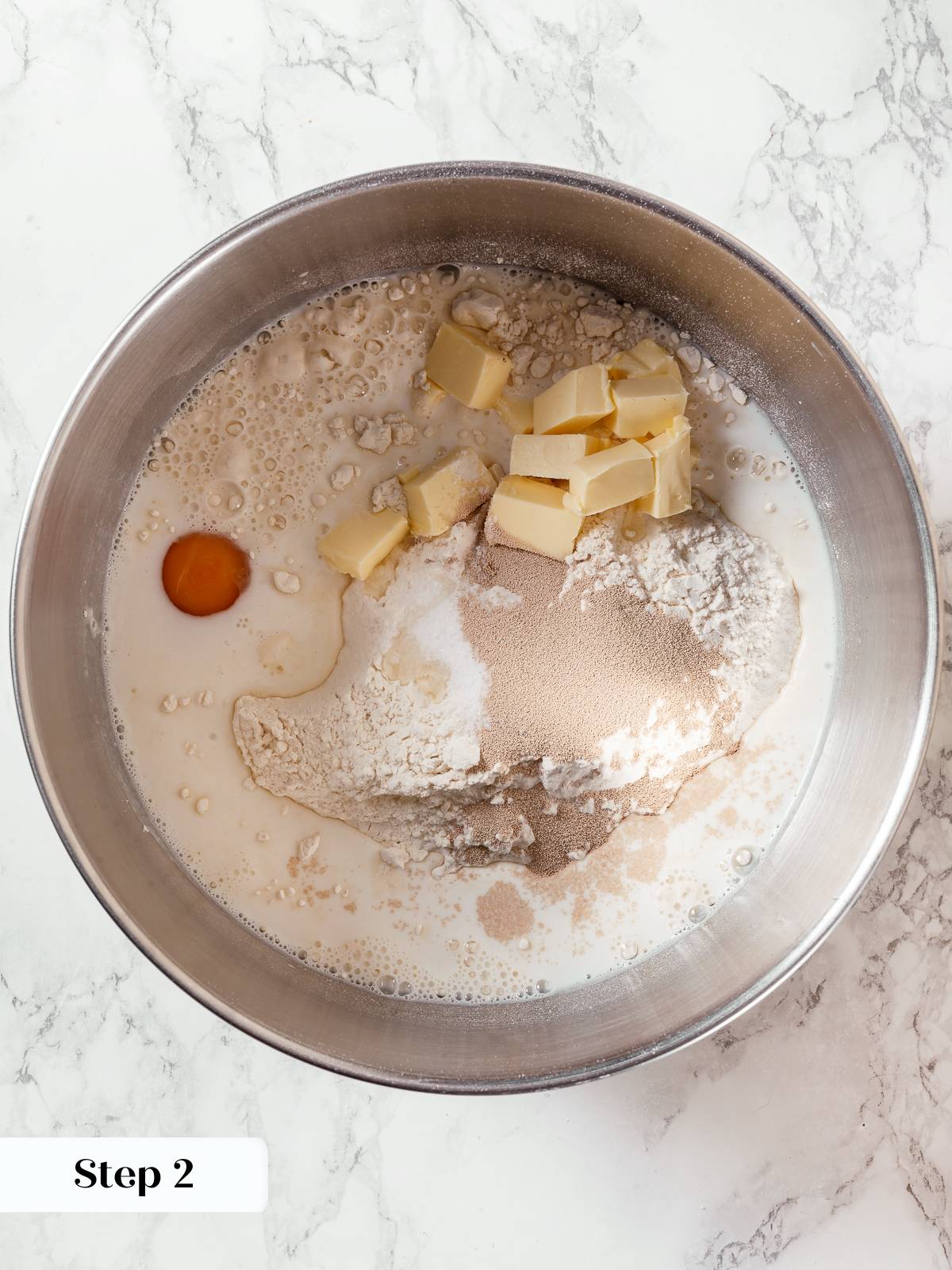
Step 2: Combine the ingredients. To the mixing bowl, add sugar, flour, salt, yeast, milk, butter, and the egg for the dough. I purposefully add them in this order to separate the hot tangzhong from the yeast and egg. By the time all the ingredients are incorporated, it will have cooled and there was no need to wait before mixing (photo 2).
Step 3: Mix the milk bread dough. Fit the stand mixer with the hook attachment and mix on low speed until all the ingredients have incorporated and there are no more visible pieces of butter. Increase the mixer to medium speed and develop gluten for 4 minutes or until the dough pulls a smooth window pane (photo 3).
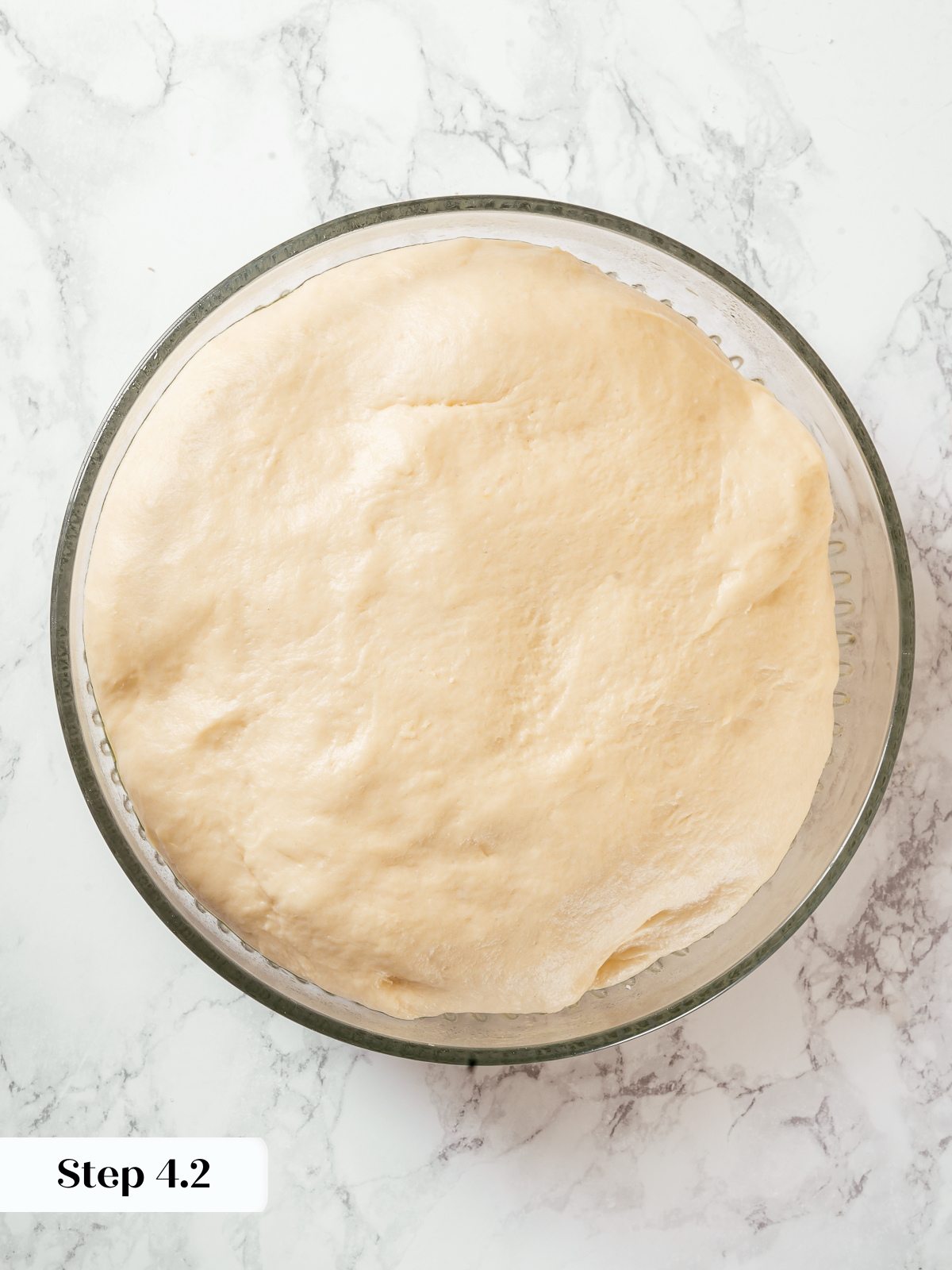
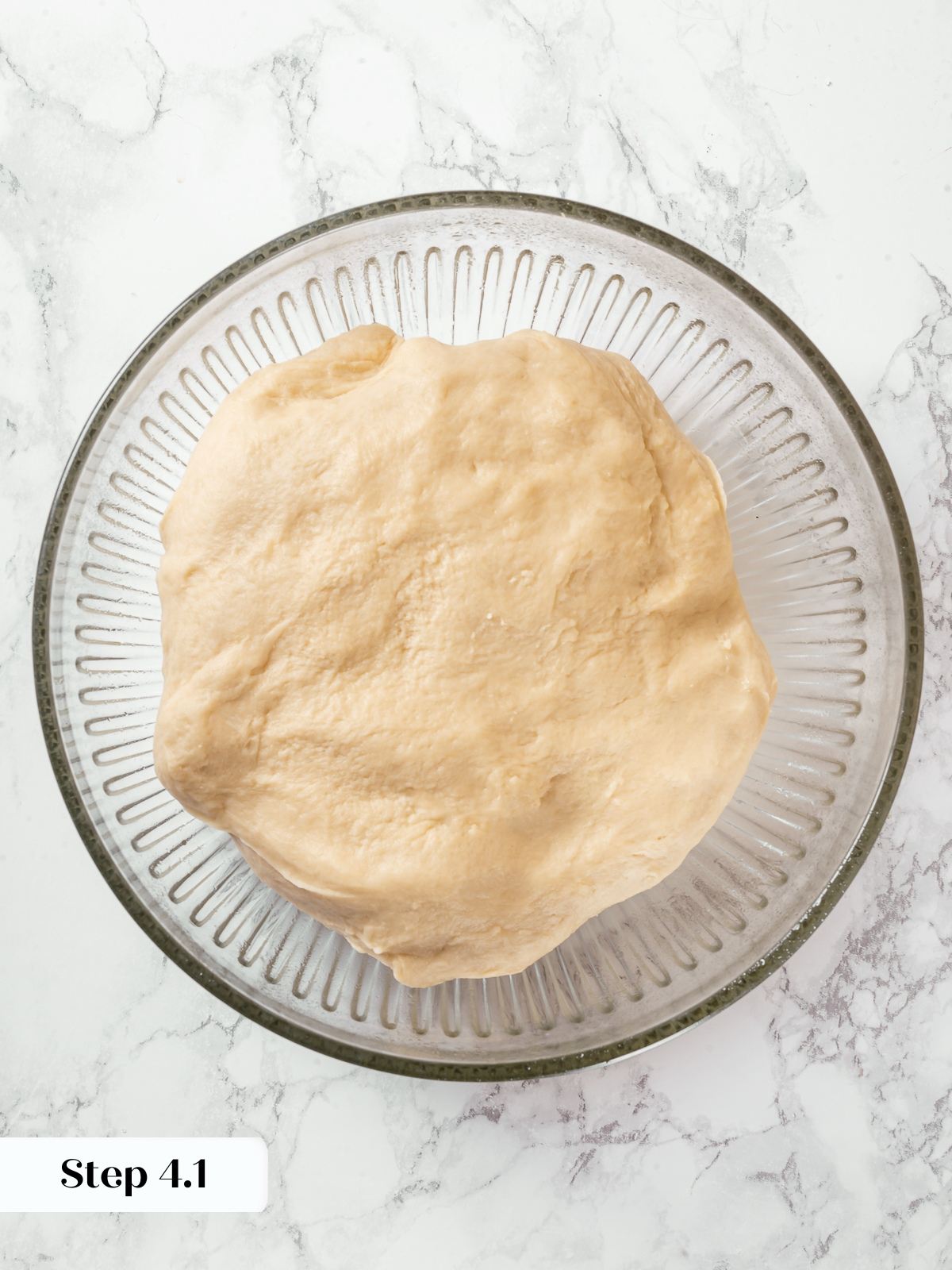
Step 4: Bulk proof (first proofing). Using a bowl scraper, scrape the dough into a large lightly oiled bowl. Bulk proof 1 ½ hours or until doubled and light and airy (photos 4 & 5).
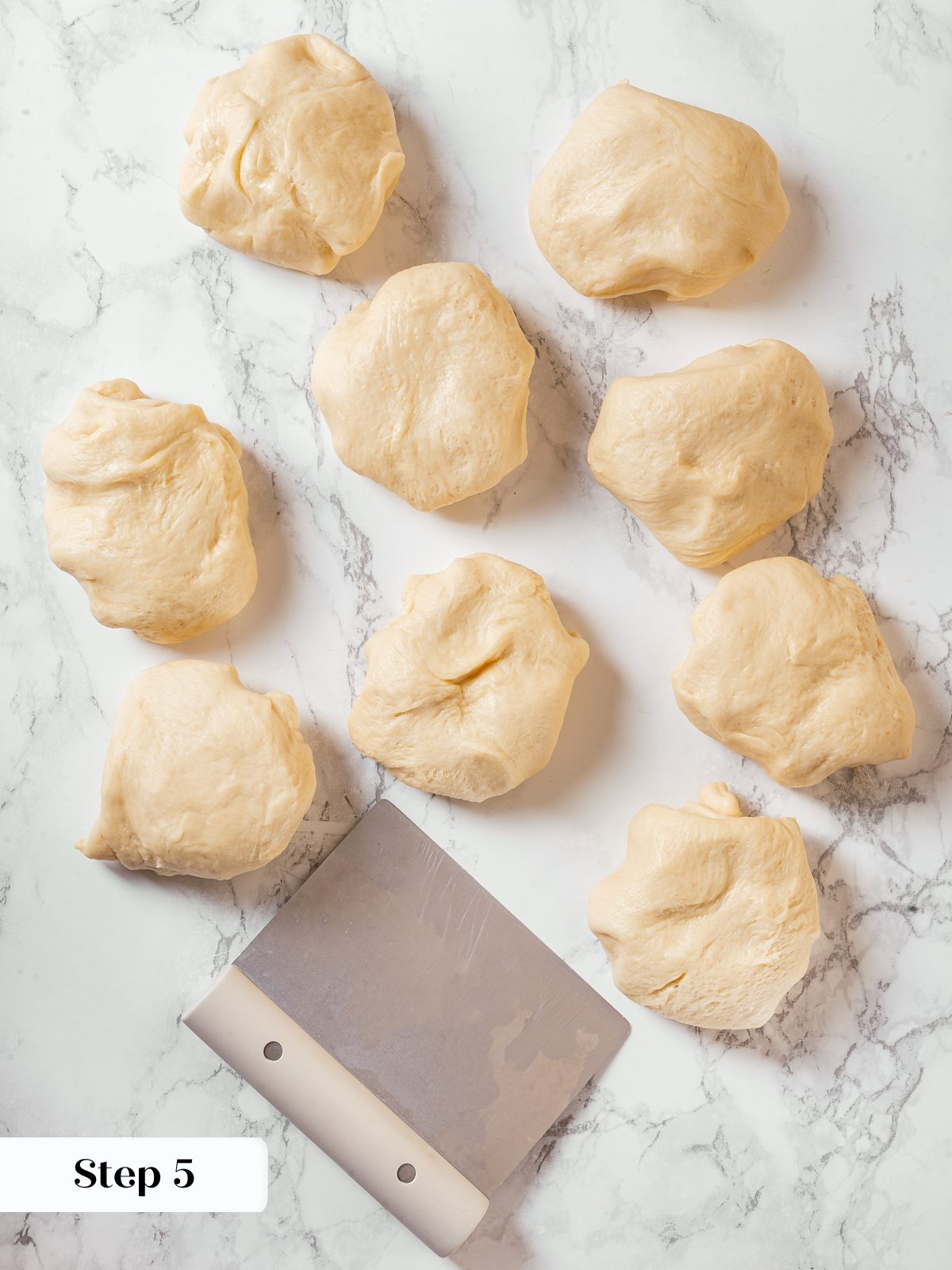
Step 5: Divide the dough. Spray a 9×13-inch baking dish(for 12 rolls) or a 9-inch square dish (for 9 rolls) with non-stick cooking spray or grease with softened butter. Scrape the dough onto a clean work surface and divide it into 9 equal pieces for large rolls (approximately 124 grams each) or into 12 for smaller dinner rolls (93 grams each).
This recipe can also be divided in half and shaped and baked into a loaf pan like my sandwich bread recipe.
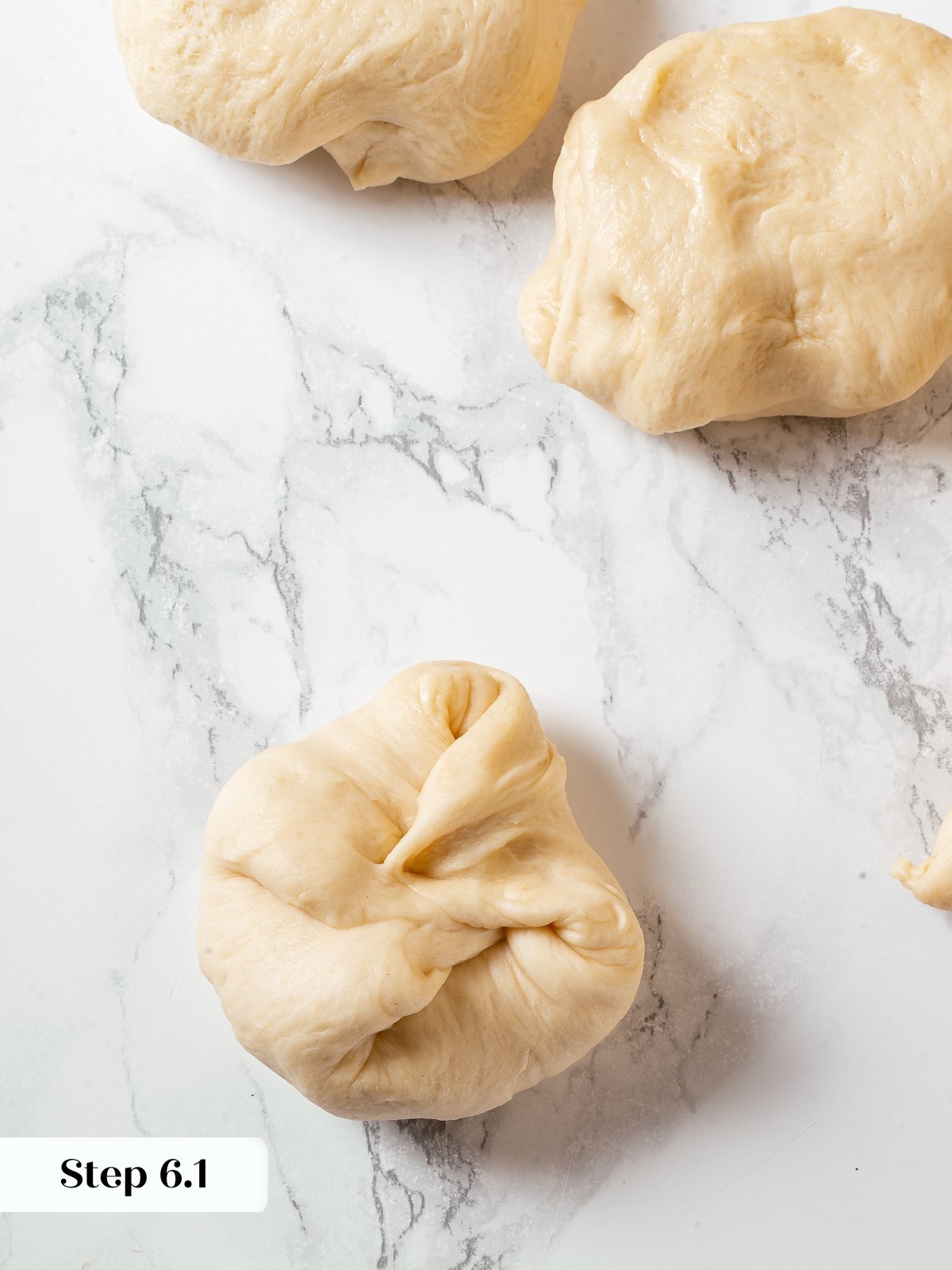
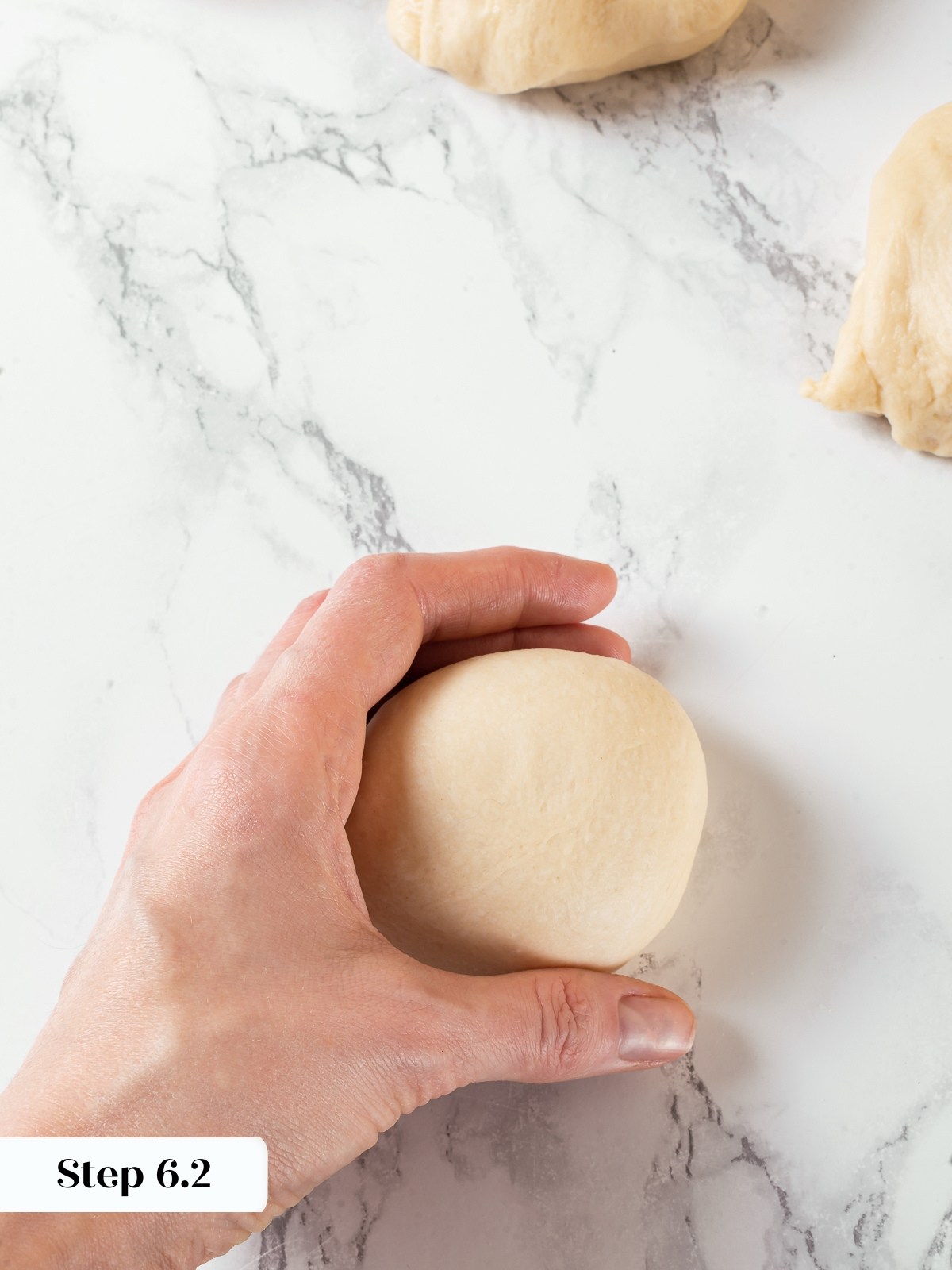
Step 6: Shape the rolls. Shape each piece by folding all the edges into the center, then flip seam-side down. Roll quickly between your thumb and other fingers using a push-pull motion to create surface tension and form a smooth ball. Work quickly to prevent excessive sticking, though this dough isn’t very sticky (photos 6 & 7).
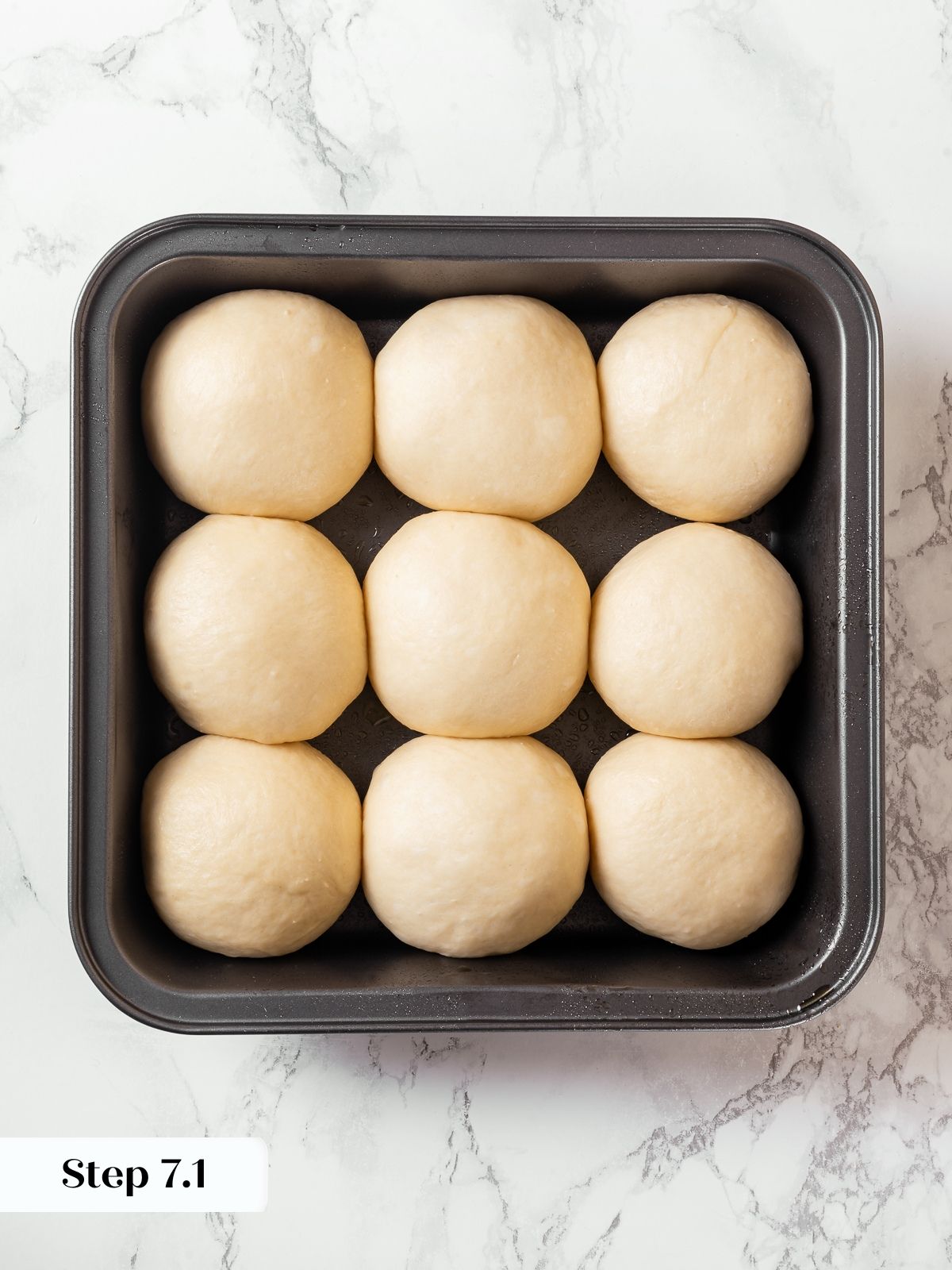
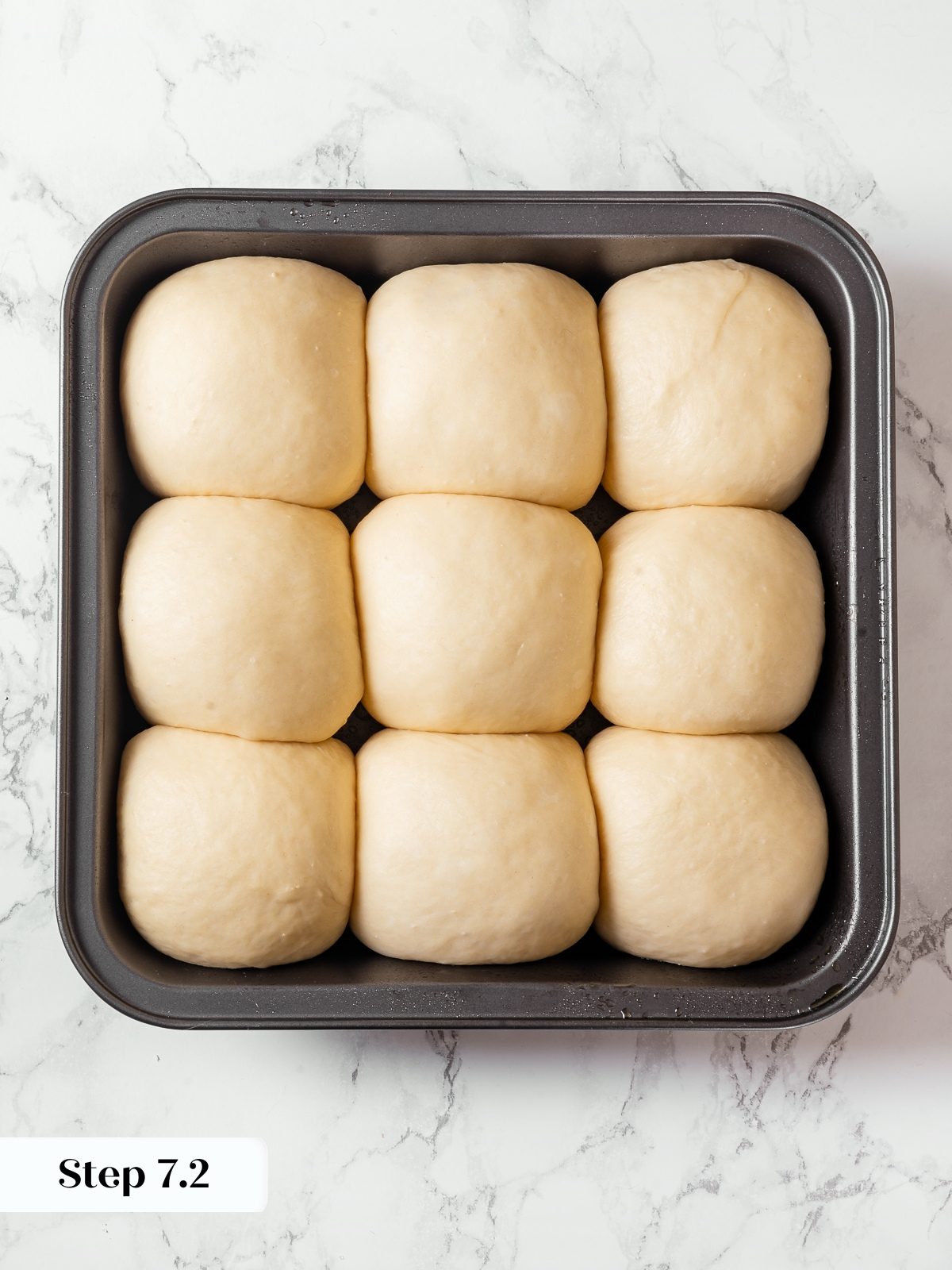
Step 7: Final proof (second rise). Place shaped rolls in the prepared baking dish and repeat with remaining dough. Cover with plastic wrap and proof in a warm spot for 1-1 ½ hours or until the tops of the rolls crest over the sides of the baking dish (photos 8 & 9).
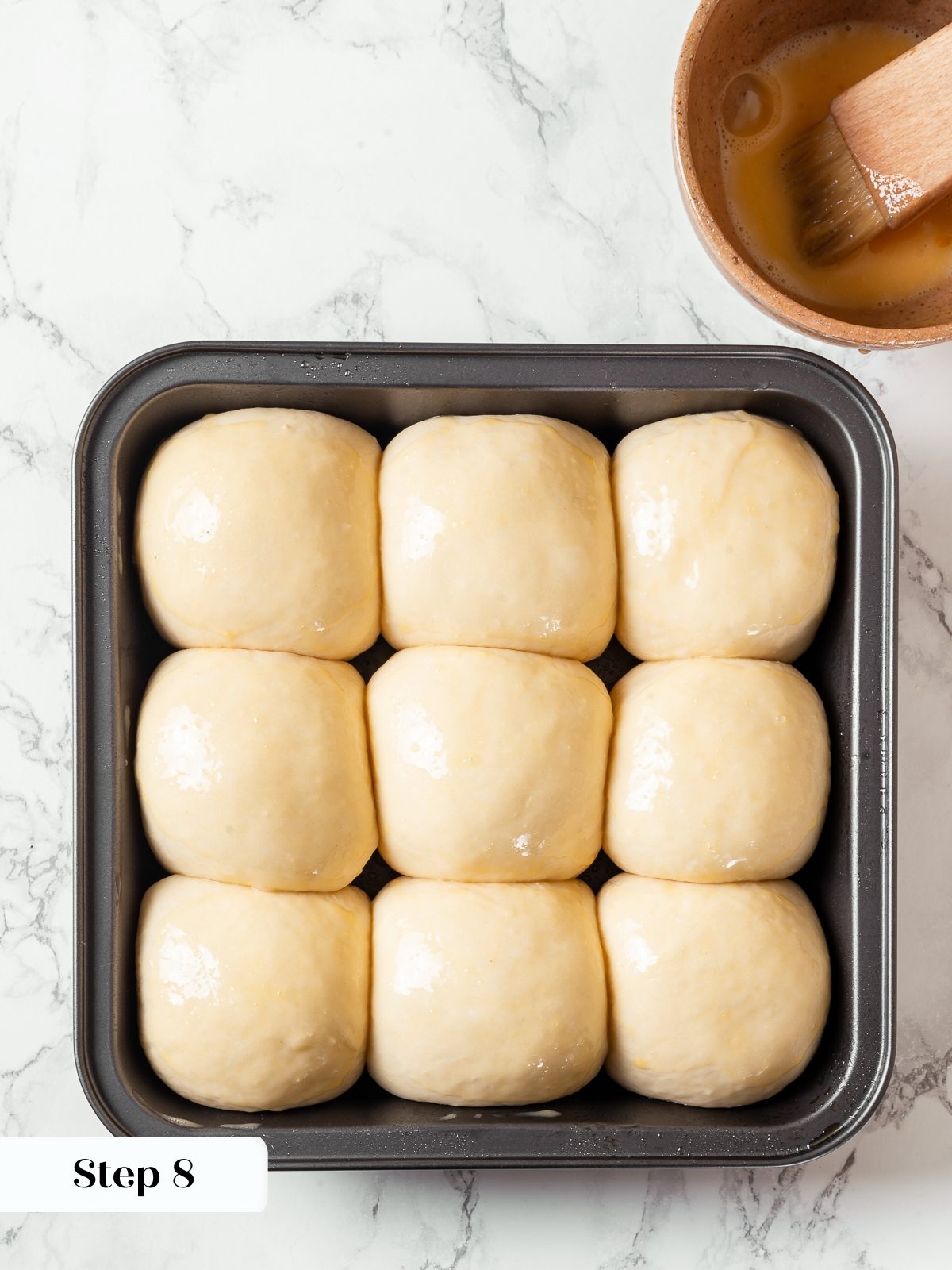
Step 8: Egg wash. Brush the tops gently with beaten egg (photo 10).
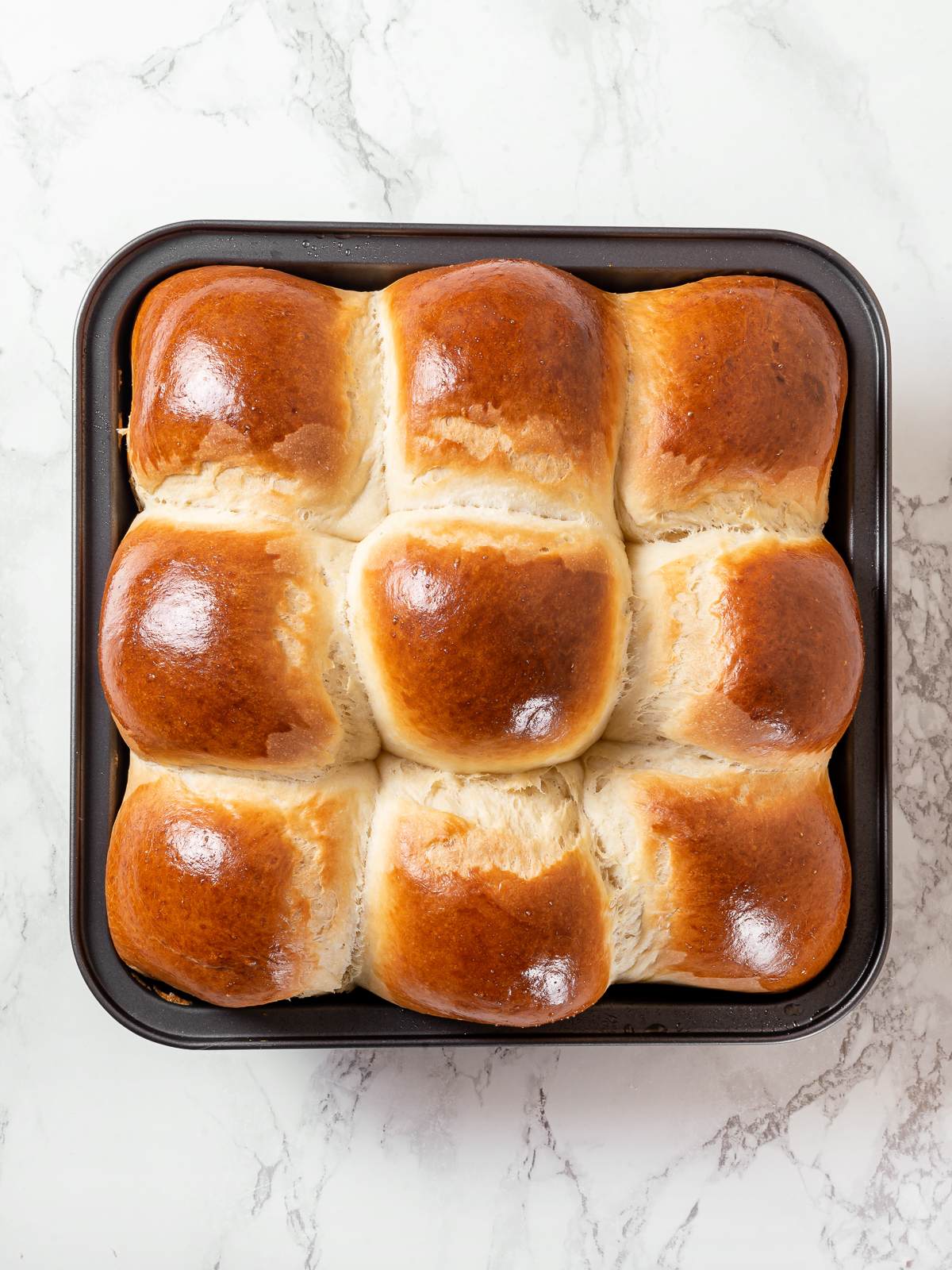
Step 9: Bake. Bake at 350°F conventional (no fan) for 25 minutes for 9 rolls or 20-22 minutes for 12 rolls. The rolls will be a nice golden brown on top (photo 11).
Step 10: Cool & serve. I like to remove the rolls from the pan onto a wire rack to cool quickly and without steaming. Simply turn them out as you would a loaf. You can also cool the rolls in the pan.
Recipe FAQs
While you could skip it and make regular milk bread dinner rolls, the tangzhong is what makes this milk bread recipe uniquely soft and pillowy. It only takes 3 minutes and makes a dramatic difference in texture, so I highly recommend not skipping it!
Many recipes use milk powder and it is listed as a common additive in milk bread; however, in my testing and professional opinion I don’t feel that milk powder adds anything to the flavor or texture of the bread. I feel that it detracts from the pillowy aspect and makes the rolls more dense and almost spongy. It also adds an almost artificial milk flavor.
Store completely cooled rolls in an airtight container at room temperature for up to 5 days. The tangzhong helps them stay soft much longer than regular rolls! For longer storage, wrap well and freeze for up to 3 months. I prefer the texture when stored in the freezer or at room temperature rather than in the fridge.
Recommended Soft Bread Recipes

Yeast Breads

Yeast Breads

Rolls & Biscuits

Yeast Breads
If you enjoyed this recipe, please leave a star rating and let me know how it goes in the comments below! I love hearing from you and your comments make my day!
Milk Bread Recipe
Ingredients
- For the Tangzhong
- 3 tablespoons water, 46g
- 3 tablespoons whole milk, 51g
- 2 tablespoons all-purpose flour, 16g
- For the Dough
- ¼ cup granulated sugar, 57g
- 4 ½ cups all-purpose flour, 558g
- 1 ½ teaspoons kosher salt
- 2 ¼ teaspoons instant yeast
- 1 cup whole milk, 260g, at room temperature
- ¼ cup unsalted butter, cubed (57g)
- 1 large egg, for the dough
- 1 large egg, beaten, for egg wash
Instructions
- In a small saucepan, combine water, milk, and 2 tablespoons flour for the tangzhong. Whisk to combine and cook over medium heat until the flour hydrates and thickens, whisking constantly. This takes about 1 minute. Continue cooking for an additional 1 ½ to 2 minutes to cook out the raw flour taste and thicken further. The mixture should be quite thick, like mashed potatoes.
- Scrape the tangzhong into the bowl of a stand mixer.
- To the mixer bowl with the tangzhong, add sugar, flour, salt, yeast, milk, butter, and one egg for the dough. I purposefully add them in this order to separate the hot tangzhong from the yeast and egg. By the time all the ingredients incorporate, it will have cooled and there’s no need to wait before mixing.
- Fit the stand mixer with the dough hook attachment and mix on the lowest speed until all the ingredients have incorporated and there are no more visible pieces of butter.
- Increase mixer to medium speed and knead for 4 minutes, or until the dough pulls a smooth windowpane. Note: This dough is sticky and will stick to the bottom of the bowl. It should clean the sides of the bowl and not tear when the hook is raised from the bowl. This is normal!
- Using a bowl scraper, scrape the dough into a large lightly oiled bowl. Cover and bulk proof for 1 ½ hours, or until doubled in size and light and airy.
- Scrape the dough onto a clean work surface and divide it into 9 pieces for large rolls (approximately 124g each) or 12 pieces for standard dinner rolls (approximately 93g each). This recipe can also be divided in half and shaped into loaves just like sandwich bread.
- Shape each piece into a roll by folding the edges into the center, flipping seam-side down, and using a push-pull motion to create a smooth ball. Place shaped rolls in a greased 9×9-inch square pan (for 9 rolls) or 9×13-inch rectangular pan (for 12 rolls).
- Cover and final proof for 1 to 1 ½ hours, or until the tops of the rolls crest over the sides of the baking dish. Meanwhile, preheat the oven to 350°F conventional (no fan).
- Gently brush the tops with beaten egg (egg wash).
- Bake at 350°F for 25 minutes for 9 large rolls or 20-22 minutes for 12 smaller rolls, until the rolls are a nice golden brown on top. Don’t overbake or the crust will become too thick!
- Remove from oven and let cool slightly before serving. These are best served warm or at room temperature.
Notes
Nutrition
Nutrition information is automatically calculated, so should only be used as an approximation.
 Like this recipe? Rate & comment below!
Before You Go
I hope you enjoyed this incredibly soft milk bread recipe! Check out our other delicious yeast bread recipes or find your next bake in our rolls and biscuits recipes!



These milk bread rolls were unbelievably soft and fluffy. The tangzhong made the texture so pillowy, and they disappeared from the table almost instantly. I’ll definitely be making another batch soon.