
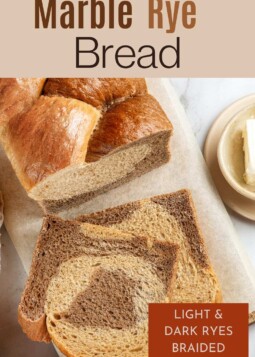
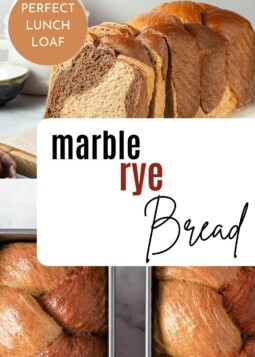
A soft, marble rye bread recipe that is easy enough for beginners! It has a light rye flavor and tender texture. Step-by-step instructions with photos on how to braid light and dark rye doughs for the perfect sandwich bread!
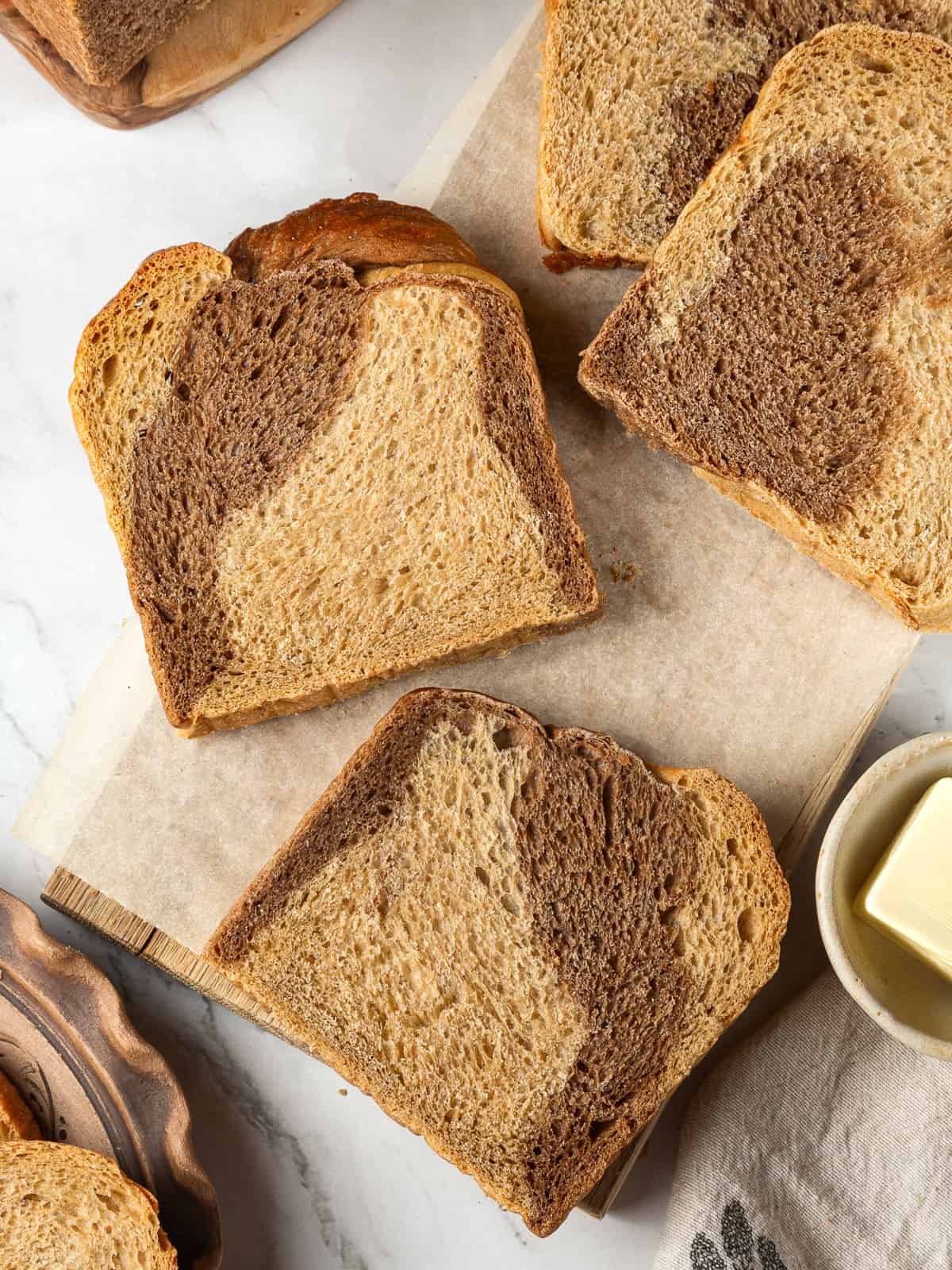

A Quick Look At The Recipe
This is a brief summary of the recipe. Jump to the recipe to get the full details.
Prep Time
30 minutes
Cook Time
45 minutes
Proof
1 hour 30 minutes
Total Time
2 hours 45 minutes
Servings
24 slices
Difficulty
Intermediate
Calories *
182 kcal per serving
Technique
Make dough, divide in half, and mix cocoa, proof, then braid before baking.
Flavor Profile
Soft, mildly earthy rye flavor balanced with molasses and butter.
* Based on nutrition panel
Wow. My first attempt at rye was an utter failure and this was just the polar opposite. I’m honestly stunned I made this so successfully. I made the marbled loaf by rolling the doughs together, and it’s also great-looking. I’ve already recommended this recipe.⭐⭐⭐⭐⭐
Katja Beh-Forrest
Why You Will Love this Recipe
- Soft, flavorful marble rye bread. A little butter and molasses gives this sandwich bread a soft, tender crust and crumb.
- One rye bread recipe, divided. For major time savings, make this bread in one batch in a stand mixer. Half the dough is made darker with cocoa powder. If you are mixing by hand or in a stand mixer 5 quarts or smaller, you might consider incorporating the ingredients together, but kneading the light and dark rye doughs separately.
- A versatile bread even beyond sandwiches & toast. Yes, it is true that marble rye bread makes a fantastic Reuben and uplevels avocado toast, but this bread is also the perfect pair for reuben dip, pulled pork, homemade croutons, and more!
- Tested & updated by a professional pastry chef. The original instructions had the dark dough and the light dough mixed & kneaded separately even though the only difference was the cocoa powder. I have streamlined the instructions and improved the recipe for the home baker.
Nothing compares to home-baked rye bread, and if it’s marbled (or in this case, braided), all the better. The combination of light and dark rye flavors can’t be beat. I love it with eggs, grilled cheese, and sandwich bread! It is particularly lovely with tuna or egg salad.
This marble rye bread recipe makes a lower hydration dough, very similar in stiffness to my pumpernickel bread, which means it can be a challenge for stand mixers to knead. Rye flour is partially to blame for this because it hydrates differently than white wheat flour, so what seems like a perfect dough during mixing, would become unmanageable and sticky after proofing.
Ingredients & Substitutions
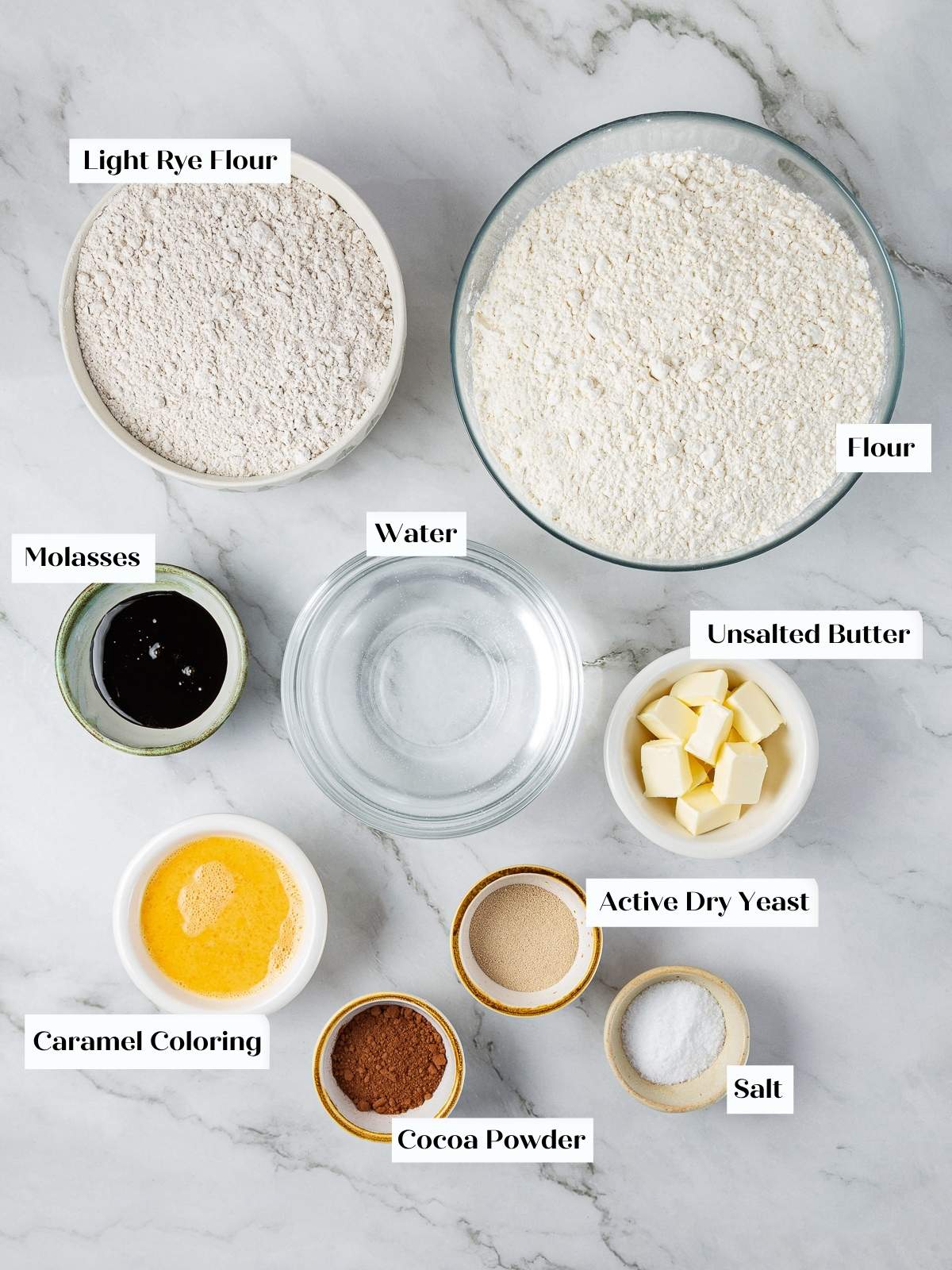
- Rye Flour: The original recipe calls for light rye flour, but I prefer the taste and texture of medium rye flour.
- Bread Flour: I use bread flour in combination with rye flour because of the added gluten. Rye flour only contains the gluten protein gliadin and not glutenin. Glutenin is the protein that creates the elasticity in dough. Both proteins weave together to form a network that is elastic and will trap the gas produced by yeast. Rye flour, though high in gluten, will not produce this network without wheat flour.
- Active Dry Yeast: I prefer active dry yeast in this recipe for a slower, more consistent rise. You could substitute instant yeast, but watch the proofing at each stage because it will be twice as fast.
- Molasses: Molasses adds a hint of sweetness and also softens the bread, but there is not nearly as much as steakhouse-style pumpernickel bread.
- Butter: Softened, unsalted butter or shortening soften the crust and crumb, making this a delightful sandwich bread! You could also use vegetable oil.
- Unsweetened Cocoa Powder: Half of the dough is colored with cocoa powder mixed with water, but you could also use 1 tablespoon liquid caramel coloring instead.
See the recipe card for full information on ingredients and quantities.
Variations
- No braid, no problem: While this recipe is for marbled rye, you could also bake each loaf separately like my white sandwich bread recipe and rye bread recipe, or just make 2 loaves without the additional cocoa powder.
- Add caraway seeds: If you enjoy the anise flavor of caraway seeds, add up to 2 tablespoons to the dough before incorporation. You could also add additional mix-ins like dried fruit and nuts like I do in this raisin walnut pumpernickel bread.
- Swirl the dough instead of braiding. When it comes to bread, “marbled” really means “swirled.” If you would like to swirl this recipe then simply divide the dark and light dough into halves, and roll out each piece (4 total) using a rolling pin until they are approximately 5 inches by 8 inches. Stack the dark on top of the light (2 pieces per loaf) and roll up tightly like cinnamon swirl bread. Place in greased loaf pans and proceed with the recipe as written.
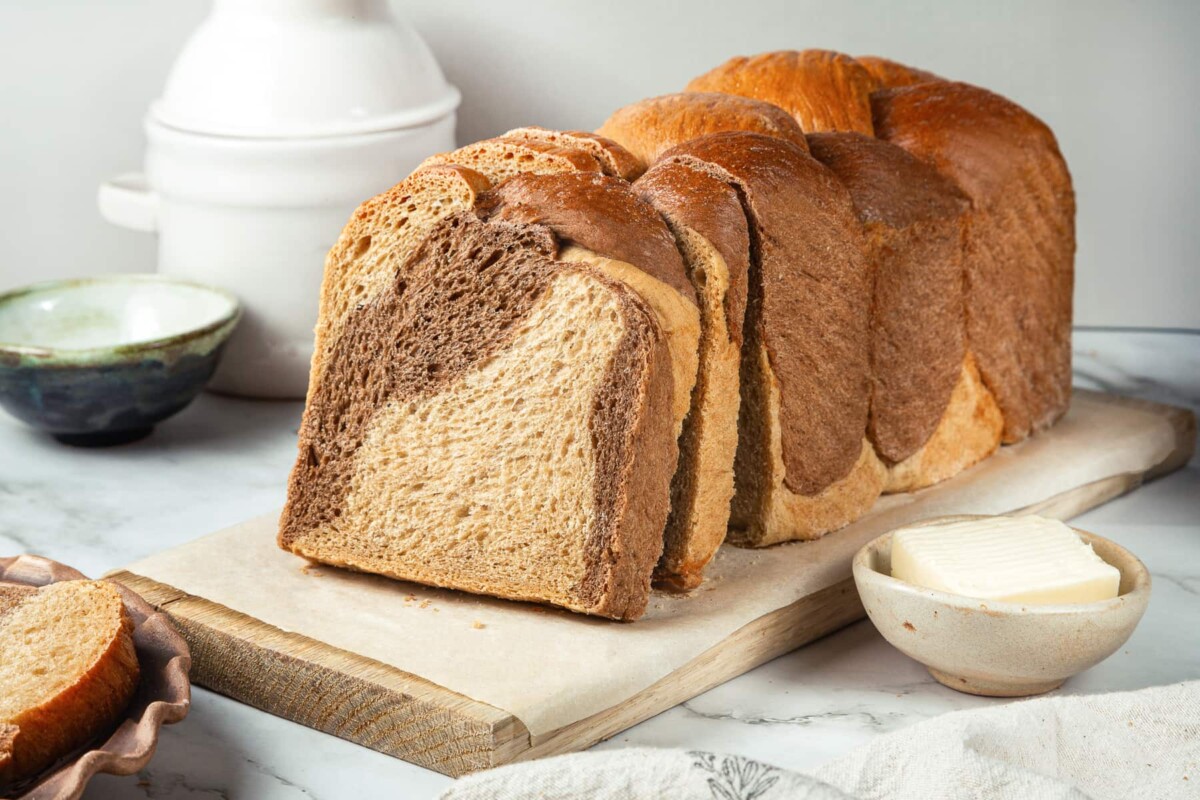
Pro Tips for Braided Rye Bread
- You really need to listen to your mixer, and if it is struggling, just let the dough develop gluten while it proofs. My 5 quart Kitchen Aid was unable to knead the combined recipe, but was able to develop half at a time.
- This is a low hydration dough and every brand of rye flour is different. This means your dough might be stickier than mine or it might be more stiff. All you can do is your best at this juncture and then try a small tweak next time. But don’t kill your mixer in the process! When in doubt, stop.
- Unlike braided challah bread, I do not pre-shape the strands before rolling. This dough is too stiff and it is unnecessary. I simply divided it into quarters and then rolled each one out.
- Don’t let the strands get too long. Remember that you are going to be placing this loaf in a standard loaf pan, so short and fat is better than long and skinny. My first test of the original recipe was too long and I had to fold it under to fit it in the pan.
How to Make Marble Rye Bread
Use these instructions to make soft marble rye bread! Further details and measurements can be found in the recipe card below.
Make both the light and the dark rye dough together:
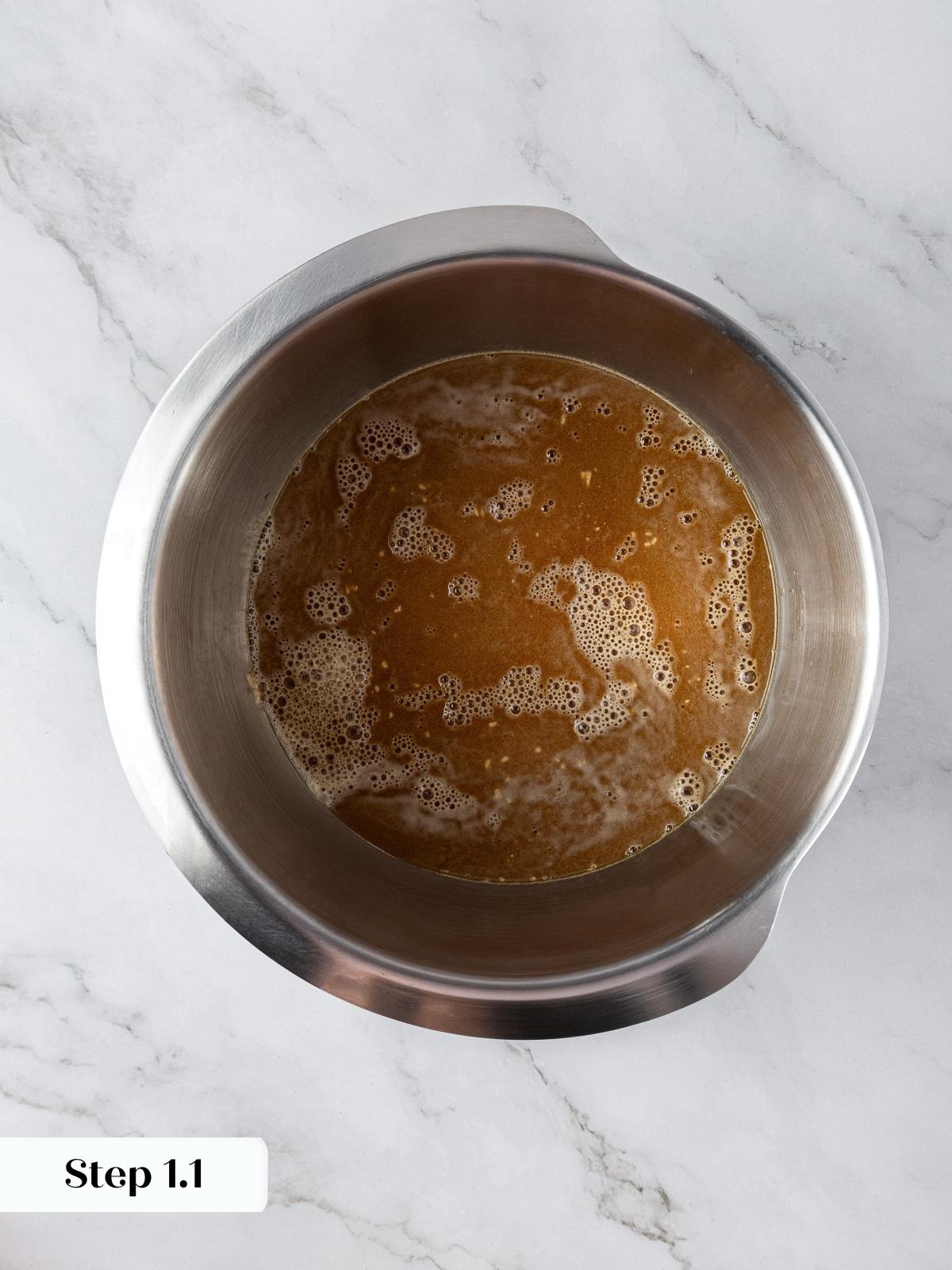
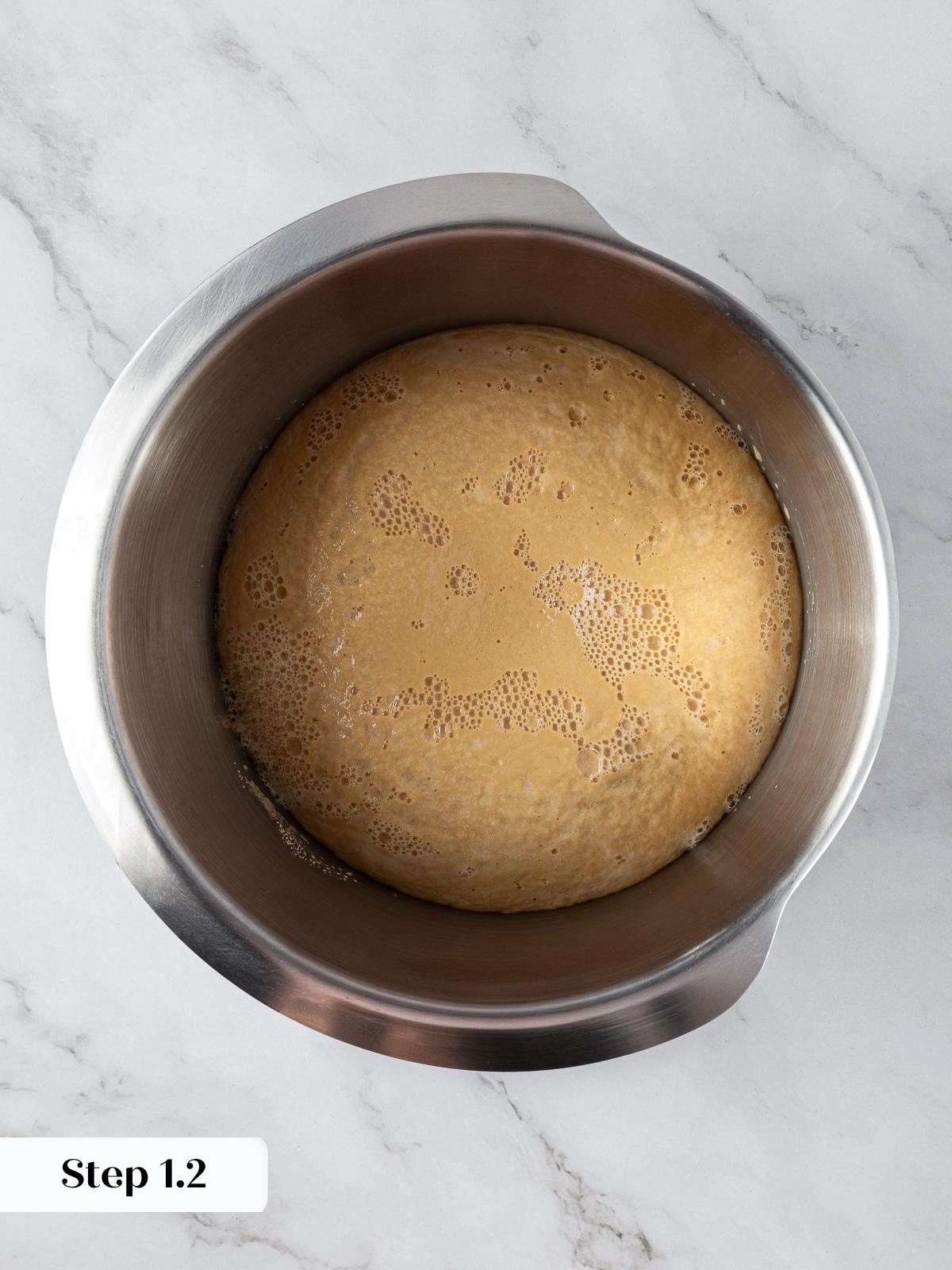
Step 1: Bloom yeast. In a large bowl or in the bowl of a stand mixer, whisk together molasses, yeast and water. Let sit until foamy (photos 1 & 2).
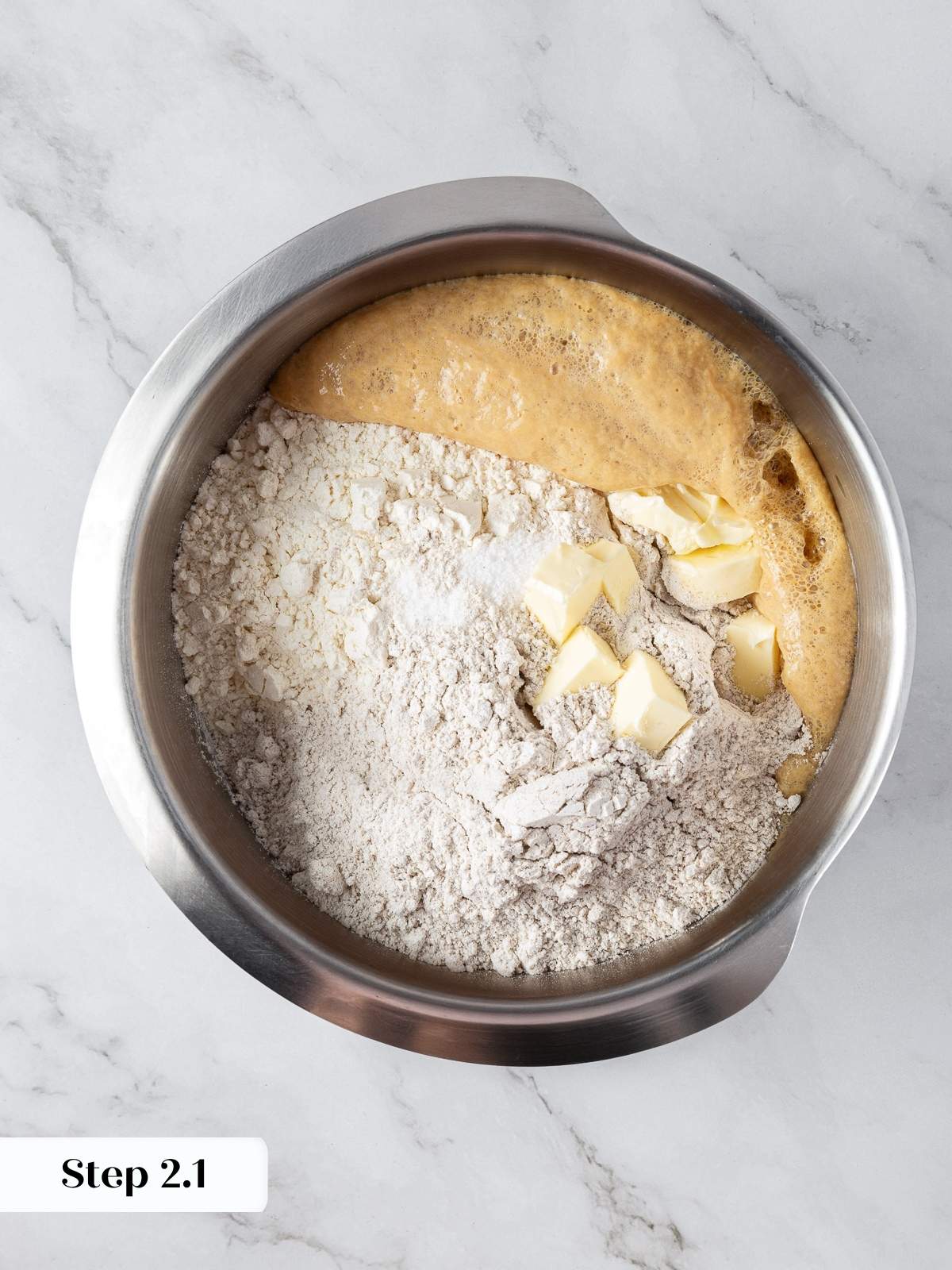
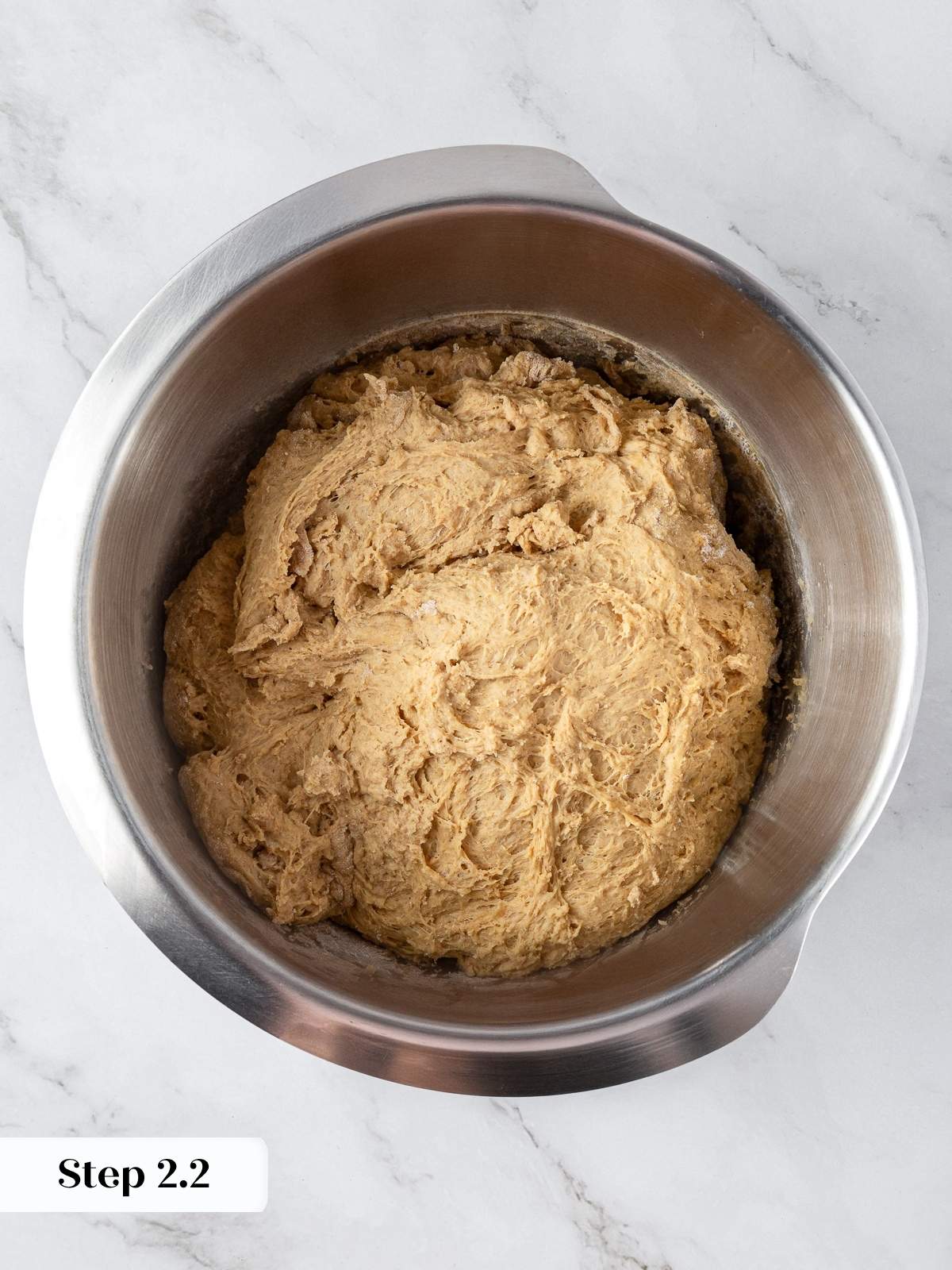
Step 2: Mix dough. Add rye flour, bread flour, butter (or shortening) and salt to the yeast mixture, stir to incorporate either with a wooden spoon or the dough hook attachment in a stand mixer on low speed (photos 3, 4, & 5).
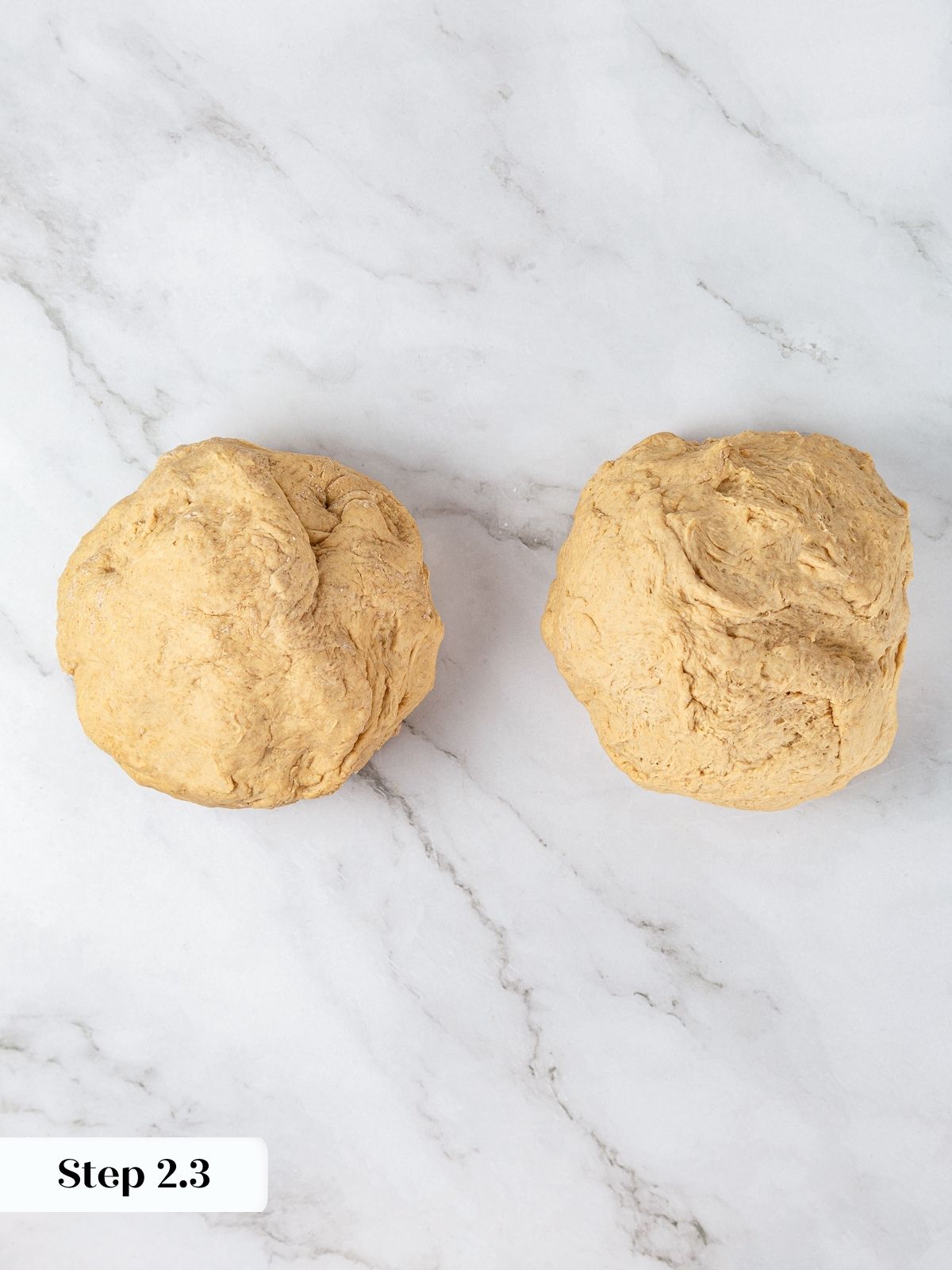
Divide the dough in half, leaving ½ in the stand mixer. Increase the speed to medium (or as close to medium as your mixer will tolerate with a stiff dough), and knead with the dough hook attachment until the dough is smooth and elastic and tacky but not sticky, about 3-4 minutes. Place in a lightly oiled bowl and cover with plastic. Set aside to proof.
To knead by hand: place dough on an unfloured surface and knead until dough is smooth and elastic and tacky but not sticky, about 5-6 minutes.
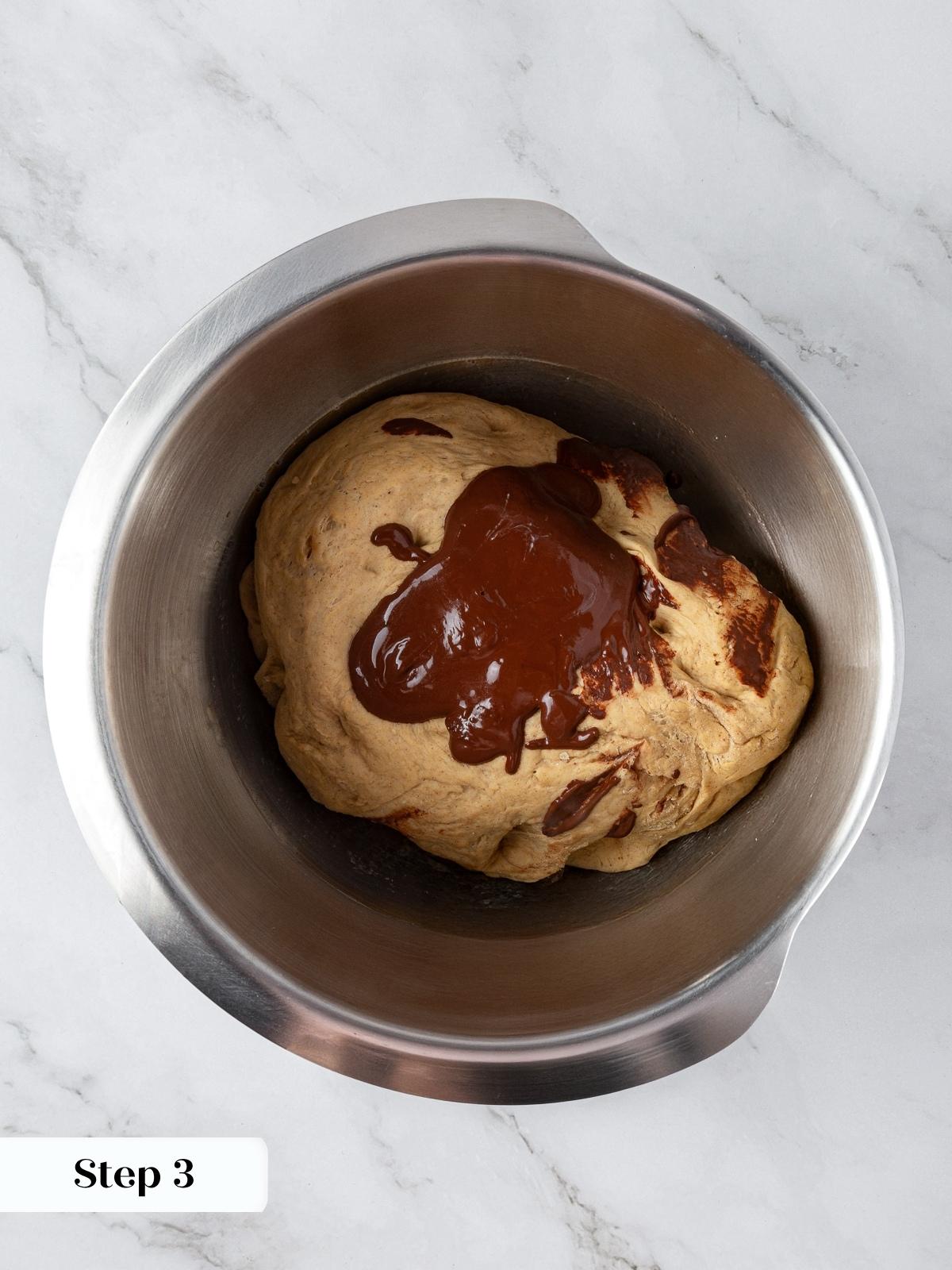
Step 3: Place the other half of the dough in the stand mixer. Add the cocoa powder dissolved in water, mix on the medium-low speed to incorporate the cocoa powder mix and develop gluten at the same time. I just took my dough out after the cocoa powder had mixed in: It took 4 minutes. It will eventually incorporate; some streaks are fine. Place in a separate, lightly oiled bowl, and cover with plastic (photo 6).
Think of this as a take on the “doppio impasto” technique where you add additional water after the gluten has developed like in my sourdough focaccia recipe.
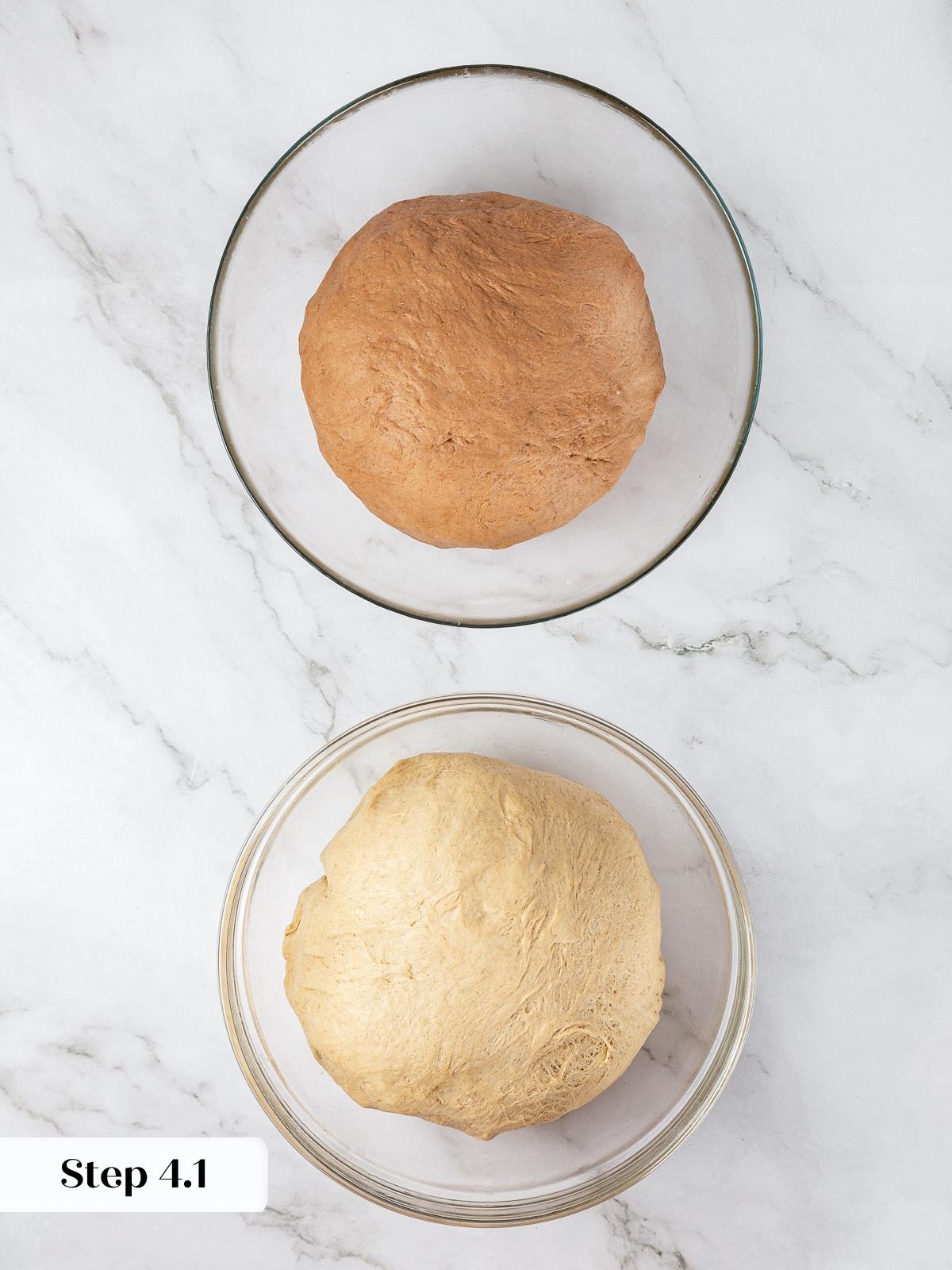
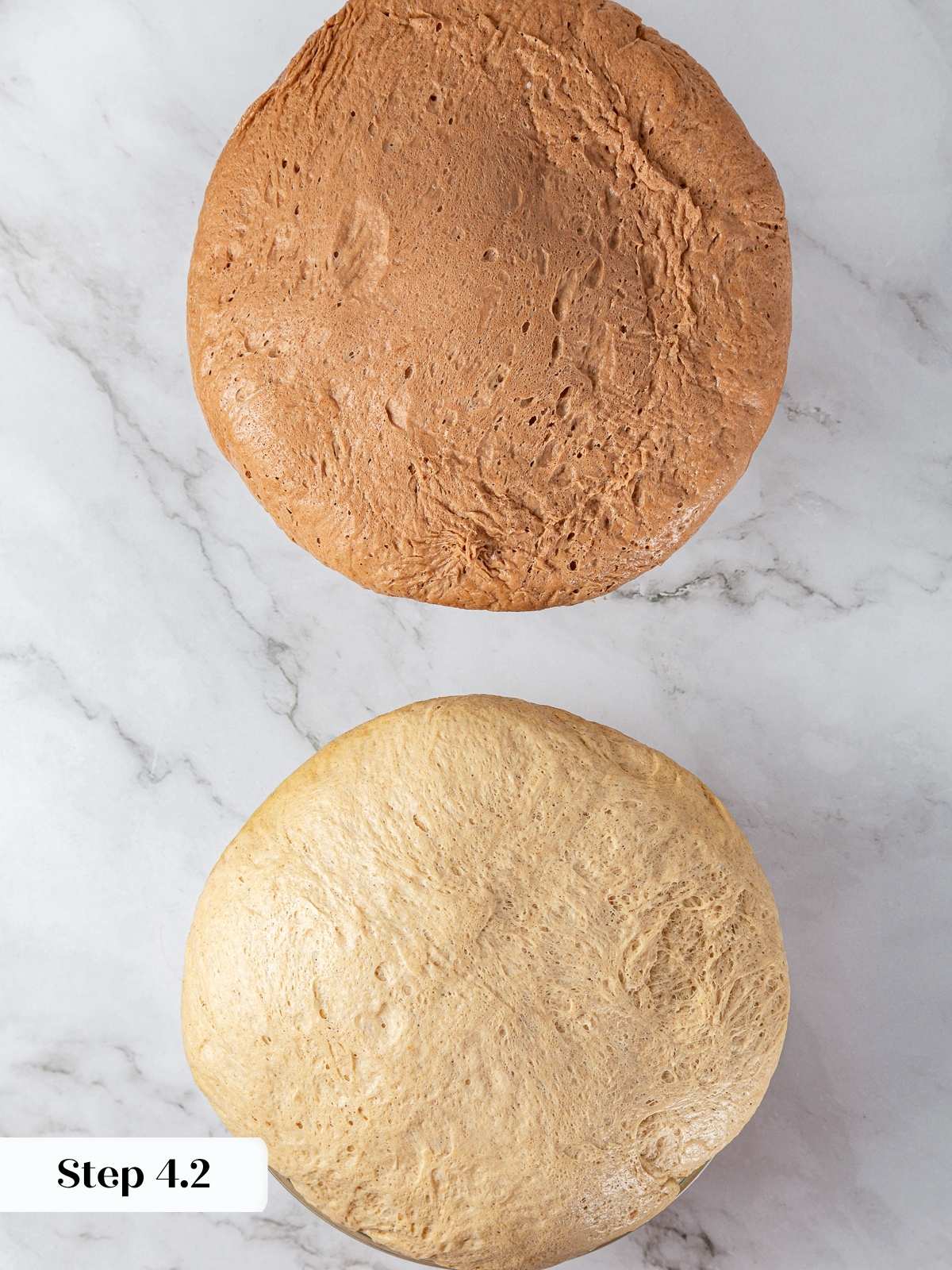
Step 4: Proof the doughs. Let rise until doubled, about 1 ½ hours (photos 7 & 8).

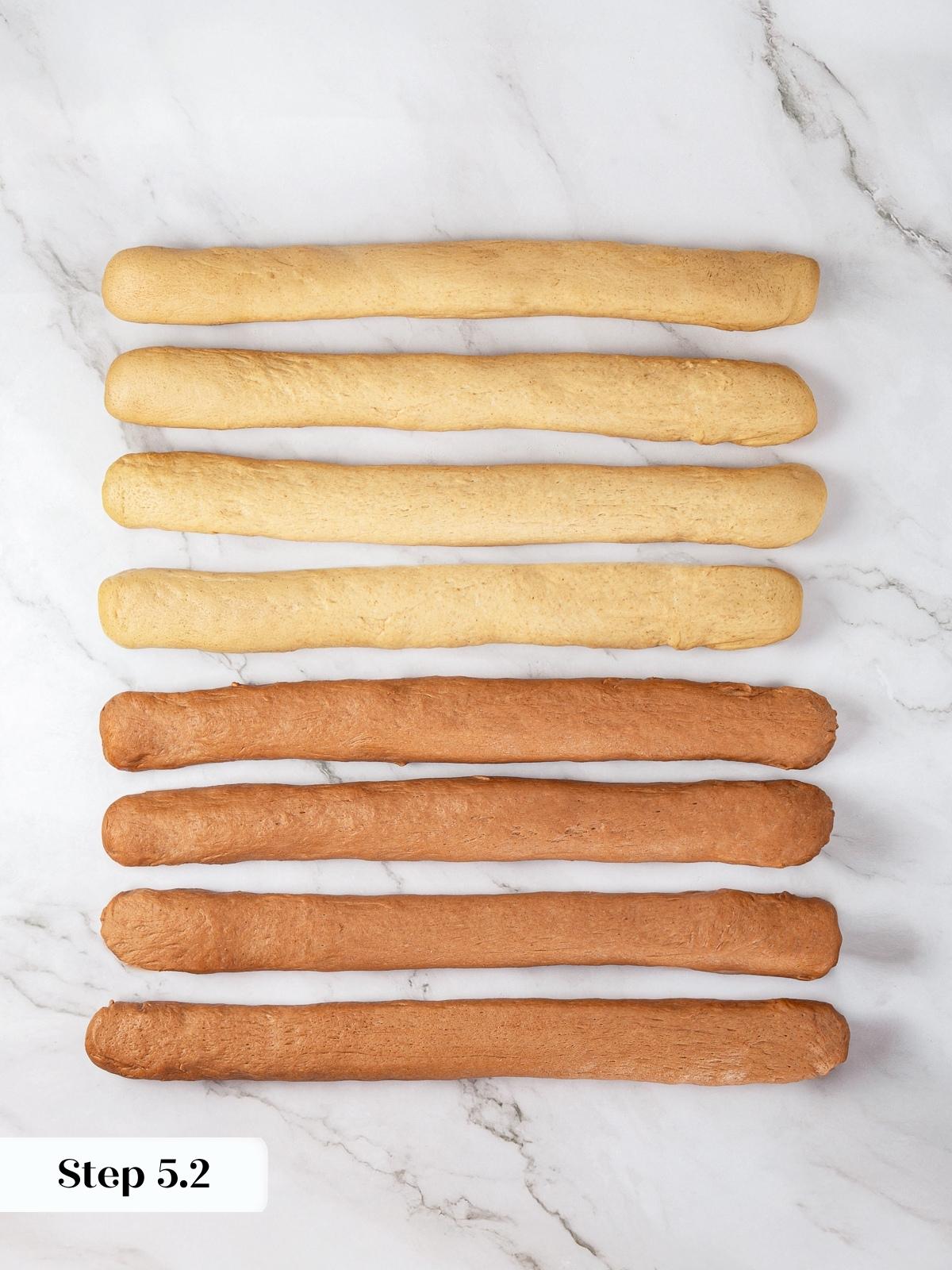


Step 5: Shape. When both doughs are risen, punch doughs down gently to degas, remove from bowls and place on an unfloured surface. Divide each piece equally into fourths; roll out each piece into a 10-inch log (photos 9 & 10).
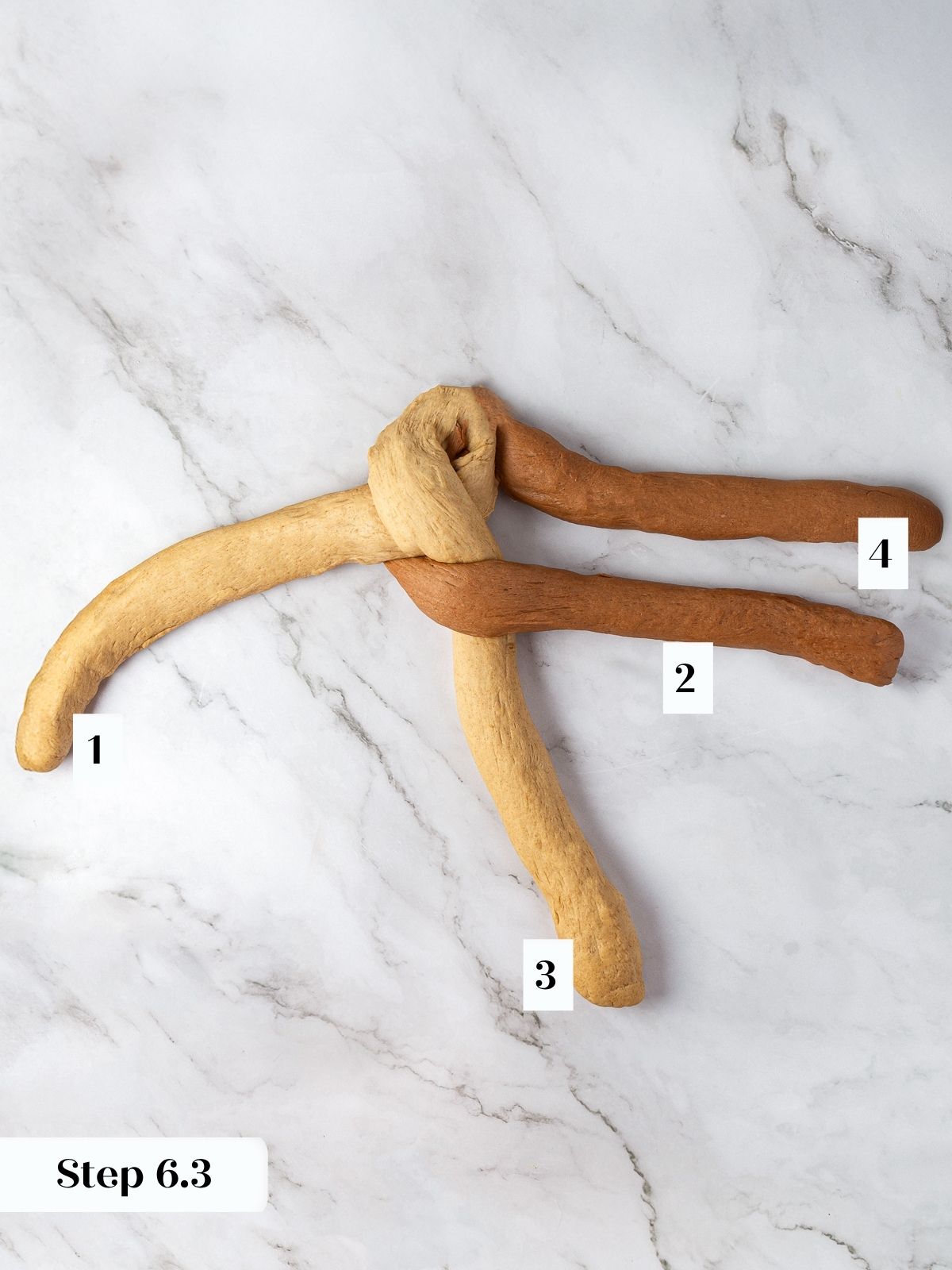


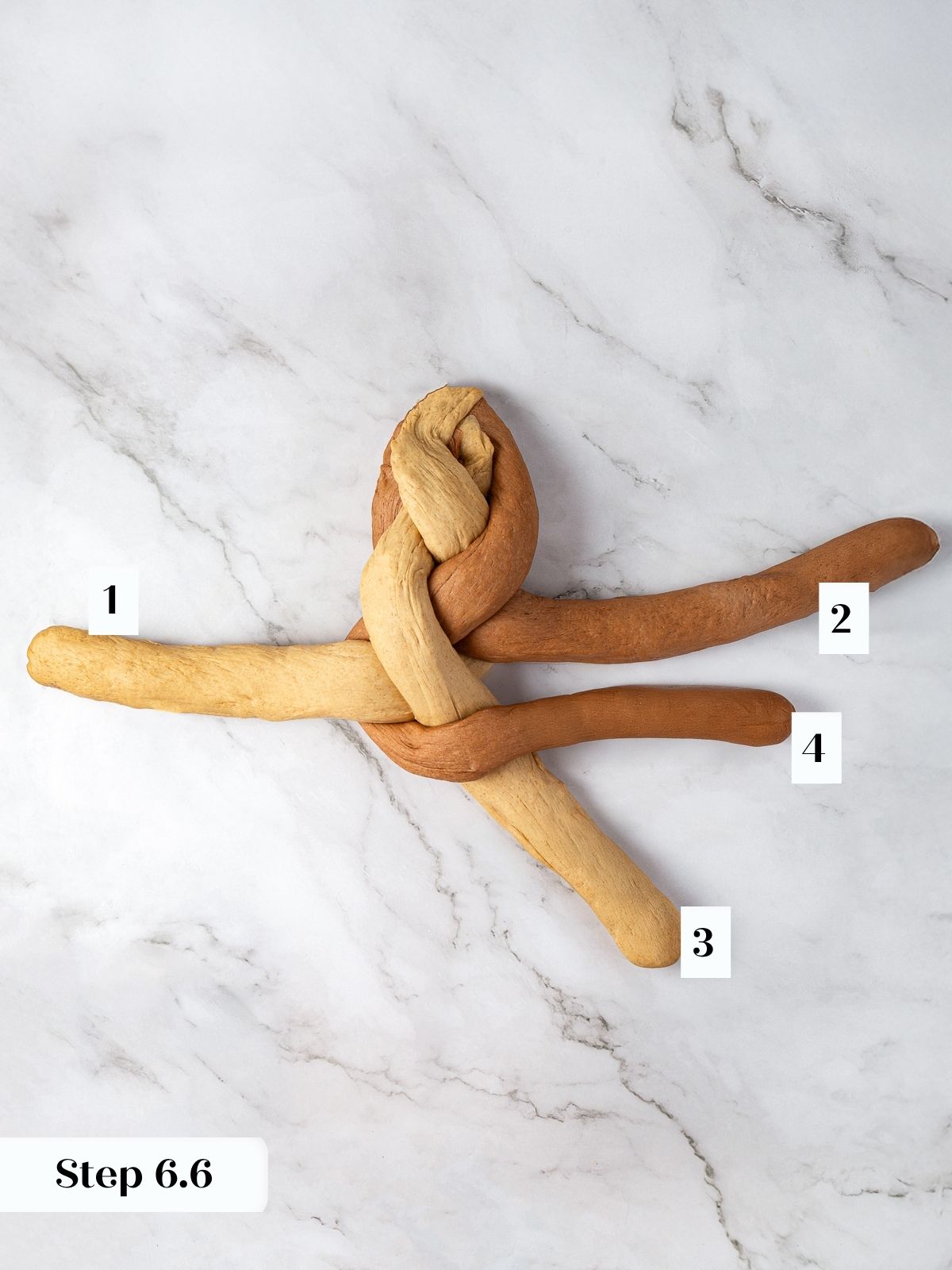

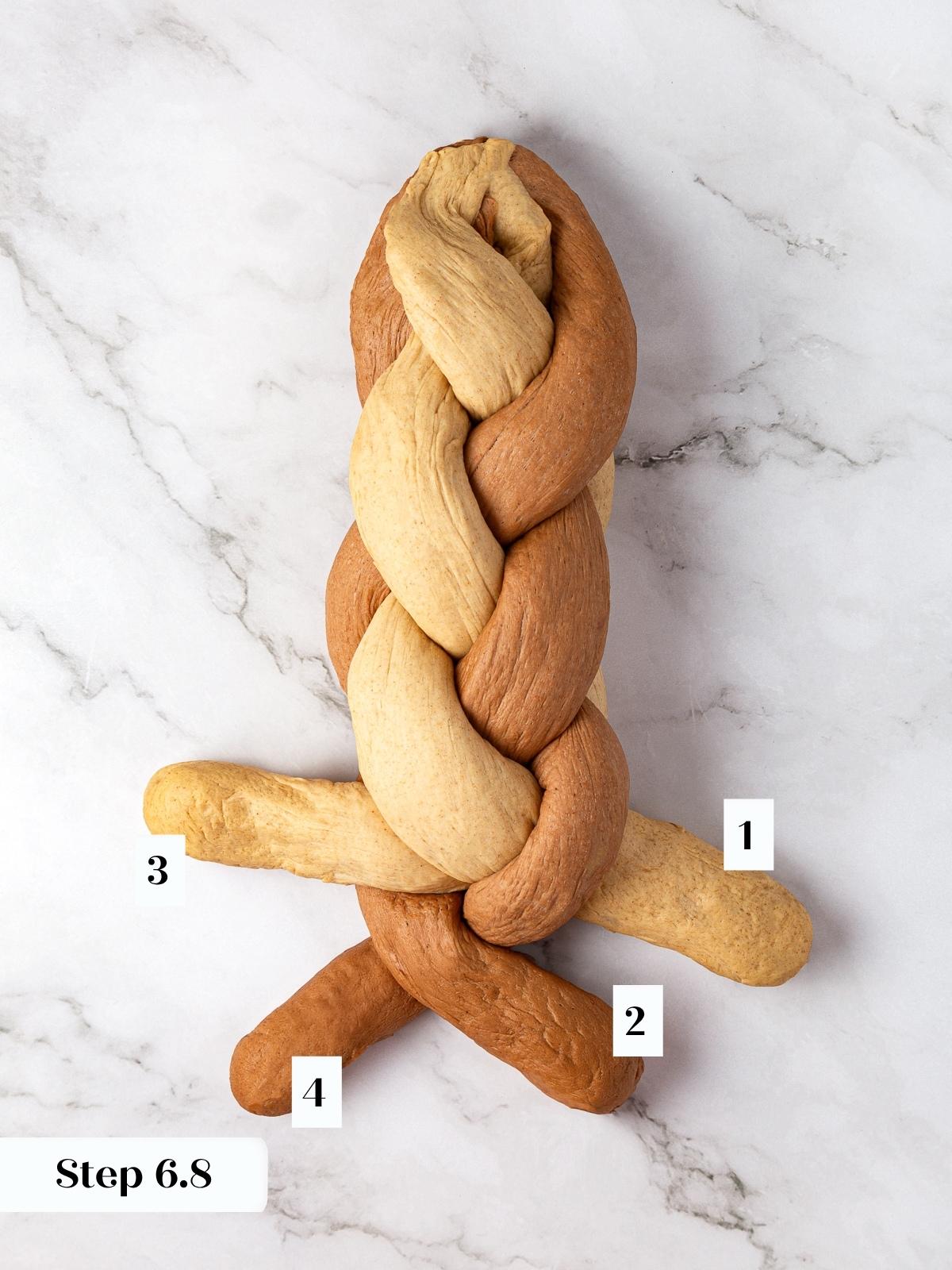
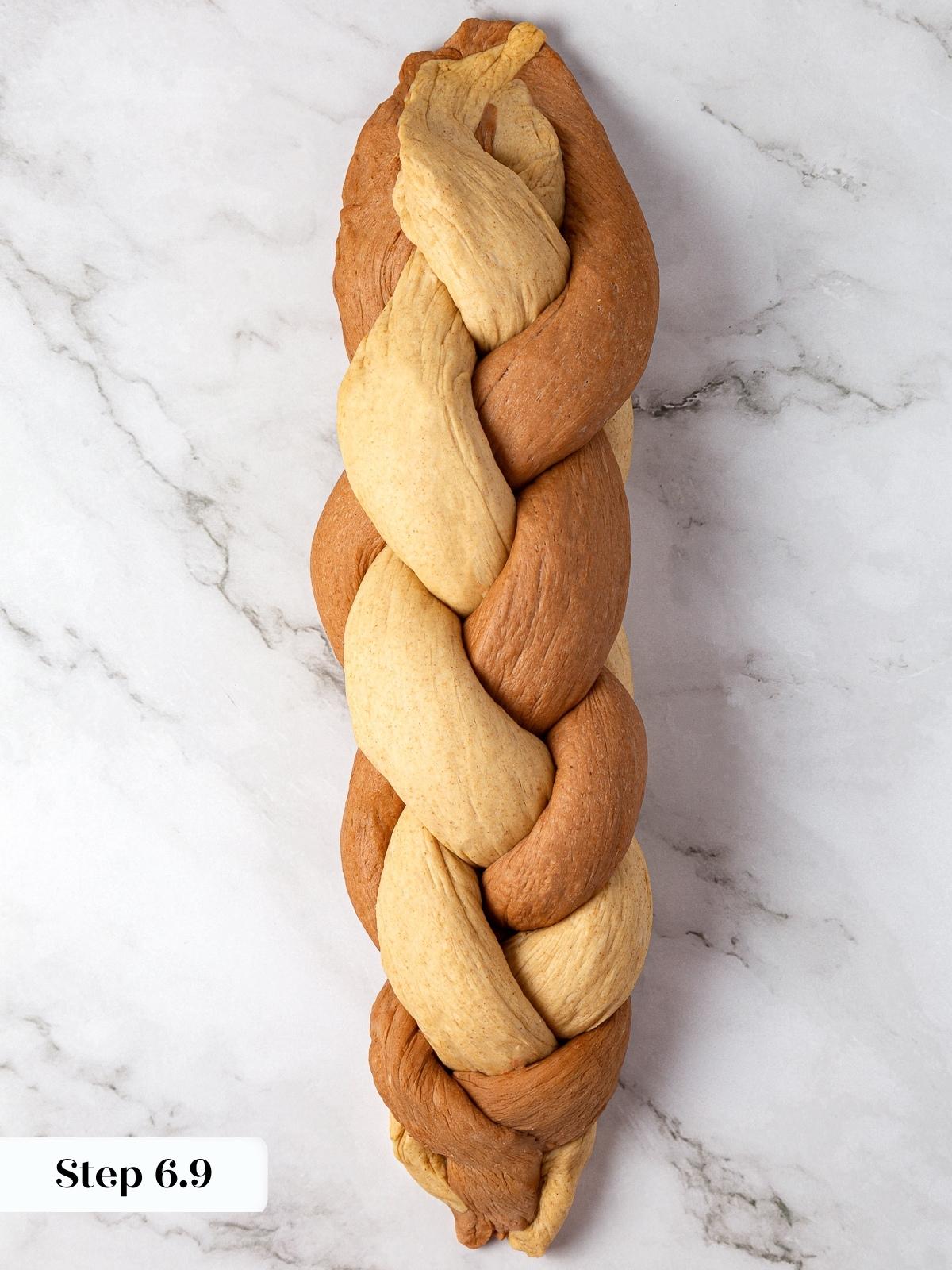
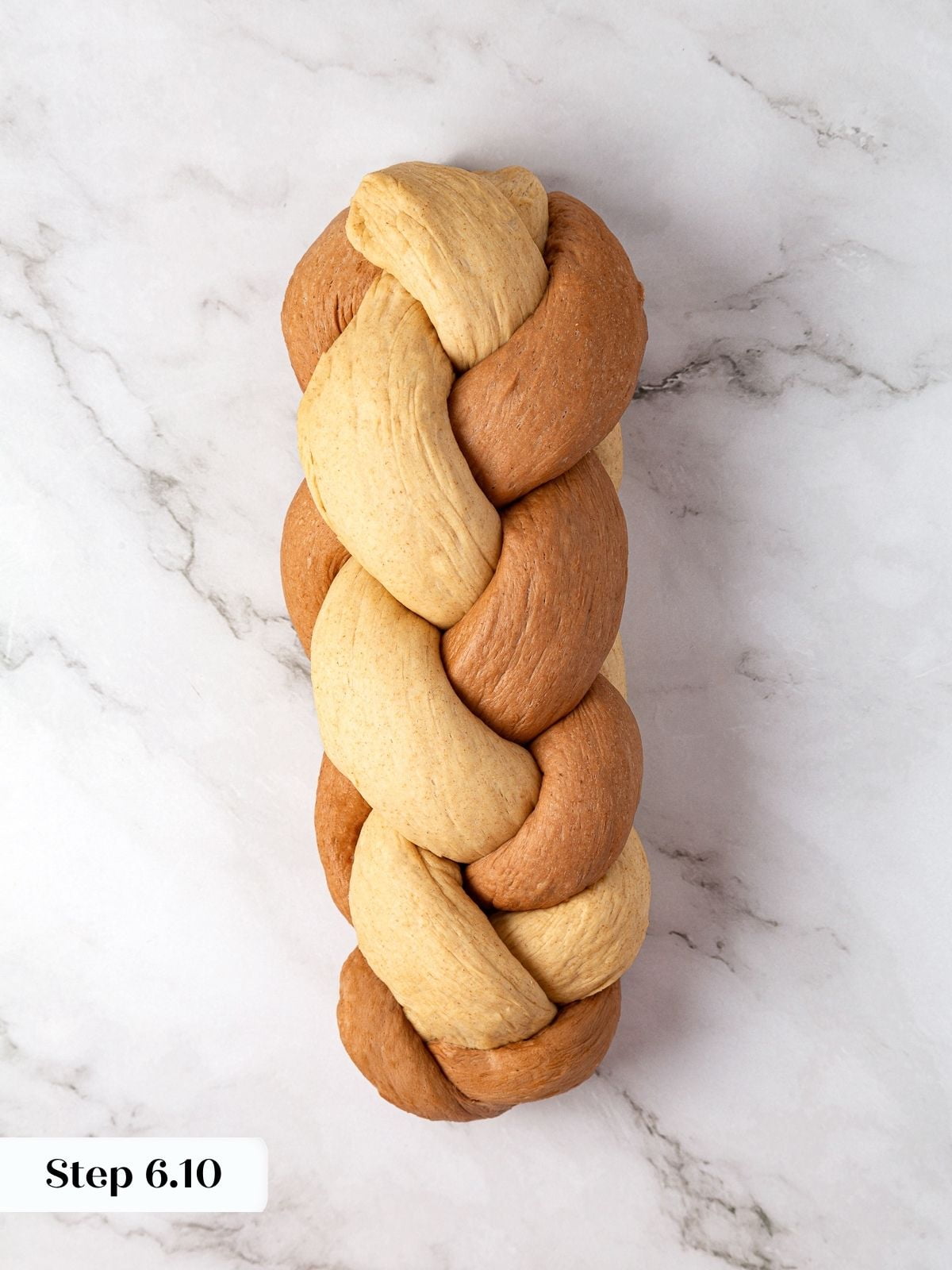
Step 6: Braid. Connect 4 strands of alternating colors (1 light, 1 dark, 1 light, 1 dark) at one end with the sealed end away from you and the strands separated out in front of you.
Number the strands from left to right — 1, 2, 3, 4 — then follow this pattern: 3 over 2, 1 over 3, 2 over 3, and 4 over 2 until you run out of dough. You can follow the pictures, or if you would prefer, follow the sequence instead, and renumber the strands. Pinch the other ends together and place the braid in a lightly greased 9-by-5-inch loaf pan. Repeat with remaining dough to form 2 loaves (photos 11-20).


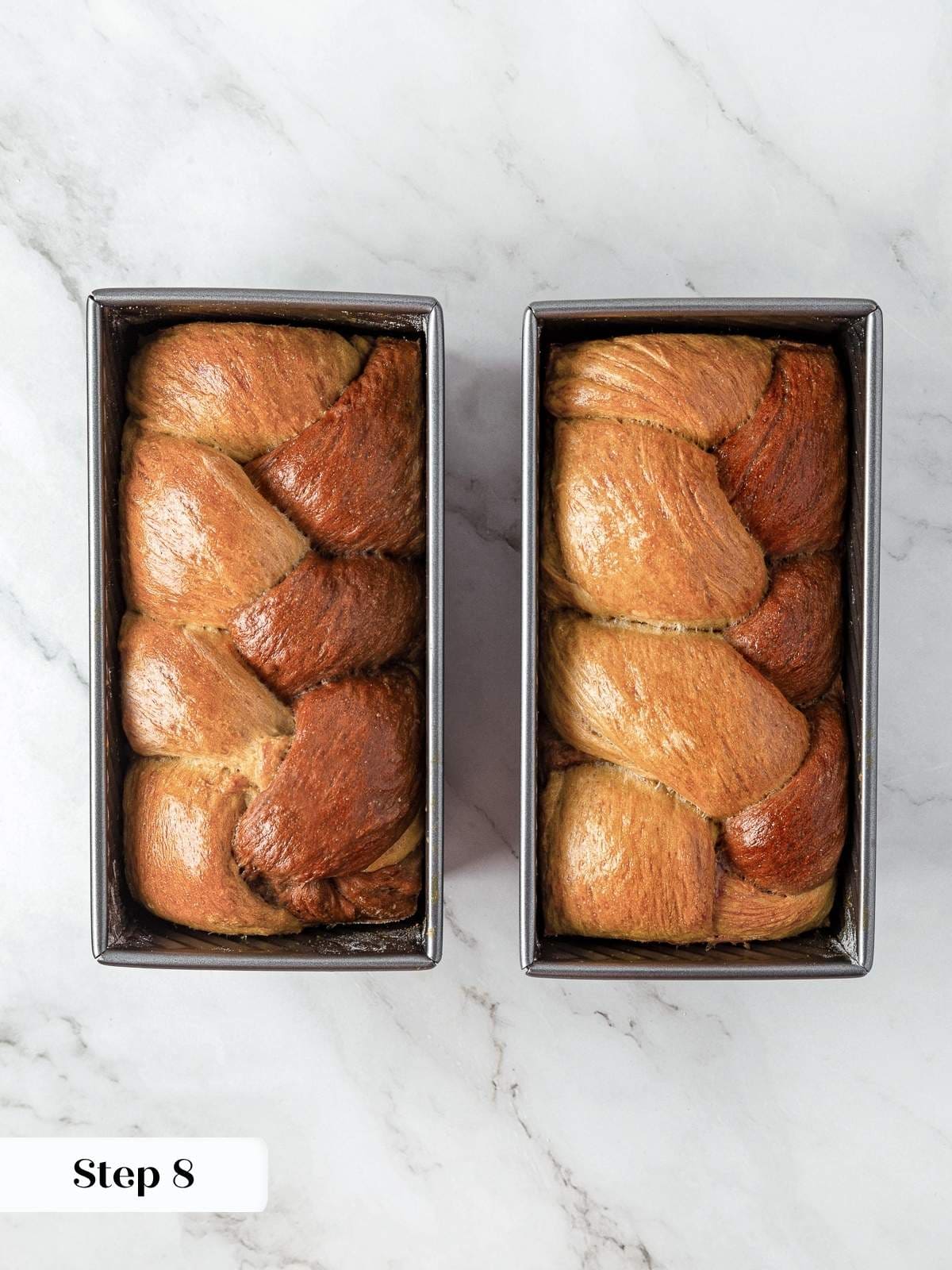

Step 7: Final rise. Lightly mist the tops of loaves with cooking spray in the baking pans and cover lightly with plastic wrap. Let rise until doubled, about 1 hour (photos 21 & 22).
Step 8: Bake. Preheat the oven to 350 degrees F. When loaves have doubled, brush lightly with beaten egg and bake on center rack of oven until golden brown and baked through, about 45 minutes, rotating loaves 180 degrees halfway through baking (photo 23).
Step 9: Cool and slice. Remove loaves from the oven and loaf pans and let cool completely on a wire rack before slicing (photo 24).
Recipe FAQs
Store cooled rye bread in an airtight container or ziptop baggie at room temperature for up to 5 days. I recommend wrapping cooled loaves in plastic wrap and placing in plastic freezer bags for longer term storage in the freezer. I often slice the loaves before freezing for easy access to fresh bread for toast and sandwiches!

Recommended Rustic Bread Recipes

Yeast Breads

Yeast Breads

Yeast Breads

Yeast Breads
If you enjoyed this recipe, please leave a star rating and let me know how it goes in the comments below! I love hearing from you and your comments make my day!
Marble Rye Bread
Ingredients
For the light rye —
- 1 ½ cups light rye flour
- 3 cups unbleached bread flour
- 1 ½ teaspoons salt
- 2 ¼ teaspoons active dry yeast, 1 packet
- 1 tablespoon molasses
- 2 tablespoons unsalted butter, or shortening, room temperature
- 1 ¼ cups plus 2 tablespoons water, room temperature
For the dark rye —
- 1 ½ cups light rye flour
- 3 cups unbleached bread flour
- 1 ½ teaspoons salt
- 2 ¼ teaspoons active dry yeast, 1 packet
- 1 tablespoon molasses
- 2 tablespoons unsalted butter, or shortening, room temperature
- 1 ¼ cups plus 2 tablespoons water, room temperature
- 2 tablespoons unsweetened cocoa powder
- 2 tablespoons water, for cocoa powder
Instructions
Make both the light and the dark rye together:
- In a large bowl or in the bowl of a stand mixer, whisk together molasses, yeast and water. Let sit until foamy.
- Add rye flour, bread flour, shortening or butter and salt to the yeast mixture, stir to incorporate either with a wooden spoon or the dough hook attachment in a stand mixer on low speed.
- To knead by hand: place dough on an unfloured surface and knead until dough is smooth and elastic and tacky but not sticky, about 5-6 minutes.
- Divide the dough in half, leaving ½ in the stand mixer. Increase the speed to medium (or as close to medium as your mixer will tolerate with a stiff dough), and knead with the dough hook attachment until dough is smooth and elastic and tacky but not sticky, about 3-4 minutes. Place in a lightly oiled bowl and cover with plastic. Set aside to proof.
- Place the other half of the dough in the stand mixer. Add the cocoa powder dissolved in water, mix on the medium-low speed to incorporate and develop gluten. I just took my dough out after the cocoa powder had mixed it. It took 4 minutes. Place in a separate, lightly oiled bowl, and cover with plastic.
- Let rise until doubled, about 1 ½ hours.
- When both doughs are risen, punch doughs down gently to degas, remove from bowls and place on an unfloured surface. Divide each piece equally into fourths; roll out each piece into a 10-inch log. Connect 4 strands of alternating colors (1 light, 1 dark, 1 light, 1 dark) at one end with the sealed end away from you and the strands separated out in front of you.
- Number the strands from left to right — 1, 2, 3, 4 — then follow this pattern: 3 over 2, 1 over 3, 2 over 3, and 4 over 2 until you run out of dough. You can follow the pictures, or if you would prefer, follow the sequence instead, and renumber the strands. Pinch the other ends together and place the braid in a lightly greased 9-by-5-inch loaf pan. Repeat with remaining dough to form 2 loaves.
- Lightly mist tops of loaves with cooking spray and cover lightly with plastic wrap. Let rise until doubled, about 45-60 minutes.
- Preheat oven to 350 degrees F. When loaves have doubled, brush lightly with egg wash and bake on center rack of oven until golden brown and baked through, about 45 minutes, rotating loaves 180 degrees halfway through baking.
- Remove loaves from oven and loaf pans and let cool completely on a cooling rack before slicing.
Notes
Nutrition
Nutrition information is automatically calculated, so should only be used as an approximation.
 Like this recipe? Rate & comment below!
Before You Go
I hope you enjoyed this braided rye bread recipe. Check out our other perfect sandwich bread recipes for more lunch and dinner time inspiration!


I haven’t made this recipe in sooo long! And next time I make it, I’m totally going to braid it. Yours look gorgeous!
Marissa — So nice to “meet” you through Audra! 🙂 And you have to try this bread — it’s hands-down one of my favorites, still.
So nice to “meet” you too! My goal is try this recipe before Christmas! Also, I saw on your about section you were a newspaper reporter! I’m a journalist too! Just graduated in May and lived in the Twin Cities a couple of summers ago while interning with The Star Tribune. Such a lovely city!
I stumbled upon your blog while reading about your cake from the vitrual baby shower for Audra at The Baker Chick and found this photo and OMG I’m going to try this recipe ASAP. I know it’s just bread but this looks AMAZING with the braided twist in it! Can’t wait to read more of your posts!
Van — A lot of work, maybe, but totally worth it! 🙂 I don’t know of a crusty rye bread recipe off hand, but Artisan Bread in Five may have a good (and easy) one.
Looks great but a lot of work. I have been looking for a Crusty Rye bread recipe that is easy. Do you know of any? I really like your site.
I recently started baking with yeast and found your blog a few weeks ago- love it. Made this bread yesterday- easy, yummy, and so pretty. Many thanks for your blog and posting this recipe. Keep it up- very encouraging
I love the braided rye — I never would have thought to do it and it makes a stunning presentation! I’ll have to do this when I dip my toes into the marble-rye-pool. Thanks for the inspiration!
Stacey — Do it!! I think it tastes better when it’s prettier, honestly. 😉
That is the most BEAUTIFUL loaf of bread I’ve ever seen! It’s even more pretty when sliced!
Pam — Oh, thank you so much! 🙂
I haven’t tried making bread with rye flour, and I’m not really sure why since I love rye bread. I would have never, ever guessed that cocoa is what makes dark rye, well, dark, but it’s just another reason to give this recipe a try!
Kate — I honestly didn’t know that either before making this recipe, but it works! Thanks for the comment 🙂