
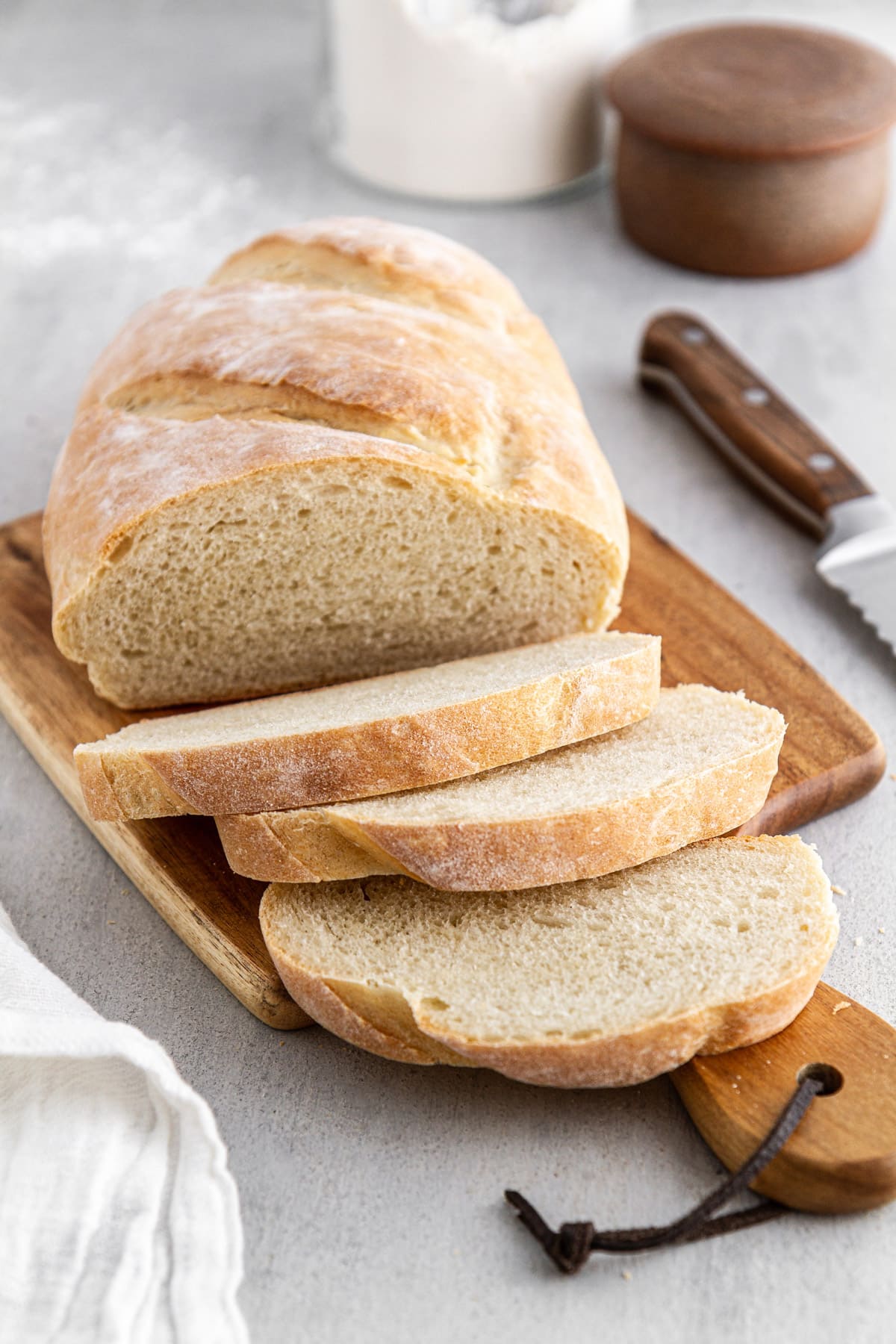
This classic Italian bread recipe is soft and tender on the inside with a chewy crust on the outside. Homemade bread doesn’t get much better — or simpler — than this!
(NOTE: This post was originally published in 2014 (!). We’ve since then updated it with new photos, but it’s the same recipe you know and love.)
Table of Contents
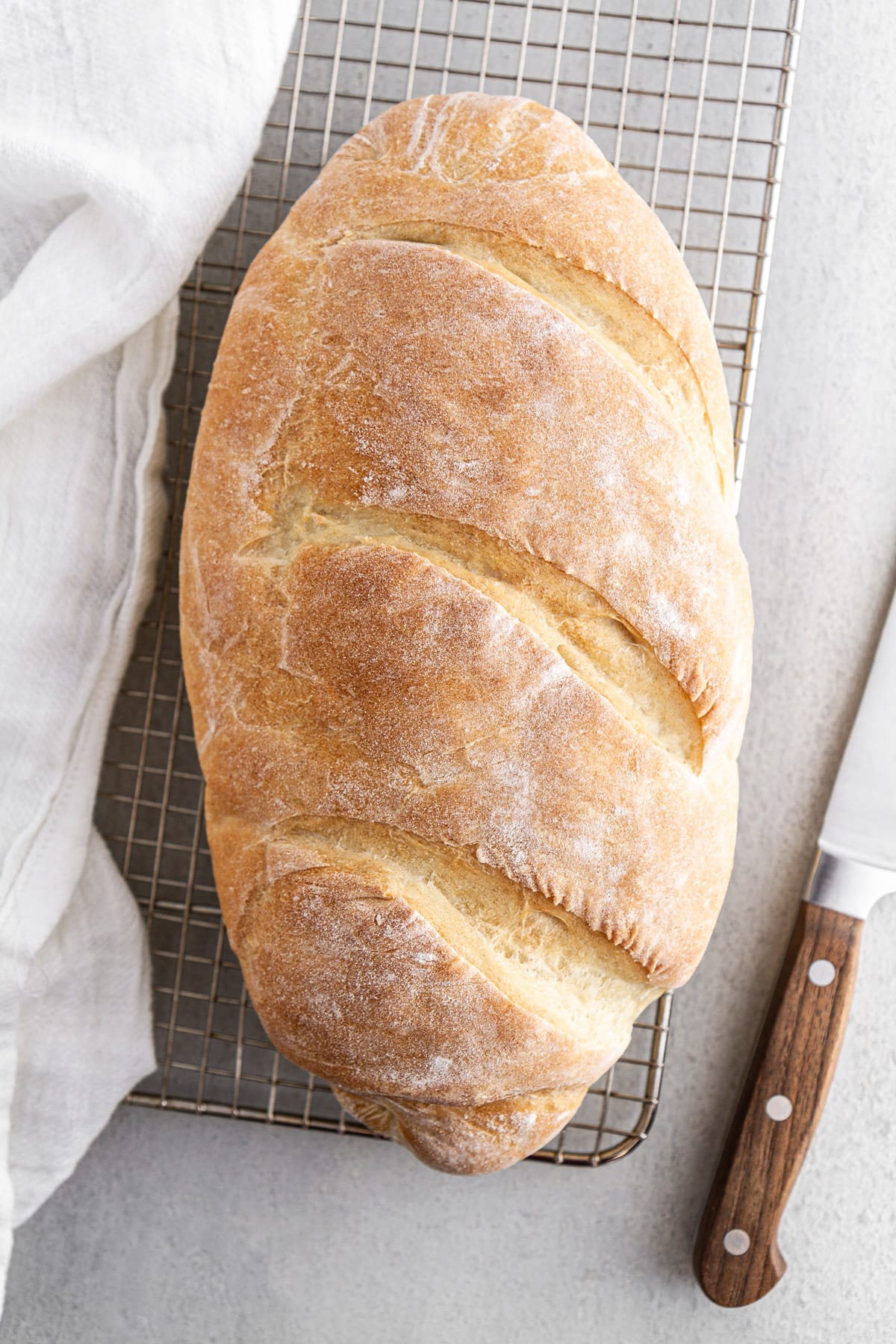
How to Make Italian Bread from Scratch
Sometimes I wish I had one of those potions from Alice in Wonderland so I can make myself small enough to lay on a slice of this Italian bread like a pillow. A heavenly soft, carbolicious pillow.
But seriously, how wonderful would that be? Because not only are you totally comfy-cozy, you also have a snack right there to munch on as needed. And then when you want to eat the bread as a sandwich or make it into a yummy baked French toast or strata or something, you can take the potion that makes you big again. It’s perfect.
Aaaaaand I’ve lost you. But homemade, soft-on-the-inside-crusty-on-the-outside classic Italian bread, remember? Yes, let’s focus more on that.
Watch How to Make Homemade Italian Bread
Ingredients You’ll Need
I am fairly certain that whenever I went to my grandma and grandpa’s house as a kid, my snack diet consisted of snap peas from the garden, kohlrabi stalks (no, really, so good) and sliced Italian bread from the bakery plain or with my grandmother’s plum jam on it (that is truly one of the best things about life ever, and I hope I can get the recipe one day to share it with you). So when Red Star Yeast asked me to make a loaf of Italian bread using their yeast, I was happy to take it on because nostalgia. And homemade bread. It was a no-brainer.
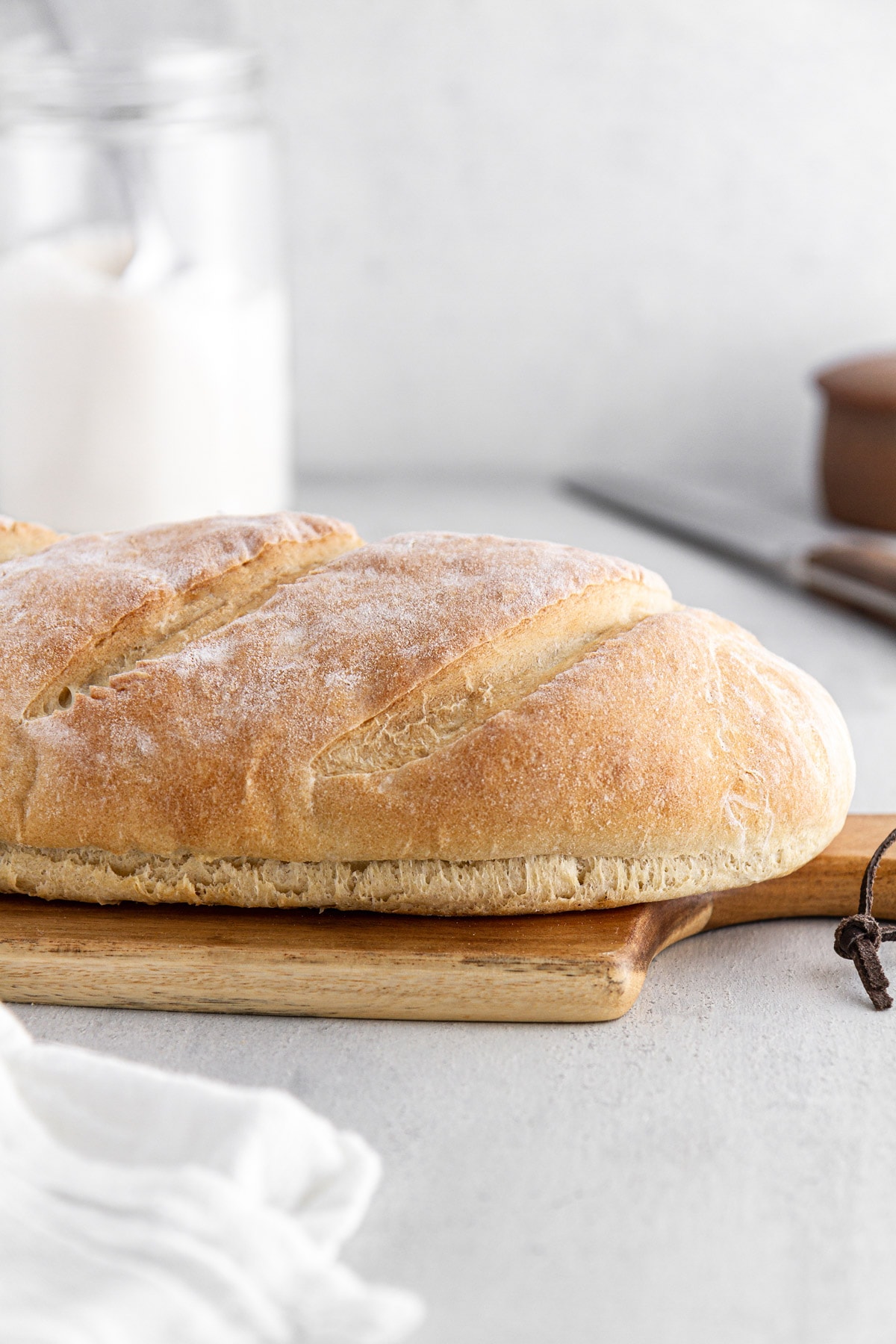
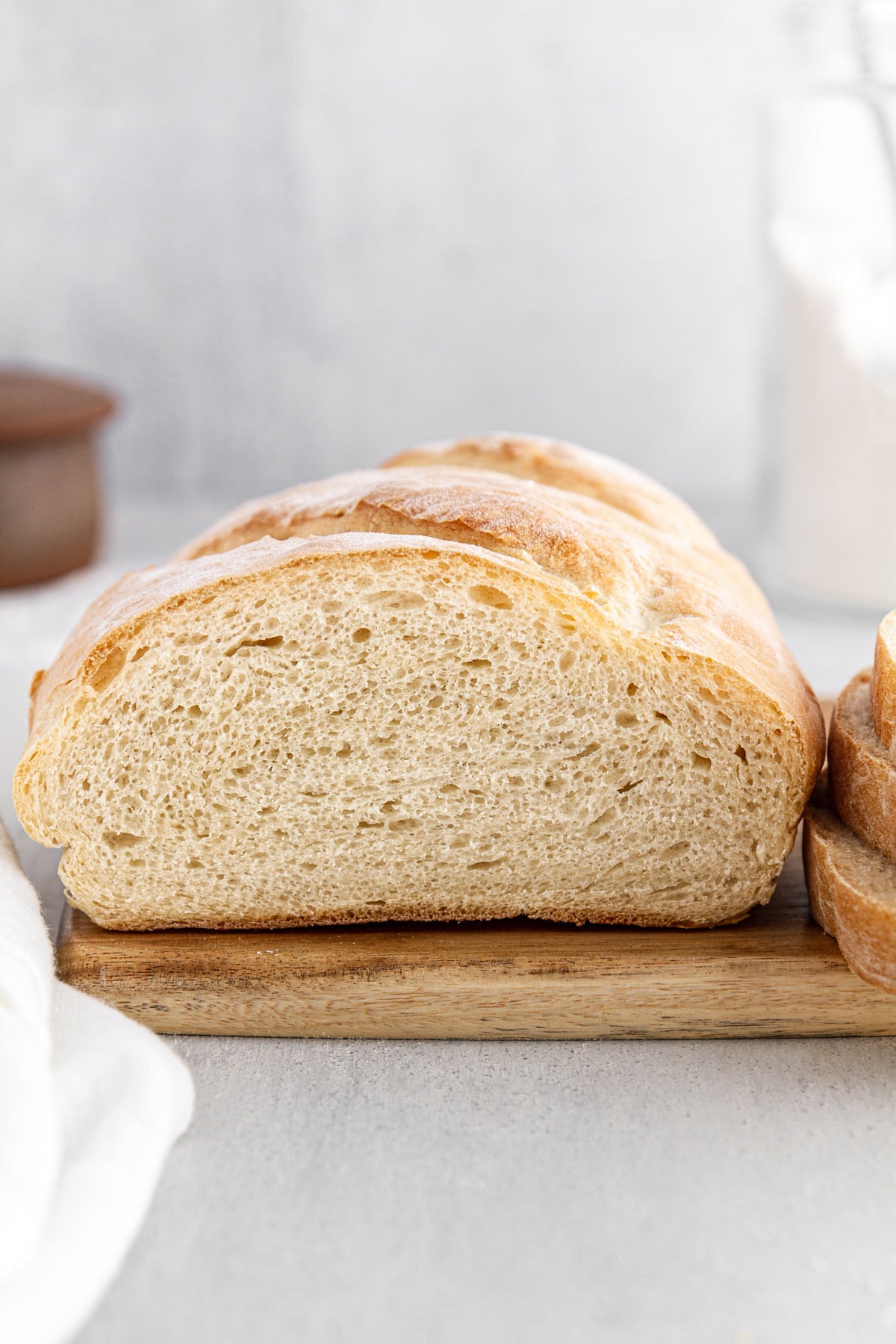
I was a little nervous that my recipe wouldn’t taste quite the same as what I remembered eating as a youth — that soft, aforementioned pillowy center with a perfectly chewy, flaky crust — but my friends, this recipe is just that and it is a glorious thing. It really doesn’t take much time, effort or ingredients to get there, either. Just a little:
- Flour (bread flour or all-purpose flour works for this recipe!)
- Yeast (Active dry yeast or instant yeast — see Recipe Notes for conversions!)
- Water
- Olive oil
- And a little know-how on shaping it into a batard/torpedo loaf (which I show in the video above!)
And just like that, you’re well on your way to homemade bread blissdom.
How to Enjoy Italian Bread
So in conclusion, I’ll be making a loaf of this bread on the regular this fall and the Season That Shall Not Be Named. And it will be taking any and all of the following forms: Sandwich, strata, bread pudding, French toast, baked French toast casserole, croutons, grilled cheese, toast. Surely I am missing more options, but that’s just for starters.
Of course, just eating slice after slice plain (as I may or may not have done once this loaf was cool enough to cut into) is going to happen a lot, too.
If this crisp-cool weather (or in my great state of Minnesota, the weird summer-after-fall weather we’ll be having) has got you bit by the baking bug as it has me, then put this easy homemade Italian bread on your list. You can thank me for it later, with a sandwich. For dessert, keep the Italian thing going with this olive oil cake, ricotta blueberry cake or an Italian panna cotta!
More Delicious Bread Recipes
- rosemary-garlic no-knead bread
- no knead ciabatta bread
- classic brioche loaf bread
- cinnamon raisin sourdough bread
- whole wheat bread
- potato bread
- nostalgic banana bread
Italian Bread

Ingredients
- 2 ¼ teaspoons active dry yeast, 1 packet
- 1 teaspoon granulated sugar
- 1 cup warm water
- 2 ½ cups bread flour , or all-purpose flour
- 2 tablespoons olive oil
- 1 teaspoon salt
Instructions
- In a large bowl or bowl of a stand mixer, combine yeast, sugar and warm water (about 110°F)
- Let stand 5 to 10 minutes or until yeast is foamy.
- Add 2 cups flour, olive oil and salt. Stir with a wooden spoon or with a dough hook on low speed until a shaggy dough forms. Turn dough out onto a lightly floured surface and knead by hand 10 minutes, adding just enough of the remaining flour until a soft, smooth and elastic dough forms; OR, increase dough hook speed to medium and knead dough in stand mixer 5 minutes, adding just enough of the remaining flour until a soft, smooth and elastic dough forms.
- Shape dough into a ball; place in an oiled bowl and turn to coat. Cover bowl with plastic wrap and let dough rise 1 hour until doubled.
- Heat oven to 400°F. Line a baking sheet with parchment paper, a silicone mat or lightly grease the surface with oil or cooking spray. On a lightly floured surface, punch down dough, then carefully shape into a batard/torpedo about 12 inches long. Transfer to prepared baking sheet. Cover with a tea towel and let rise another 20 to 30 minutes until puffy.
- Use bread lame, razor blade or serrated knife to make a few 1/4-inch deep slits in the surface of the loaf. Bake loaf 20 to 25 minutes or until golden brown. Cool completely on a cooling rack before slicing.
Video
Notes
- Yield: 1 large loaf
- *If you only have instant yeast on hand, use 1 3/4 teaspoons of instant yeast in place of the active dry yeast.
- Use the highest quality olive oil you have on hand, if possible.
- How to store homemade Italian bread: Leave unsliced bread uncovered (or covered with a tea towel) at room temperature 1-2 days. If sliced, store bread cut side-down on a cutting board at room temperature 1-2 days. Beyond 2 days, store bread in a paper or plastic bag, sealed, at room temperature another 1-2 days. You can also freeze homemade Italian bread in a sealed plastic bag for up to 3 months.
Nutrition
Nutrition information is automatically calculated, so should only be used as an approximation.
 Like this recipe? Rate & comment below!
Disclosure: I received compensation from Red Star Yeast for recipe development purposes. All opinions are my own.




I only use rapid rise yeast so one needs to change the flour the rising time etc. It would be very nice if you could make this using rapid rise yeast. Old school yeast rising is tedious and why use it when there is a new and more efficient way to get a rise. Both times I made this I’ve had sticky dough, very sticky, add more flour, more flour more flour, do a 20 minute rise since I use fast rise yeast, all rises well – I cook it and it flattens out. I may try this one more time, but it would be great that YOU as the author adjust the recipe to help people like me that find proofing yeast outdated. Bread tastes okay, not what it looks like above though.
Hi Genevieve, I totally get the desire for the convenience and speed of rapid rise yeast as I often use it myself. The key is knowing when and how to substitute. It should not materially change the hydration of this dough, so I am going to give you some general advice followed by specific precautions when making this recipe with instant yeast. First generally speaking, if you are kneading dough by hand, you should try to power through the stickiness until the gluten begins developing. As the gluten network develops and strengthens this “stickiness” will disappear without having to add additional flour. Alternatively, you could use a stand mixer.
Now specifically about your experience and this recipe with instant yeast: It makes total sense that your dough is rising and then falling when baking. There are only 2 reasons this happens in bread baking: 1-you overproofed the dough which is certainly not your issue in 20 minutes unless you are using more than a packet of instant yeast; or 2 – you underdeveloped the gluten and it cannot support the rapid rise of the yeast. Adding more flour to the dough until it is no longer sticky is not the same thing as developing a sufficient gluten network; you have essentially just created a ball of dough with no means of trapping the air produced by the yeast and you are not giving it the time to develop naturally over time by using a slower rising yeast. The solution is simple: you must fully develop the gluten if you are going to use instant or rapid rise yeast. That way the dough will trap all the air produced and will be ready to bake and set while retaining its structure in the oven. ~Lindsey
I have had this problem over and over again with other recipes. I, opposite to you, only use traditional yeast. This is the first recipe that the flour was exactly as it calls for. I have learned a few tricks. One, use a stand mixer with a hook. Two, instead of more flour- ice cold water your fingers and start stretch and folding. THEN add little spoonful of flour- cold fingers stretch and fold. It really does help.
Wonderful recipe. Have used it to make multiple Italian bread based items like cheese bread and garlic bread. Love it.
Hi Mrs. Stepp! Thank you so much for sharing this, it’s really helpful. I’m so glad this one worked well for you. You nailed it: the goal is a dough that becomes smooth, soft, elastic and only slightly sticky, and a stand mixer plus gentle stretch-and-folds can make all the difference. I love that you’ve turned it into cheese bread and garlic bread too! Happy baking! ~gvd team
Do you have to use plastic wrap to cover it? I only have press & seal wrap. Will it make a difference?
Hi Cheryl! Press & Seal will work just fine. The goal is simply to keep the dough covered so it doesn’t dry out while it rises. In the recipe we say to cover bowl with plastic wrap and let dough rise 1 hour until doubled, but a tea towel or any loose cover works too. Happy baking! ~gvd team
if you are using quick rise yeast you must use water than is 120F – 130F. Quick rise yeast needs a higher temperature as the yeast is not proofed.
Hi Jennifer! In this recipe the yeast is proofed in water first, so ~110°F water is correct as written. If you only have instant yeast on hand, use 1¾ teaspoons in place of the active dry yeast. Bob’s Red Mill explains yeast begins to weaken around 120°F, so hotter water can potentially damage it. Happy baking! ~gvd team
My bread tastes good but did not rise as much as past efforts. Looks a little like halfway between flat bread and loaf bread. What is reason?
I just wanted to say thank you very much for this recipe. It is so simple and I’ve made it many times.
Hi Winter! This absolutely made our day, thank you! I’m so glad you’ve made it many times and that it’s been a keeper for you. Thank you for taking the time to say hello! Happy baking! ~gvd team
Can I use a loaf tin to make this?
Hi Tim! Yes! You can place the shaped dough into a lightly greased 9×5-inch loaf pan instead. Let it rise until puffy (about 20–30 minutes, as written), then bake at 400°F for 20–25 minutes, or until golden brown. The crust will be a bit softer but still delicious! Happy baking! ~gvd team
Perfect! Easy recipe to follow. Bread was delicious! Definitely my go to from now on!
Hi Tracy! So glad it worked well for you! Thanks for coming back to leave us a note, always makes our day! ~gvd team
First rise always great but after punching dough doesn’t rerise to its first rise volume and I let it go extra 15 minutes past second rise time . Bread seems to be dense after baking . This is always the same result on any of my bread recipes
Hi John. This is completely normal! The second rise is never as dramatic as the first — it only needs to puff noticeably, not double again. If your bread is consistently dense across recipes, the most likely culprits are over-punching the dough (a gentle fold is all it needs), a too-cool proofing environment, or slightly overproofing the first rise. Try proofing in a warm oven at 80°F for more consistent results! ~GVD team
Hi Stephanie,
I would love to make this recipe. Just wondering if you have the recipe in grams? Flour in grams etc. Thanks
Hi Jenn!
233g warm water
312g bread flour
Teaspoons and tablespoons can be measured out in measuring spoons at this yield! Happy baking! ~gvd team
Thank you ?
My pleasure! Happy baking!
Oven temper, please. Making it now!
Hi May! Heat the oven to 400°F, and if you’re using an oven thermometer, bonus points. Bake 20–25 min until golden. Happy baking! ~gvd team