
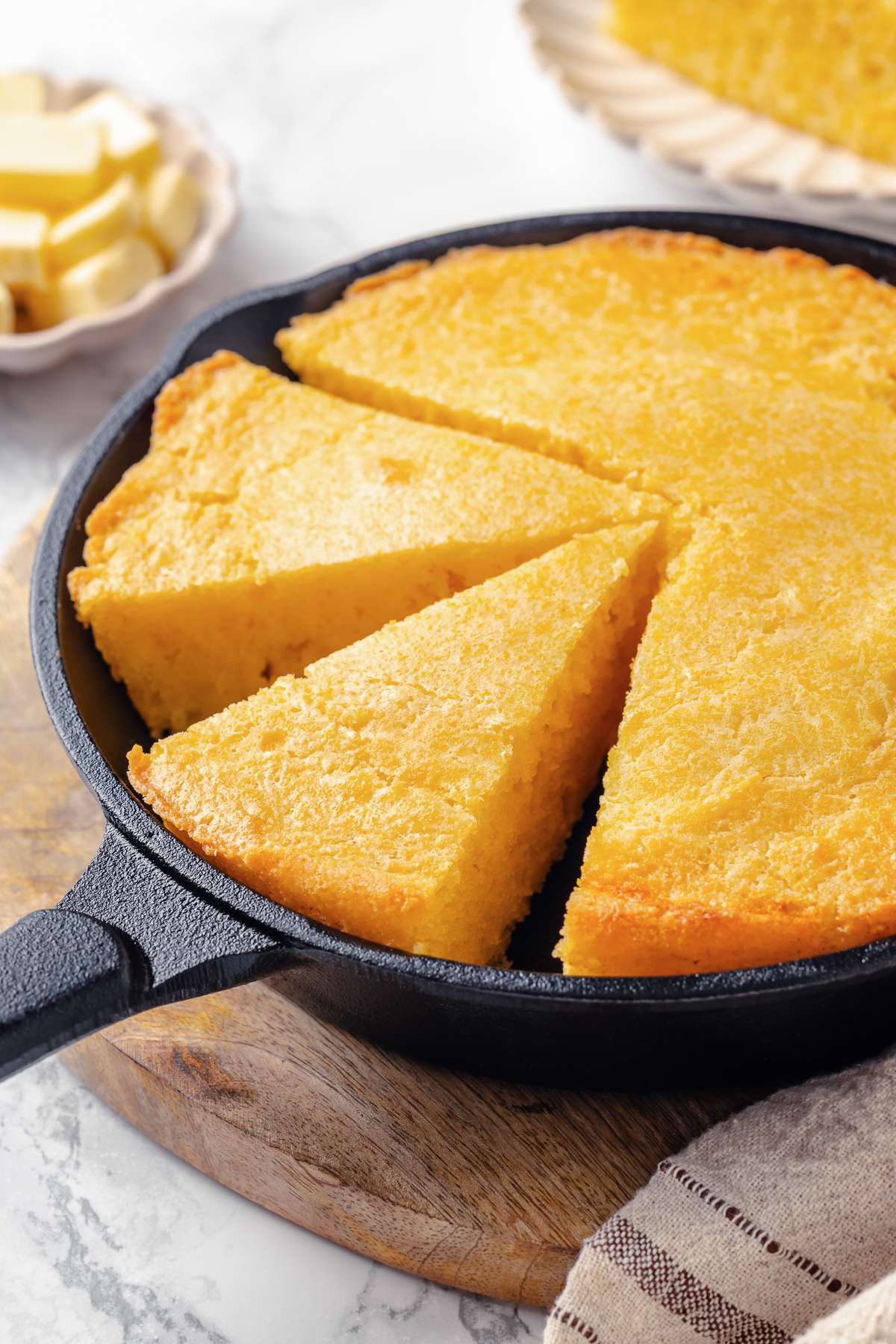
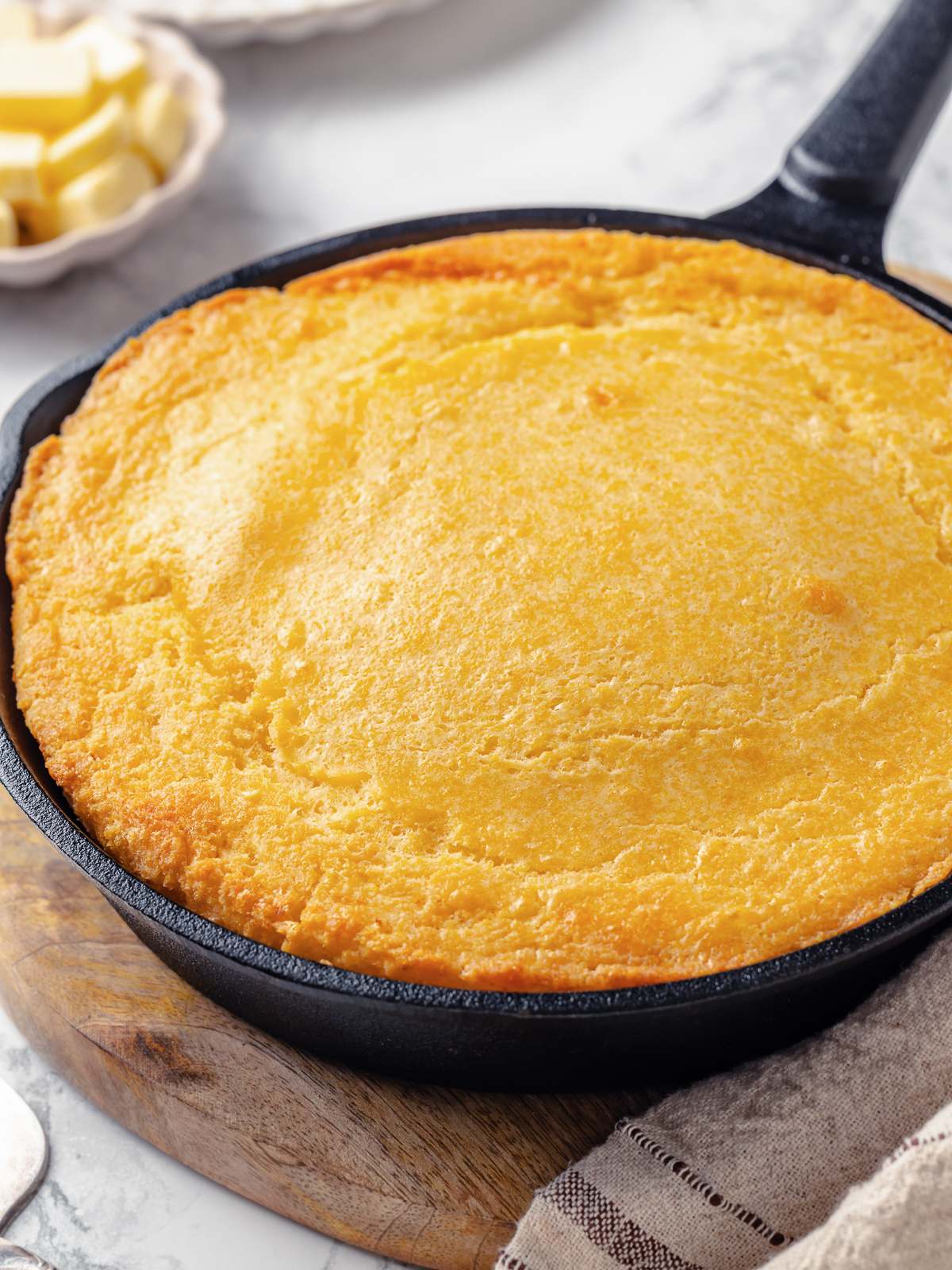
Sourdough cornbread made in a cast iron skillet, with sourdough discard folded right into the batter for a moist, lightly tangy crumb that bakes up in just 30 minutes.
A Quick Look At The Recipe
This is a brief summary of the recipe. Jump to the recipe to get the full details.
Prep Time
10 minutes
Cook Time
20 minutes
Total Time
30 minutes
Servings
8 wedges
Difficulty
Intermediate
Calories *
367 kcal per serving
Technique
Whisk and bake in skillet
Flavor Profile
Soft, buttery, lightly sweet with sourdough tang.
* Based on nutrition panel
“I was skeptical that a cornbread could come together this fast, but the crumb was genuinely moist and the tang from the discard was subtle but noticeable in the best way. My cast iron skillet gave it the most perfect golden crust on the bottom.” ⭐⭐⭐⭐⭐
Renata
Why You Will Love This Recipe
- Ready in 30 minutes. No yeast, no proofing, and no waiting. Mix the batter, pour it into your pan, and it is done before the hour is up.
- Genuinely moist and tender. Most cornbread dries out fast or crumbles. Sour cream and sourdough discard keep every slice soft without making it dense.
- Uses discard you already have. This is an easy way to put your discard to work. For more ways to use it up, The Ultimate Guide to Sourdough Discard Recipes is a great place to start.
- Walks the line between sweet and savory. Northern-style cornbread leans sweet, Southern-style leans savory. This one does both, complete with a balanced tang. If you prefer a more classic version, my buttermilk cornbread is a great place to start.
This sourdough cornbread came together after several rounds of testing, and the version that finally nailed it relies on a preheated pan and discard that is no more than a week old. Both details make a difference, and I’ll explain why in the recipe notes!
I make this on a weeknight when I need something to serve alongside a pot of white chicken chili or a big braise, and it holds its own just as well on a holiday table. If you are a fan of recipes that use discard in unexpected places, my sourdough crêpes or sourdough biscuits are worth a look next!
Ingredients & Substitutions
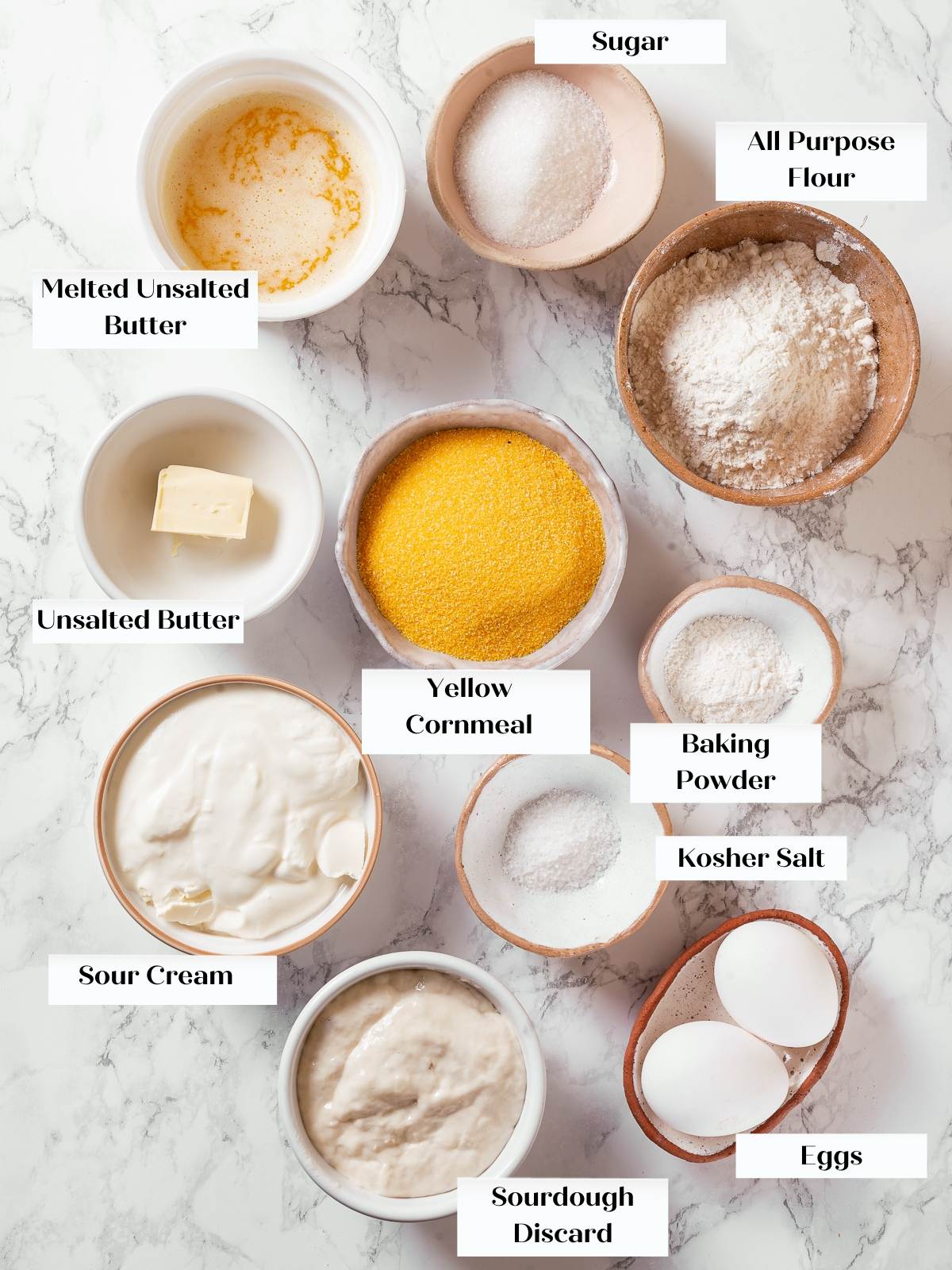
- All-purpose flour: Gives the cornbread structure and keeps the crumb light. Don’t swap it for whole wheat, which would make the texture noticeably heavier.
- Yellow Cornmeal: Provides the classic texture, flavor, and golden color. Finely ground cornmeal is what I always get because it absorbs moisture more readily and produces an even, tender crumb. If you only have medium ground, add a little extra to compensate for the coarser grind.
- Sourdough Discard: Adds mild tang, contributes to the moist crumb, and helps the cornbread rise. If you’re baking with discard, my sourdough chocolate chip cookies are another easy option!
- Sour Cream: Keeps every slice moist and adds a gentle richness. It also has enough fat content to give the crumb that luscious, tender quality you get from a good sour cream pound cake. Yogurt or buttermilk can be substituted, but expect a slight shift in both flavor and texture.
- Unsalted Butter: Melted butter is added to the batter for moisture and richness, and a separate tablespoon is added directly to the pan to create a golden, slightly crispy crust on the bottom. Use unsalted so you can control the salt level. The butter in the pan also begins to brown during preheat, which is exactly what you want.
- Eggs: Bind the batter and add structure. Three eggs keep the crumb light rather than dense.
- Granulated Sugar: A small amount balances the tang from the discard and sour cream without pushing this into dessert territory. You can reduce it to one tablespoon if you prefer a more savory result.
- Baking Powder: Baking powder is the primary leavener here; It gives the batter its lift in the oven.
- Kosher Salt: Seasons the batter and balances the sweetness and tang. I develop all my recipes with kosher salt, so if you are using table salt, start with a little less.
Variations for Sourdough Cornbread
- Reduce the sugar: Use 1 tablespoon of sugar instead of 2 for a more savory result.
- Add cheese and jalapeño: Fold in ½ cup shredded sharp cheddar and 1-2 tablespoons of diced fresh jalapeño with the dry ingredients. The cheese melts into the crumb and the jalapeño gives a clean heat. If you love that combination, my jalapeño cheddar cornbread takes it even further!
- Herb cornbread: Stir 2 tablespoons of chopped rosemary or thyme into the dry ingredients before combining. It pairs well with a braise or roasted chicken.
Professional Tips for Perfect Sourdough Cornbread
- Preheat the skillet long enough. The butter in the pan should be melted and just starting to brown. If it goes in cold, you lose the crispy bottom crust and the cornbread can stick. Give the skillet at least 10 to 15 minutes in the oven before the batter goes in.
- Do not overmix once the dry ingredients go in. Whisk just until no dry streaks remain. Overmixing makes the cornbread tough instead of tender. This same rule applies to my sourdough blueberry muffins.
- Use discard no older than one week. Discard over two weeks old is more acidic. In testing, older discard made the texture shift toward custardy spoon bread rather than the light, moist crumb you are after.
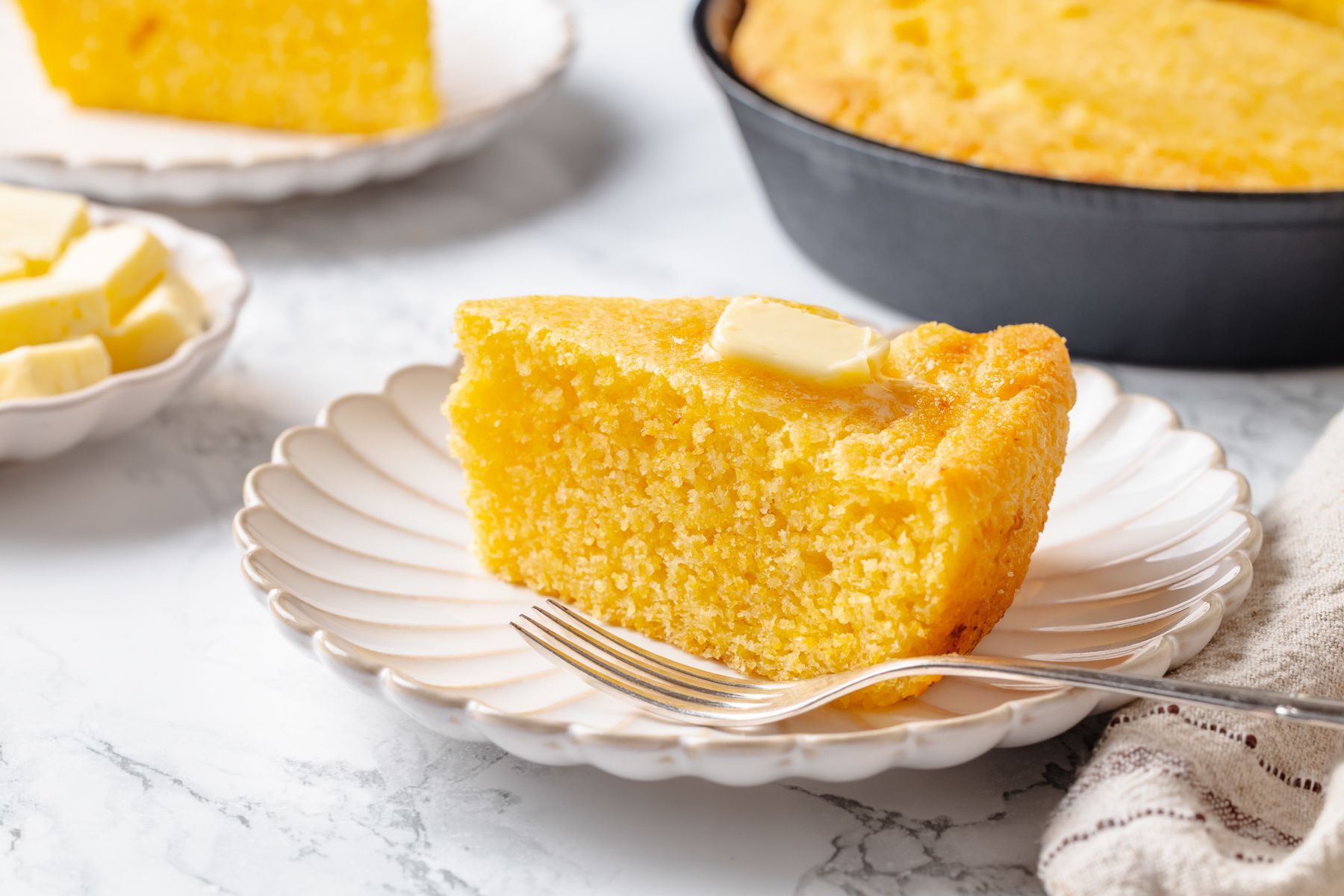
- Let it cool before cutting. The crumb needs a few minutes to set. Cutting too early compresses the crumb and the slices will not hold their shape. Let it rest 5 to 10 minutes.
How to Make Sourdough Cornbread
Use these instructions to make a moist, tangy, golden-crusted cornbread that comes together in one bowl and bakes up beautifully in a cast-iron skillet. Further details and measurements can be found in the recipe card below.
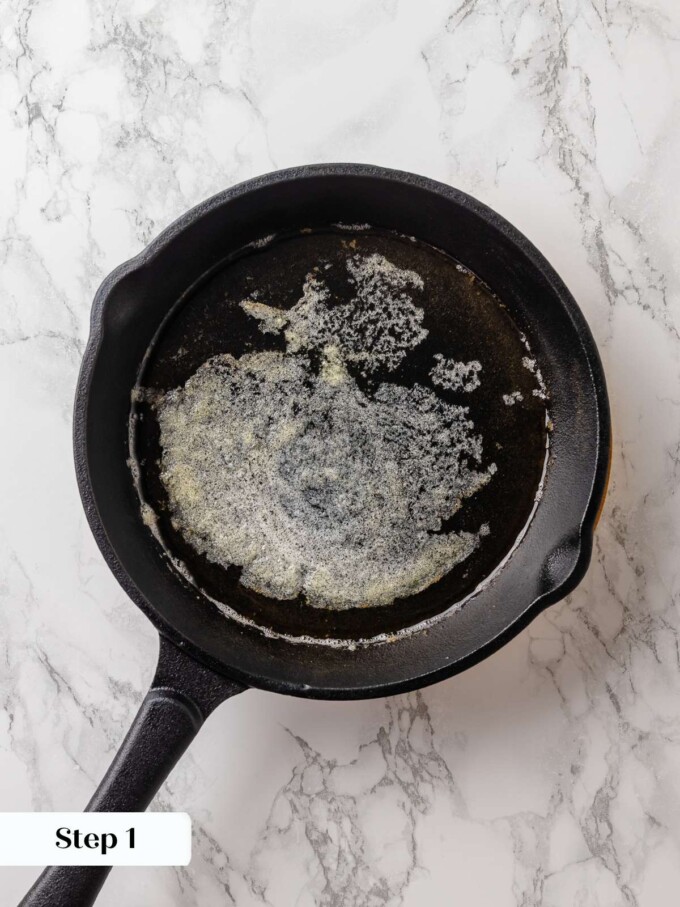
Step 1: Preheat the Oven and Skillet. Preheat your oven to 350°F (not convection). About 10 to 15 minutes before the oven reaches temperature, place your cast iron skillet in the oven with the tablespoon of butter for the pan. You want the butter to melt and just begin to brown before the batter goes in. The skillet will be very hot, so have your batter ready. (photo 1 below)
The preheated skillet is one of the most important steps in this recipe. That sizzle gives you a crisp, golden bottom.
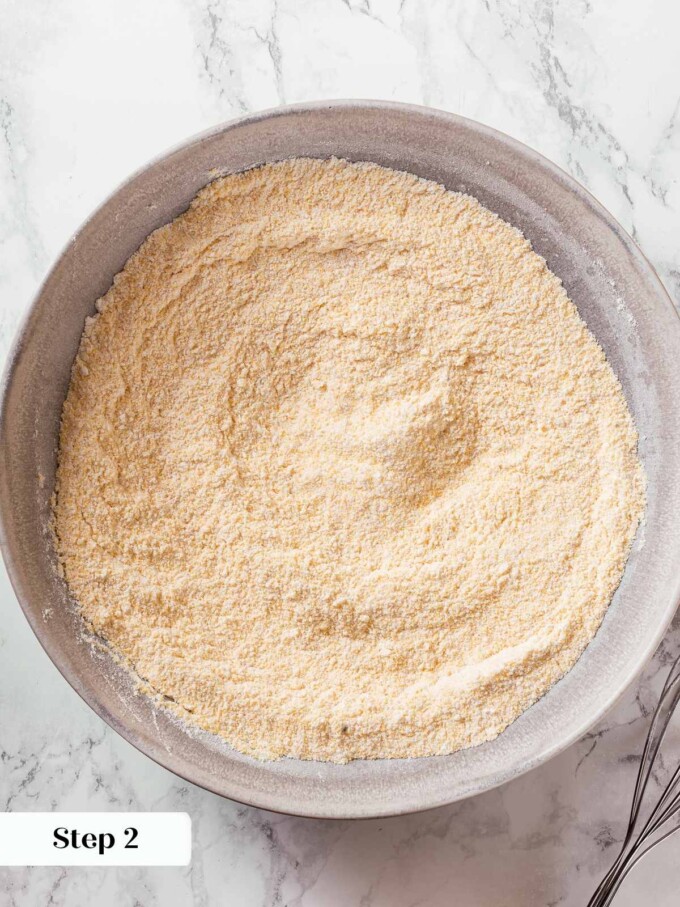
Step 2: Whisk the Dry Ingredients. Whisk together the flour, cornmeal, salt, baking powder, and granulated sugar in a medium bowl until evenly combined. Set it aside. (photo 2)
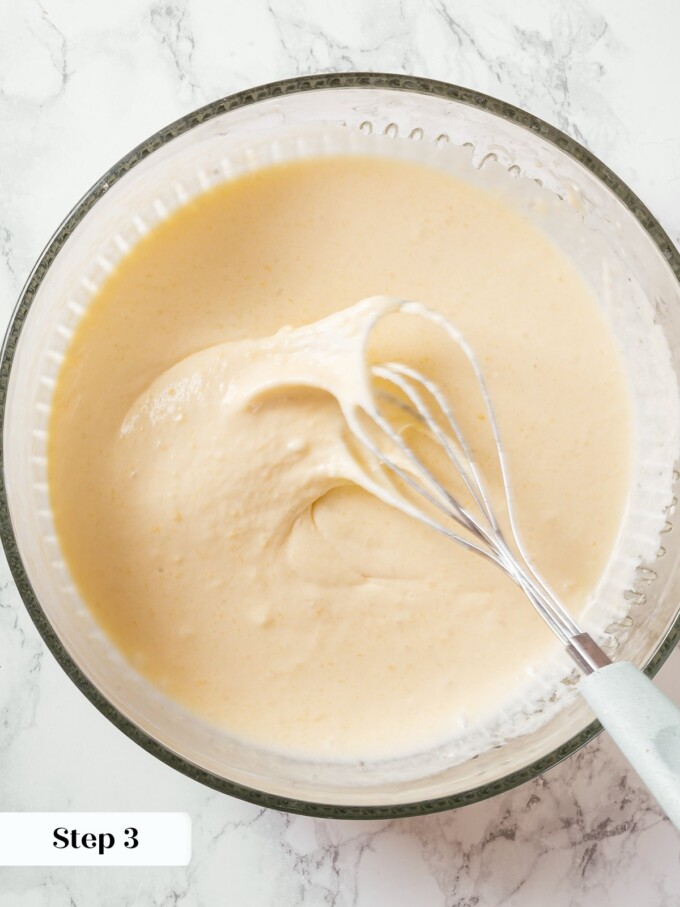
Step 3: Emulsify the Wet Ingredients. In a large mixing bowl, whisk together the eggs, sour cream, sourdough discard, and melted butter until the mixture is completely smooth and emulsified. It should look cohesive and slightly thick with no visible streaks of butter floating on top. If the butter seizes, just whisk until smooth.(photo 3 below)
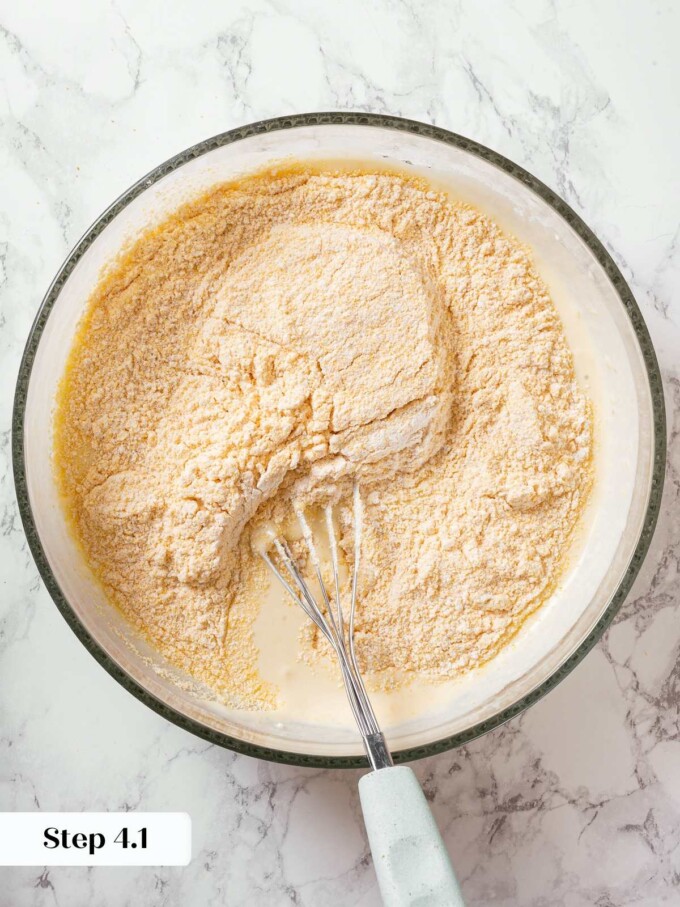
Step 4: Combine and Mix. Add the dry ingredients to the wet sourdough mixture and whisk just until no dry streaks remain. The batter will be thick and pourable. Stop as soon as it comes together. (photos 4 & 5)
Do not overmix, especially if your discard is on the more active side. A few small lumps are completely fine.
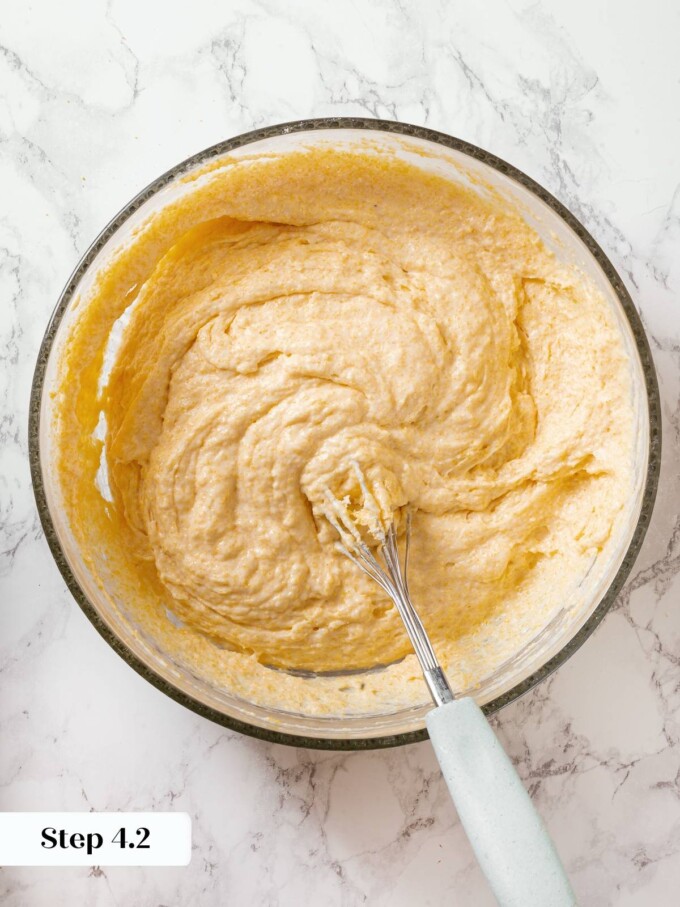
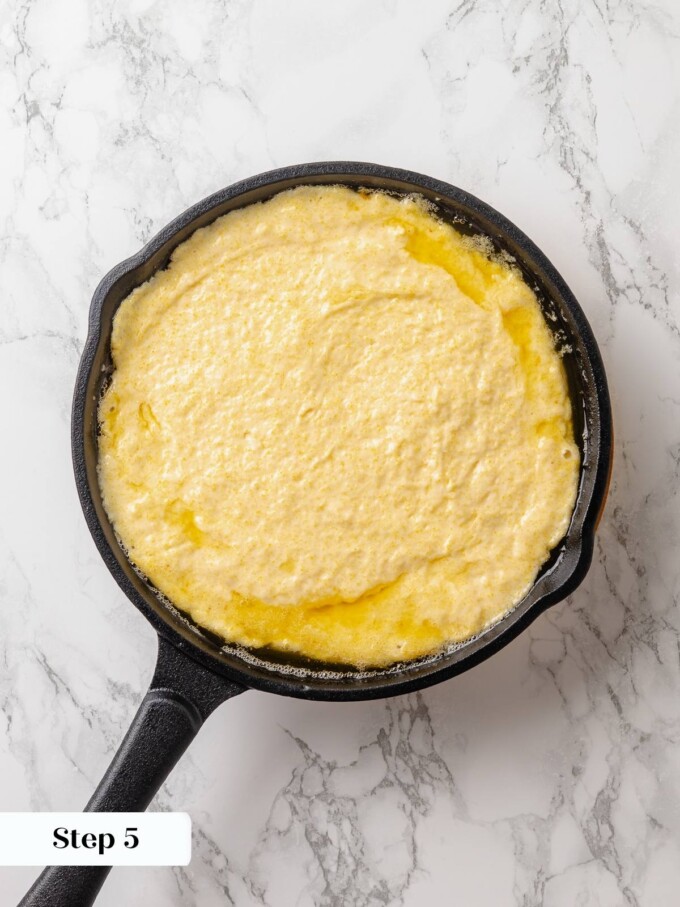
Step 5: Pour and Spread the Batter. Pull the hot skillet from the oven carefully; the butter will have melted and just begun to brown, and you should smell a faint nuttiness. Pour the batter straight in, scraping the bowl with a silicone spatula. Carefully spread it into an even layer across the pan. (photo 6)
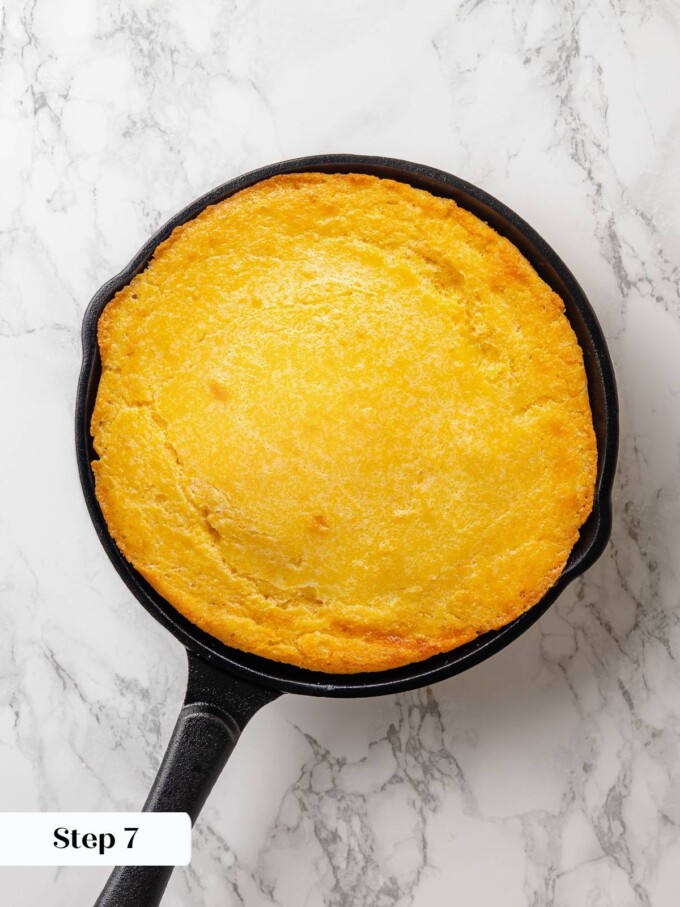
Step 6: Bake. Return the skillet to the oven and bake for 20 to 24 minutes. The cornbread is done when the center springs back firmly when you press it lightly with a fingertip, or when a toothpick inserted in the center comes out clean or with a few clinging crumbs. The top will be golden and the edges will have pulled away slightly from the sides of the pan. (photo 7)
Start checking at the 20-minute mark. Ovens vary, and a minute or two of overbaking will dry out cornbread. The spring-back test is more reliable here than color alone.
Step 7: Cut and Serve. Let the cornbread cool for a few minutes, then turn it out onto a wooden cutting board and cut it into wedges with a serrated knife. If you cut it while it is still steaming hot directly in the pan, the crumb will pull and tear (which is what I learned the hard way on my first test!). Serve warm.
Recipe FAQs
Sourdough cornbread keeps at room temperature for up to 3 days, wrapped tightly or stored in an airtight container. It is genuinely at its best the day it is baked, but a quick warm in a 300°F oven for about 5 minutes brings it right back, or in the microwave for 20 seconds like I do when I just need a slice right now. If you are storing it longer than 3 days, wrap individual slices and freeze them for up to a month. Or you can use it to make this southern cornbread dressing.
You can mix the dry ingredients and the wet ingredients separately the night before and keep them covered in the refrigerator. Combine them just before baking. The baked cornbread can also be made a day ahead and reheated gently before serving.
The most likely culprit is discard that was too old. Discard older than a week is more acidic. That extra acidity makes it more like dense spoon bread. The second possibility is overmixing: once the dry ingredients go into the wet, whisk just until no dry streaks remain and stop there.
Regular cornbread without discard tends to be more one-dimensional in flavor, leaning either sweet or savory depending on the recipe, and it dries out faster once cut. Sourdough Cornbread has a subtle tang that pulls the flavor in a more complex direction and keeps the crumb moist longer, thanks to both the discard and the sour cream. The preheated skillet technique also gives it a golden bottom crust that most standard cornbread recipes skip entirely.
Yes, a 9-inch round cake pan, an 8×8 or 9×9-inch baking dish, or even a standard square cake pan all work here. The one thing you give up without cast iron is that deeply golden, slightly crispy bottom crust, which comes from the skillet’s heat retention, but the crumb itself will still be moist and tender. If you are using a cake pan, you can still preheat it in the oven with the butter for the same effect.
Recommended Sourdough Recipes

Sourdough
Bread
Bread

Sourdough
Sourdough Cornbread
Ingredients
- 1 cup all purpose flour
- ⅔ cup yellow cornmeal, finely ground
- 2 teaspoons kosher salt
- 2 teaspoons baking powder
- 2 tablespoons granulated sugar
- 3 large eggs
- 1 cup sour cream
- 1 cup sourdough discard
- 10 tablespoons unsalted butter, melted, for the batter
- 1 tablespoon unsalted butter, for the pan
Instructions
- Preheat the oven to 350°F (not convection). Place your cast iron skillet or baking pan in the oven with 1 tablespoon butter for the last 10 to 15 minutes of preheat time.
- Whisk together the flour, cornmeal, salt, baking powder, and sugar in a medium bowl. Set aside.
- In a large bowl, whisk together the eggs, sour cream, sourdough discard, and melted butter until smooth and emulsified.
- Add the dry ingredients to the wet and whisk just until combined. Do not overmix.
- Remove the hot skillet from the oven. Pour in the batter and spread it to the edges with a silicone spatula.
- Bake for 20 to 24 minutes, until the center springs back when pressed gently and a toothpick comes out clean or with a few clinging crumbs.
- Serve warm from the pan. For clean wedges, let it cool slightly, turn it out onto a cutting board, and slice with a serrated knife.
Notes
Nutrition
Nutrition information is automatically calculated, so should only be used as an approximation.
 Like this recipe? Rate & comment below!
Before You Go
If this sourdough cornbread earned a spot in your regular rotation, there is plenty more where it came from. Browse our Quick Bread Recipes or Sourdough Discard Recipes for more!



I was skeptical that a cornbread could come together this fast, but the crumb was genuinely moist and the tang from the discard was subtle but noticeable in the best way. My cast iron skillet gave it the most perfect golden crust on the bottom.
Thank you for taking the time to come back and comment Renata! Be sure to check out our other sourdough discard recipes. ~GVD team