
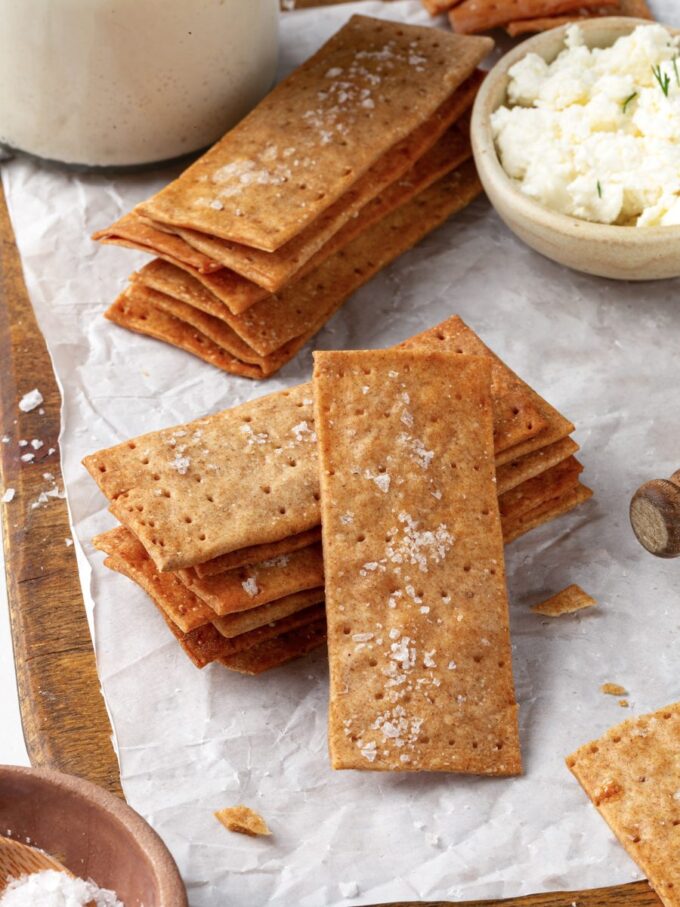
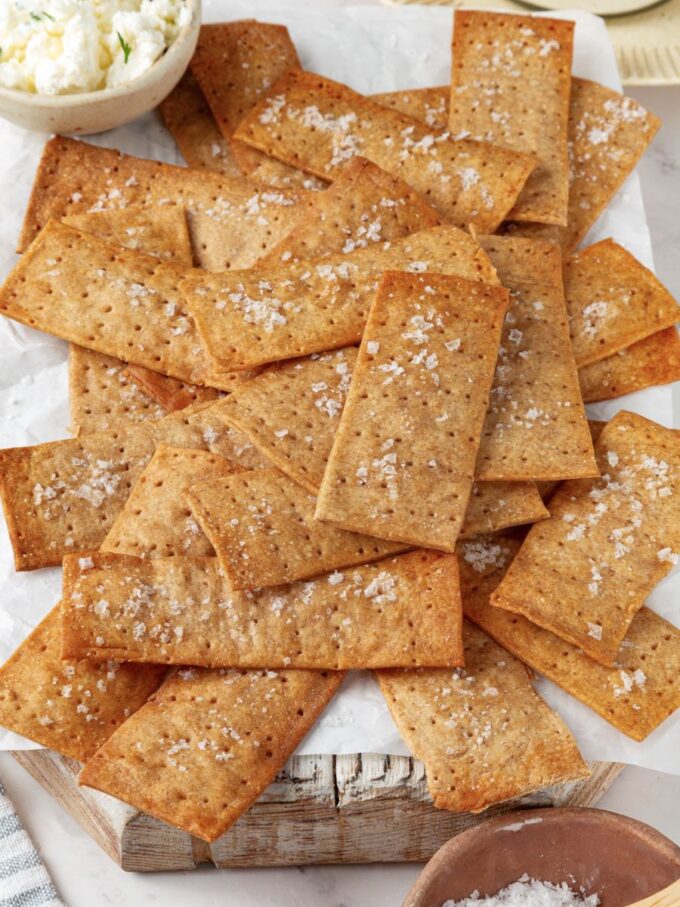
This sourdough crispbread is one of the most rewarding things you can make with discard. Dark rye flour and a long fermentation give it a bold, salty tang and a satisfying crunch that holds for weeks.
A Quick Look At The Recipe
This is a brief summary of the recipe. Jump to the recipe to get the full details.
Prep Time
20 minutes
Cook Time
30 minutes
Proof/Rest Time
2 hours
Total Time
2 hours 50 minutes
Servings
36 crackers
Difficulty
Intermediate
Calories *
30 kcal per serving
Technique
Long fermentation with sourdough discard
Flavor Profile
Sourdough tang, rye, salty, crisp
* Based on nutrition panel
“I made these on a Friday night and let them ferment overnight, and by Saturday afternoon I had the crunchiest, most flavorful crackers I have ever made at home! The dough rolled out so thin and even, and they stayed crisp on the counter for nearly two weeks. Absolute keeper! I can’t wait to experiment with toppings” ⭐⭐⭐⭐⭐
Margot
Why You Will Love This Recipe
- Only five ingredients. This recipe comes together from rye flour, sourdough discard, kosher salt, milk, and butter. No long ingredient list, nothing to track down.
- A great use for discard. Sourdough discard is doing real work here, adding bold tang and enough elasticity to make the dough easy to roll paper-thin. If you have a jar of discard waiting in the fridge, check out my ultimate guild to sourdough discard recipes for more ways to use it.
- The crunch holds for weeks. Most homemade crackers go soft within a few days. Stored in an airtight container at room temperature, these stay crisp for up to two weeks.
- Flexible from the start. You can bake these the same day or let the dough ferment for 24 to 48 hours for deeper flavor. If you enjoy sourdough baking projects, my sourdough dinner rolls are worth bookmarking next.
Table of Contents
If you’re craving a crisp, crunchy rye cracker with a delightful sourdough tang, this is the recipe for you. My favorite version uses a long-fermented sourdough discard for big, bold flavor and a dough that’s surprisingly easy to roll paper-thin. The result is a shatteringly crisp bread that’s worlds above anything from a box.
These are the kind of crackers I put out with cheese and call it dinner, and no one complains. If you love rye-forward baking, my Swedish knäckebröd is the closest cousin to this recipe and worth making side by side, or you can try this easy rieska recipe or these sourdough discard crackers!
Ingredients & Substitutions
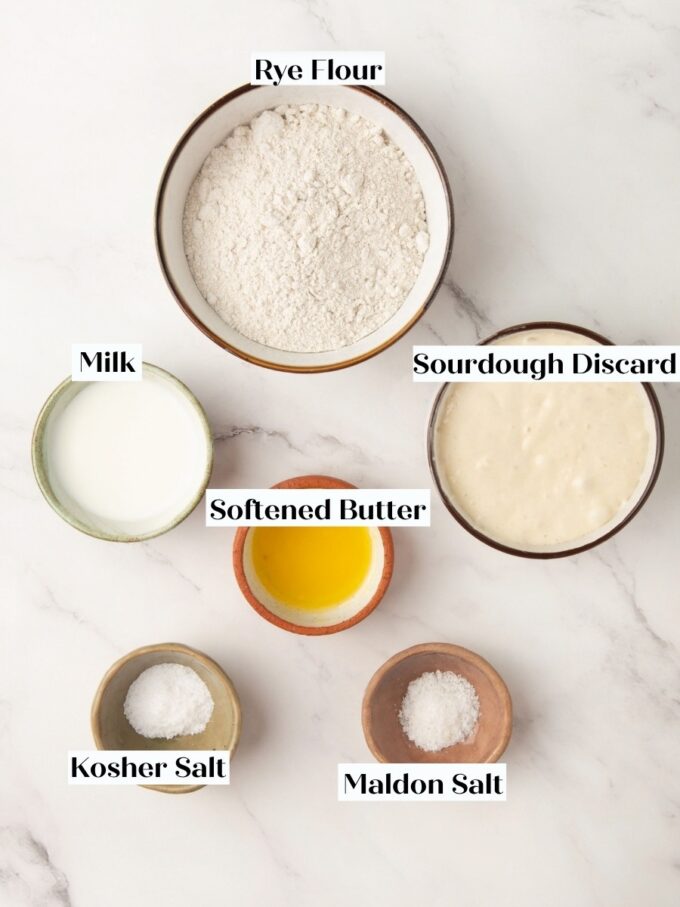
- Dark Rye Flour: This is the backbone of the recipe, giving the crispbread its hearty, slightly nutty flavor and helping create a genuinely crisp texture. If you love baking with rye, you should try this sourdough rye bread next! If you substitute whole wheat or all-purpose flour, the crackers will bake up with a noticeably milder flavor and a different crumb structure or you could make these whole wheat crackers.
- Sourdough Discard: Flat, unfed discard is what you want here. It adds bold tang and, interestingly, gives the dough a slight elasticity that makes rolling it paper-thin much easier than you might expect. Using active, bubbly starter instead of discard will produce a milder flavor. For more on keeping your starter healthy between uses, my guide on how to feed sourdough starter covers everything you need to know.
- Kosher Salt: Kosher salt seasons the dough evenly without overpowering the rye or the tang from the discard. If you only have table salt, use a smaller amount since it is finer and more concentrated.
- Milk: A small amount of milk adds just enough richness to bring the dough together smoothly and soften the tang slightly. Substituting water will produce a crisper crispbread with a little less depth of flavor.
- Softened Butter: Brushed on just before baking, the butter helps the crispbread brown evenly and adds a subtle richness to the finished cracker. Use it soft so it spreads easily without tearing the rolled dough.
- Flaky Sea Salt: Sprinkled on top before baking, flaky sea salt like Maldon adds a satisfying crunch and a bright pop of salinity in every bite. Kosher salt works in a pinch, but the flake texture makes a real difference. You can find other fun topping inspirations in my [sourdough crackers]!
Variations for sourdough crispbread (knackebrod)
- Seeded Topping. Press sesame seeds, poppy seeds, fennel seeds, or caraway into the rolled dough before baking. Any seed works, but caraway is the most traditional and leans into the rye flavor.
- Herb and Garlic. Mix a teaspoon of dried or fresh rosemary or thyme directly into the dough before resting. The fermentation time draws out the aromatics and they bake into every bite. Just know that when adding inclusions to the dough, it can cause the crackers to tear if rolled thin.
- Spicy. Add a pinch of red pepper flakes or smoked paprika to the dough. The heat stays subtle but gives the finished crispbread a little warmth that works well with soft cheese.
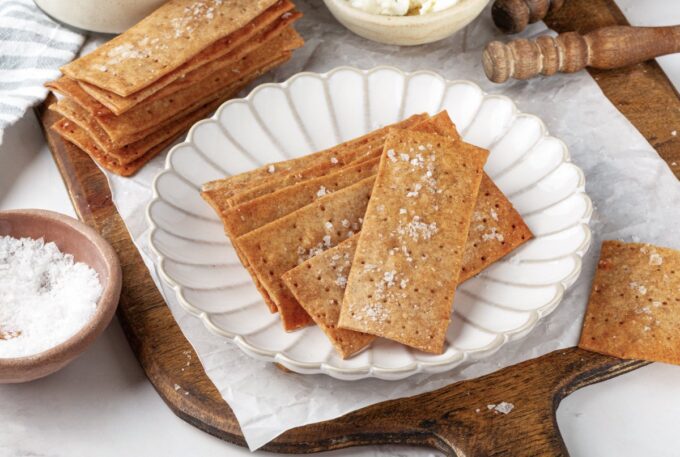
Professional Tips for Perfect sourdough crispbread (knackebrod)
- Roll thinner than feels right. The single most common mistake with sourdough crispbread is stopping the rolling pin too soon. If the dough looks translucent and feels almost too delicate to handle, you are in the right place. Thicker dough bakes up chewy in the center no matter how long it stays in the oven.
- Do not pull them early. The crispbread should be a deep golden brown throughout before it comes out of the oven. If the edges look done but the middle feels soft when you press it lightly, give them another 2 to 3 minutes. Underbaking is the number one reason these turn soggy after cooling.
- Keep pieces small and consistent. Pieces larger than about 3 by 4 inches are difficult to bake through evenly, since the edges will start to darken before the center dries out. Cutting them to a similar size also means you can pull a full tray at once without some pieces overbaking while others lag behind.
- Let the long ferment do the work. Rolling the dough after just an hour produces a mild cracker. Letting it rest at room temperature for 24 to 48 hours builds the sharp, tangy flavor that makes these worth making, like I do whenever I have the time. For a broader look at what tools and setups support long sourdough fermentation well, essential sourdough tools for baking is worth a read before you get started.
How to Make sourdough crispbread (knackebrod)
Use these instructions to make paper-thin, deeply tangy knackebrod with a satisfying crunch. Further details and measurements can be found in the recipe card below.
Mix the Dough
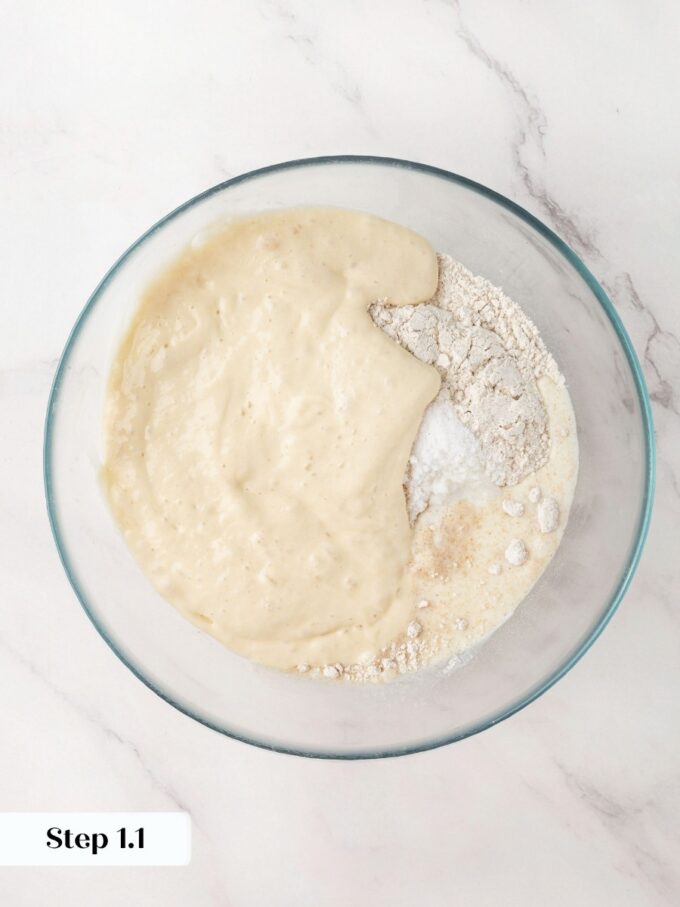
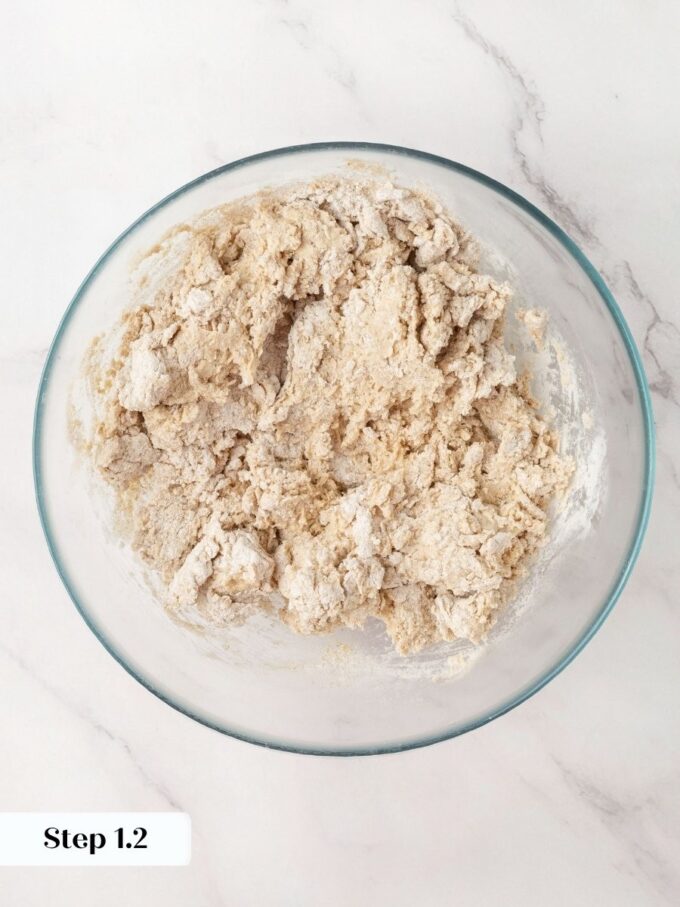
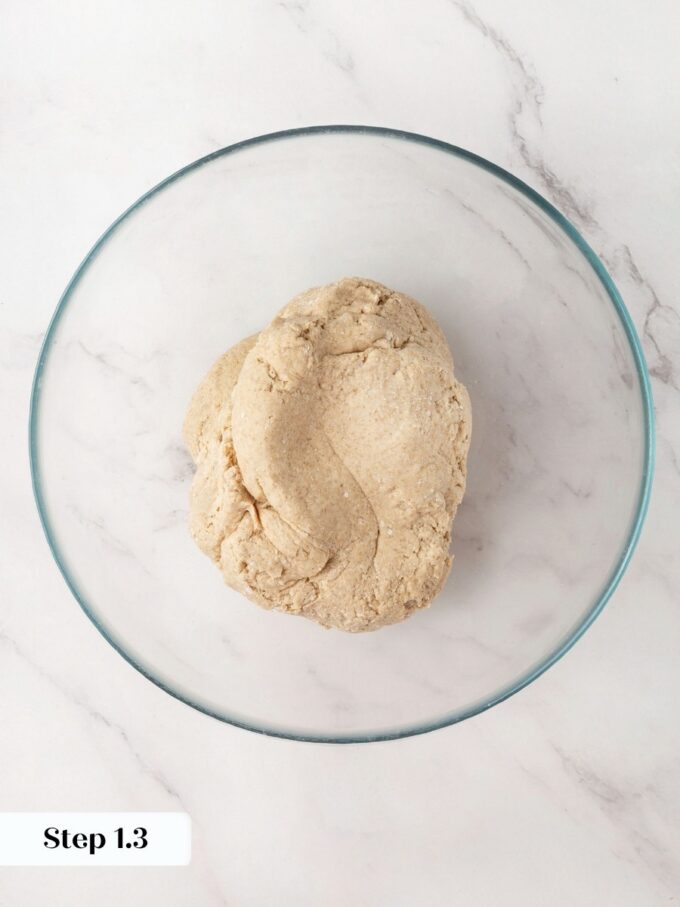
Step 1: Add the dark rye flour, sourdough discard, kosher salt, and milk to a large bowl. Mix with a large fork or spatula until the mixture looks shaggy and the flour is mostly incorporated, then knead briefly in the bowl with your hands until it comes together into a ball. The dough will feel quite stiff and just a little sticky, which is completely normal. (photos 1-3)
Rye flour has very little gluten, so this is not a dough that smooths out into something silky. It should feel dense and firm, almost like a stiff clay.
Rest and Ferment
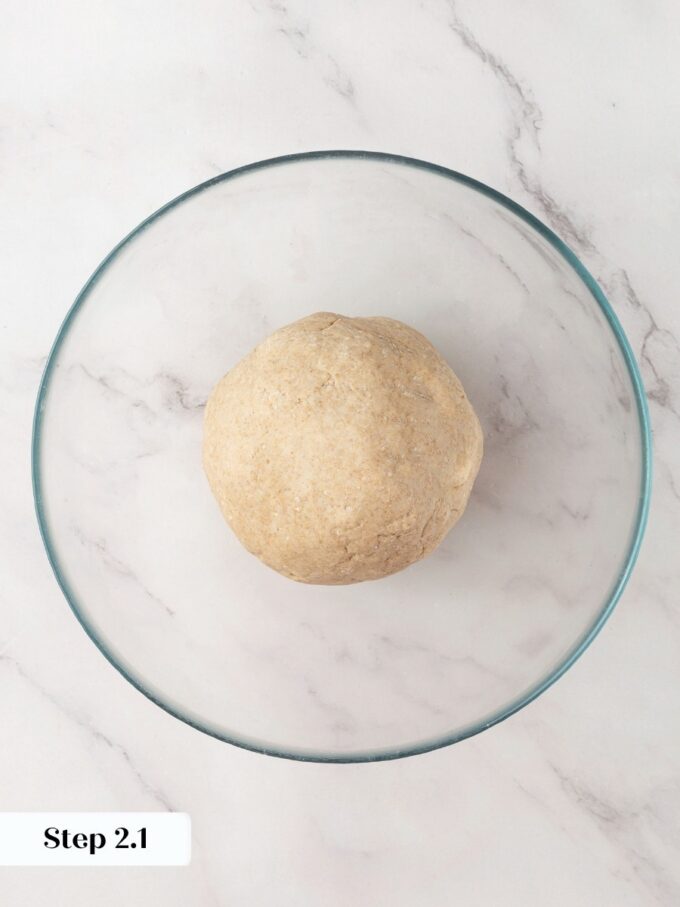
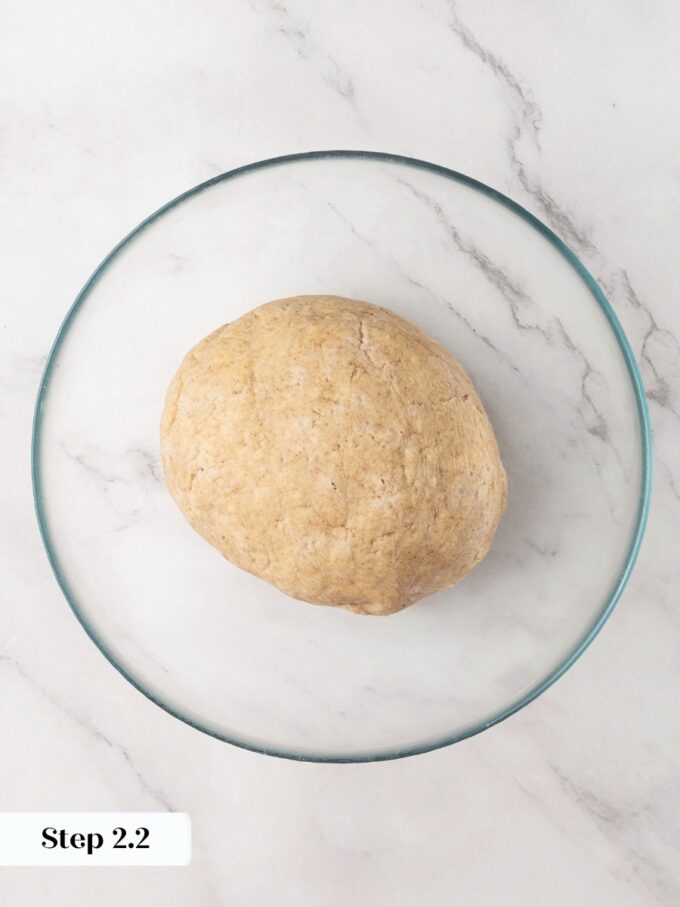
Step 2: Cover the bowl and let the dough rest at room temperature. For same-day crispbread, 1 to 2 hours is enough. The dough will not puff or rise dramatically the way a yeasted dough does. A slight softening and a faintly sour aroma are the signs that fermentation is working. (photos 4 & 5)
For the best flavor, let the dough ferment at room temperature for 24 to 48 hours before rolling and baking. That longer ferment is my favorite approach because it really amplifies the sourdough tang and gives these crispbreads their most distinctive flavor. The overnight or multi-day ferment is not required, but it is worth planning for if you can. The discard’s slight elasticity also develops further with time, which actually makes the dough easier to roll paper-thin later.
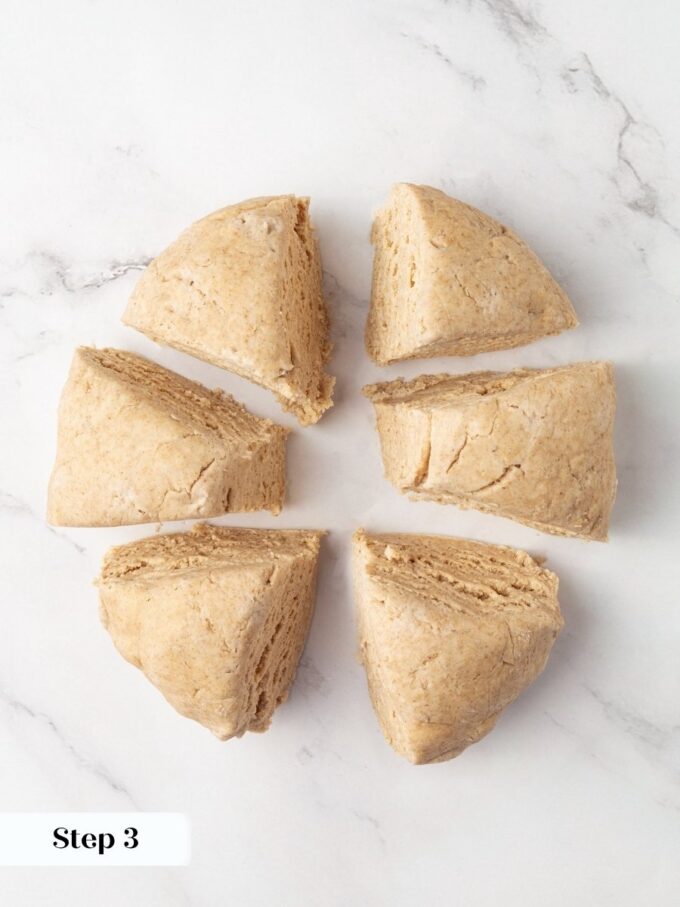
Step 3: Prepare to Roll and Bake. Preheat your oven to 350°F (no fan). Divide the dough into 6 equal pieces and keep them covered with plastic wrap so they do not dry out while you work. Working with one piece at a time keeps the rest from forming a dry skin, which is the enemy of clean, thin rolling. (photo 6)
Roll the Dough
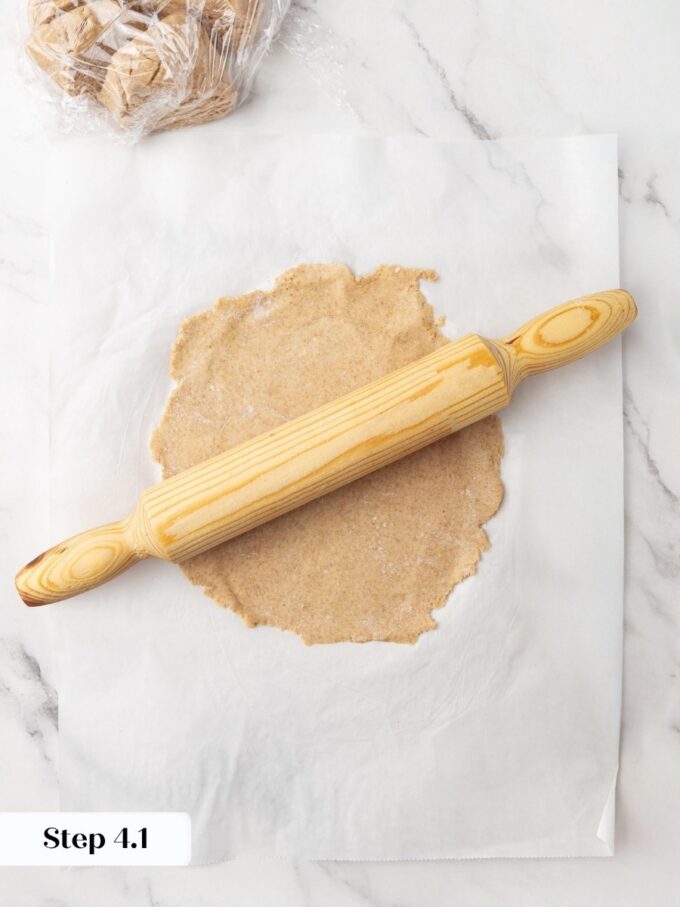
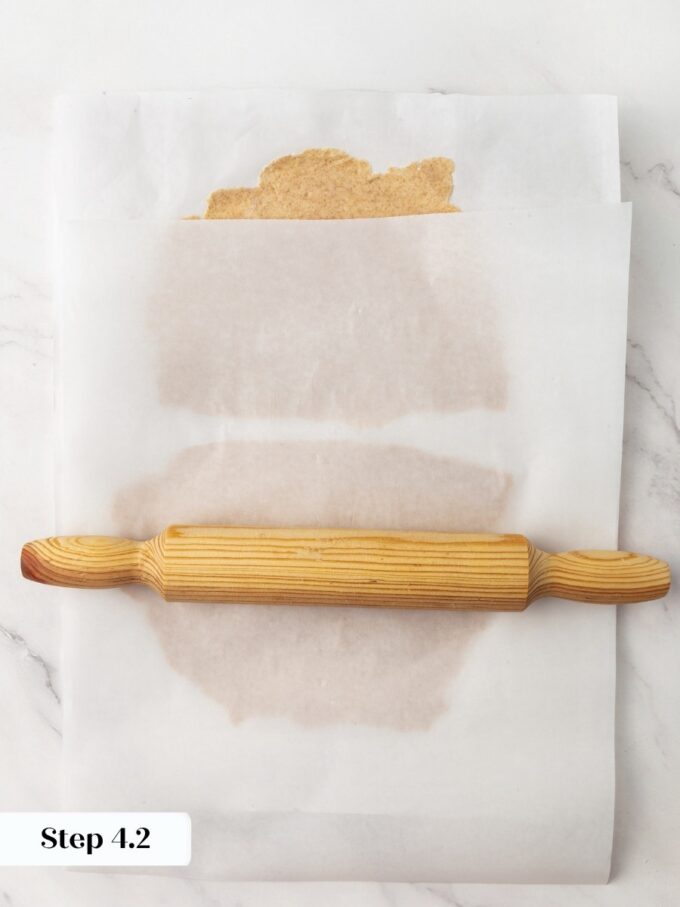
Step 4: Place one piece of dough on a sheet of parchment paper and begin rolling. Press the rolling pin away from your body while holding the parchment steady with your free hand — it is basically acting as a human dough sheeter, and that steady anchor is what lets you get real thinness without the dough sliding around. If the dough starts sticking to the rolling pin, lay a second sheet of parchment on top and continue rolling through it (photos 7 & 8).
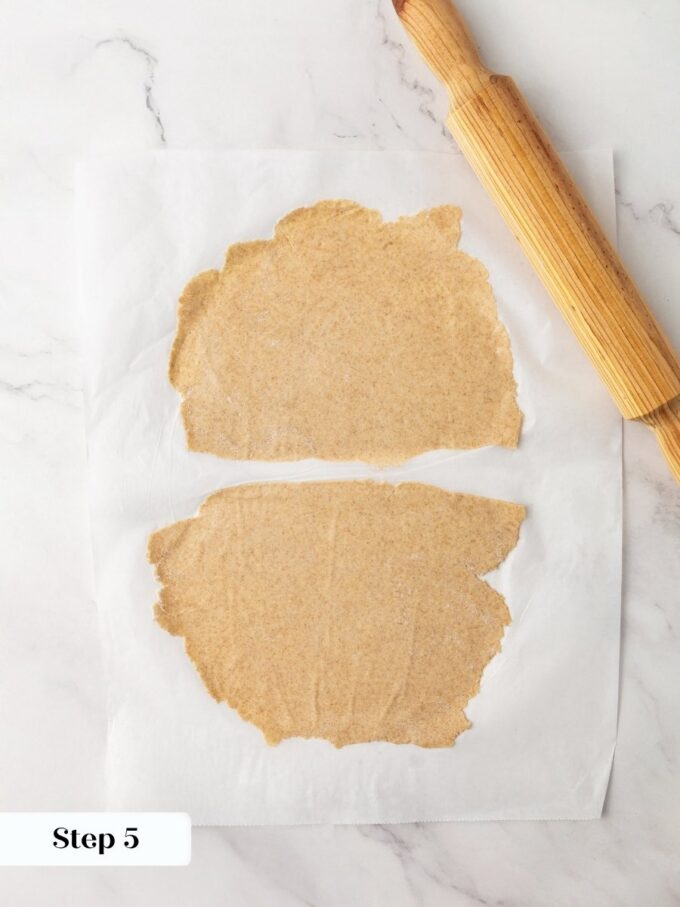
Step 5: Roll Thinner and Split. Roll until you have a rough rectangle about 7 to 8 inches across, then remove the top parchment and cut the piece in half. Separate the two halves on the parchment, replace the top sheet, and keep rolling both pieces until they are as thin as you can possibly get them (photo 9).
Roll the dough as thin as you can manage — this is the secret to crisp, not chewy, crackers.
Dock and Cut
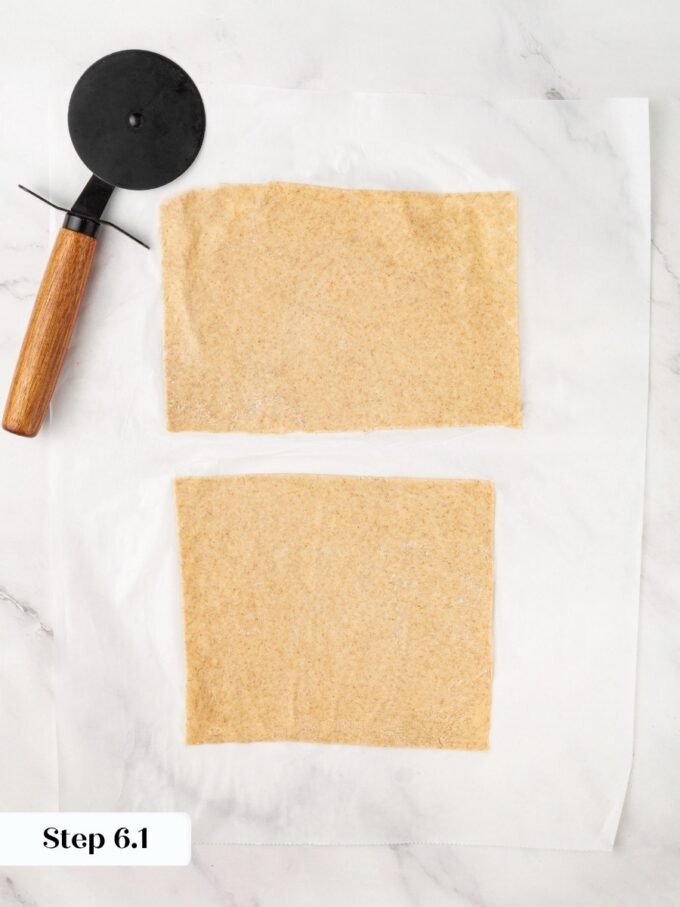
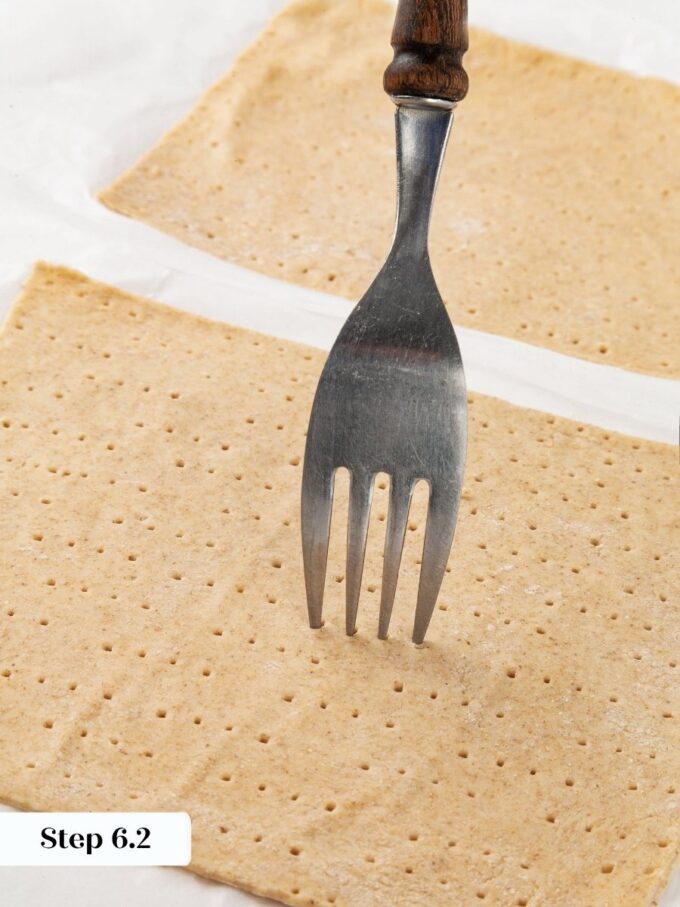
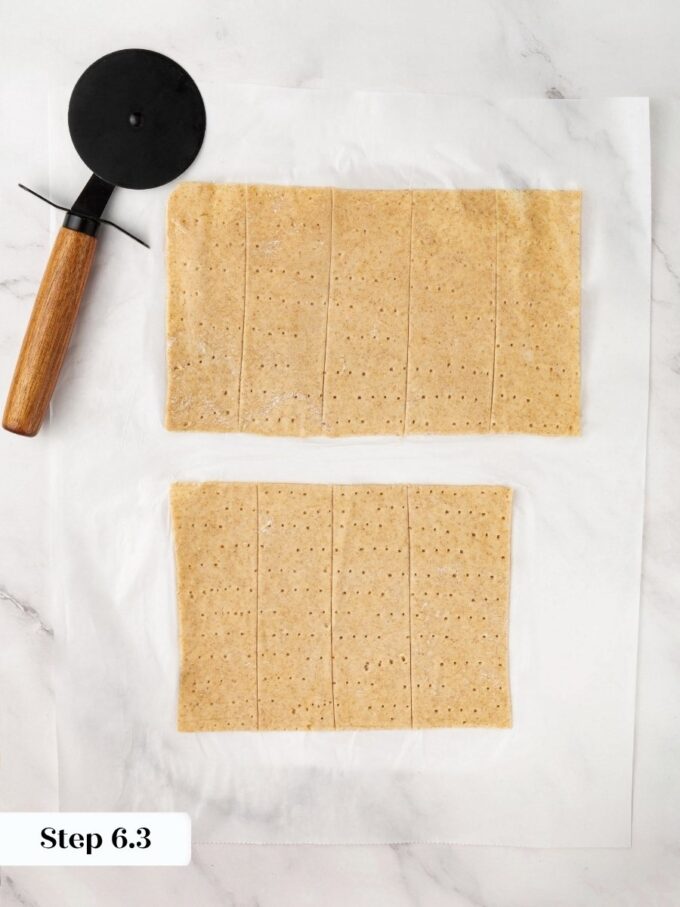
Step 6: Dock, Cut, and Top. Using a fork in each hand, poke the dough all over with the tines. This docking keeps the crispbread flat and promotes even baking. Then use a pizza wheel or sharp knife to cut the crackers to your preferred size, about 1 inch by 4 inches works well, and nothing much larger than 3 inches by 4 inches, or the centers tend to stay chewy while the edges finish. (photos 10-13)
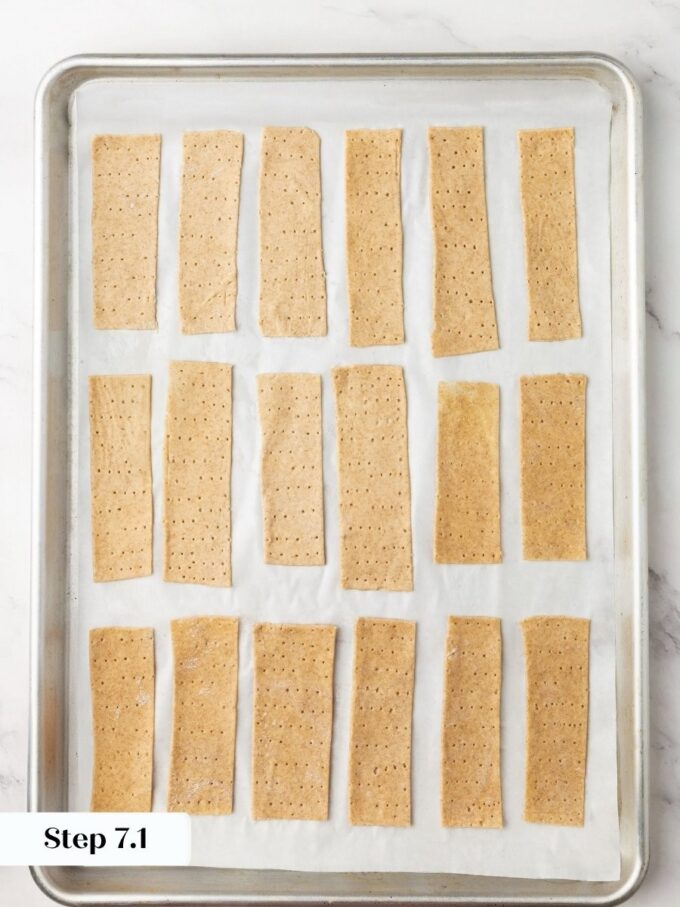
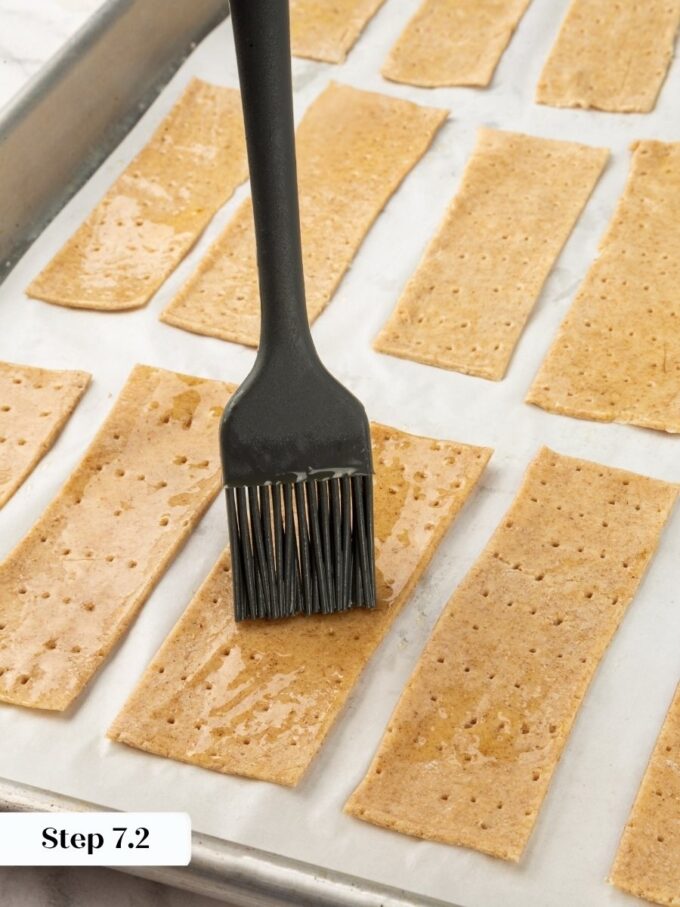
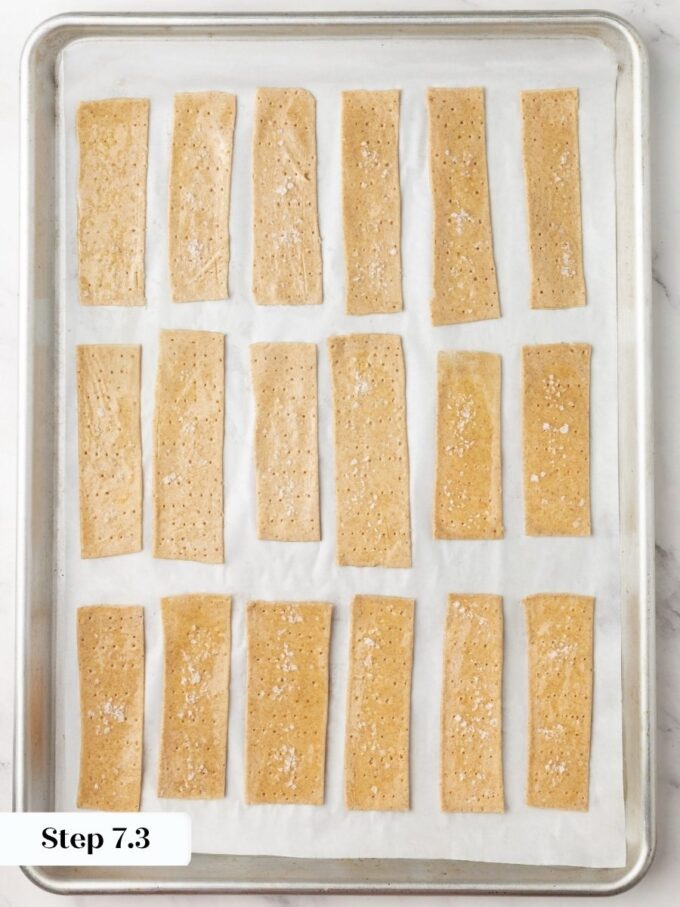
Step 7: Trim and Season. Trim any ragged edges for clean lines. Separate the pieces slightly on the parchment, brush each one lightly with softened butter, and sprinkle with flaky sea salt (photos 14-16).
Bake
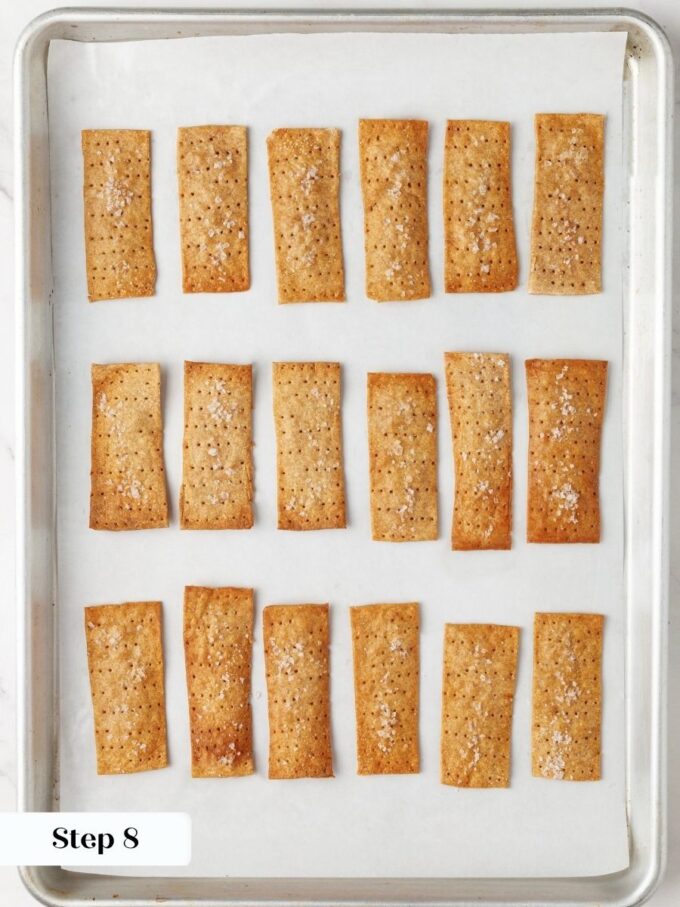
Step 8: Slide the parchment onto a baking sheet and bake for 15 to 17 minutes, until the crispbread is golden brown and crisp throughout. Pull one piece and snap it — if it bends rather than breaks, it needs more time. Do not pull the pan early; underbaking leads to a soggy texture instead of that satisfying crunch. Transfer the finished crispbread to a wire rack and cool completely before storing (photo 17).
Step 9: Repeat and Cool. Continue with the remaining dough pieces, repeating the rolling, docking, cutting, and baking process. If you have extra baking sheets and oven space, you can run multiple trays at once. Once fully cooled, store the crispbread in an airtight container at room temperature for up to two weeks. (photo 18)
Recipe FAQs
Store sourdough crispbread in an airtight container at room temperature for up to two weeks. The key is to make sure each piece is fully cooled before sealing them up, because any residual warmth will cause condensation and soften the crackers. Freezing is not necessary and not something I do, since they keep so well at room temperature on their own.
Yes, mix the dough, cover it, and let it ferment at room temperature for 24 to 48 hours before rolling and baking. The long rest builds the sharpest, most distinctive sourdough tang, and the dough actually becomes easier to roll thin after a full ferment, which is a nice bonus.
Two things most often cause this: rolling the dough too thick or pulling the pan from the oven too soon. The dough needs to be nearly translucent before it bakes, and the finished crispbread should be a deep golden brown throughout, not just around the edges. If a piece bends when you snap it instead of breaking cleanly, give the tray another 2 to 3 minutes and trust the visual cue over the timer.
You can, but the crispbread will taste noticeably different. Rye flour has very little gluten and a distinctly earthy, slightly bitter flavor that is central to traditional crispbread. Whole wheat flour has more gluten and a milder, nuttier flavor, so the crackers will be crisper in texture but less complex in taste. If you go that route, keep everything else the same and roll just as thin, since the baking time and technique do not need to change.
Recommended Cracker Recipes

Appetizers & Snacks

Appetizers & Snacks
Appetizers & Snacks

Appetizers & Snacks
Sourdough Crispbread
Ingredients
- 1¾ cups dark rye flour
- 1 cup sourdough discard
- 1½ teaspoons kosher salt
- 2½ tablespoons milk
- 2 tablespoons butter, softened, for brushing
- Flaky sea salt, such as Maldon, for sprinkling
Instructions
- In a large bowl, combine the rye flour, sourdough discard, kosher salt, and milk. Mix with a fork or spatula until shaggy, then knead briefly by hand until the dough comes together into a stiff, slightly sticky ball.
- Cover the bowl and rest at room temperature for 1–2 hours for same-day crackers, or leave at room temperature for 24–48 hours for a deeper, tangier flavor.
- When ready to bake, preheat the oven to 350°F. Divide the dough into 6 equal pieces and keep them covered with plastic wrap so they don’t dry out.
- Working one piece at a time on a sheet of parchment, roll the dough into a thin rectangle, about 7–8 inches across. If it sticks to the rolling pin, lay a second sheet of parchment on top and continue rolling. Roll as thin as you possibly can.
- Remove the top parchment. Cut the piece in half, separate the two pieces on the parchment, replace the top sheet, and continue rolling each piece thinner. Trim ragged edges with a pizza wheel if you want clean lines.
- Poke the dough all over with a fork, then cut into your preferred size. Pieces around 1 inch by 4 inches work well; avoid pieces larger than 3 inches by 4 inches or the center may stay chewy.
- Arrange the cut pieces slightly separated on a parchment-lined baking sheet. Brush lightly with softened butter and sprinkle with flaky sea salt.
- Bake 15–17 minutes, until golden brown and crisp all the way through. Do not pull them early.
- Transfer to a wire rack and cool completely before storing. Repeat with remaining dough pieces, baking as many trays at once as your oven allows.
Notes
Technique: Roll the dough as thin as you can physically manage. Press the rolling pin away from your body while holding the parchment steady, and use a second sheet of parchment on top if the dough sticks. Thin dough equals crisp crackers; thicker dough stays chewy.
Size: Keep individual crackers no larger than about 3 inches by 4 inches. Larger pieces tend to remain chewy in the center and may begin to brown on the edges before baking through.
Storage: Store completely cooled crispbread in an airtight container at room temperature for up to two weeks. Any residual warmth going into the container will soften the crackers, so let them cool fully on the rack first.
Nutrition
Nutrition information is automatically calculated, so should only be used as an approximation.
 Like this recipe? Rate & comment below!
Before You Go
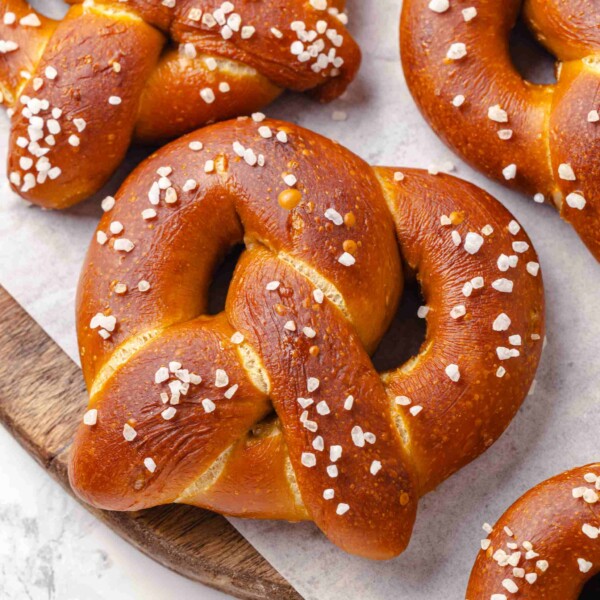
If sourdough crispbread has earned a permanent spot in your kitchen, there is plenty more to explore. Browse our Bread Recipes or make this sourdough pretzel recipe next!

I made these on a Friday night and let them ferment overnight, and by Saturday afternoon I had the crunchiest, most flavorful crackers I have ever made at home! The dough rolled out so thin and even, and they stayed crisp on the counter for nearly two weeks. Absolute keeper! I can’t wait to experiment with toppings
That is wonderful, Margot! I can’t wait to hear what toppings you start experimenting with! ~GVD team