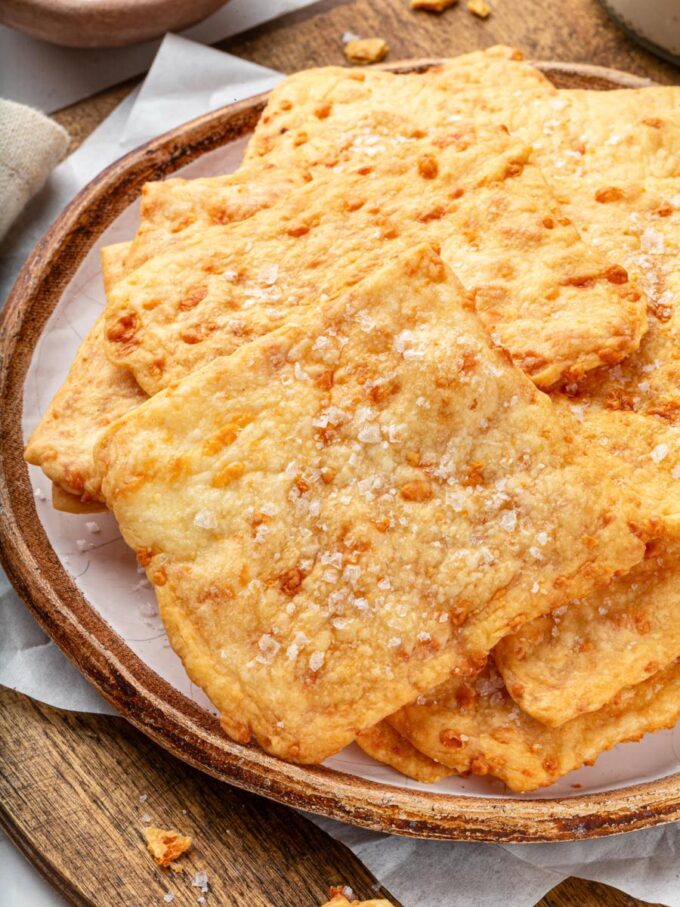
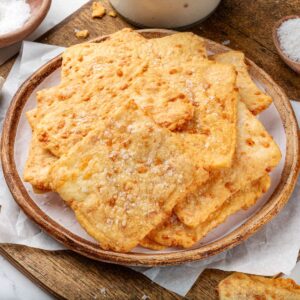
Sourdough cheese crackers are the snack I reach for whenever my discard container is full and I want something more interesting than toast. Sharp cheddar and sourdough tang together produce a cracker with real depth of flavor!
A Quick Look At The Recipe
This is a brief summary of the recipe. Jump to the recipe to get the full details.
Prep Time
20 minutes
Cook Time
25 minutes
Proof/Rest Time
2 hours
Total Time
2 hours 45 minutes
Servings
6 crackers
Difficulty
Intermediate
Calories *
316 kcal per serving
Technique
Two-stage mixing method
Flavor Profile
Sharp, savory, mildly tangy
* Based on nutrition panel
“I made these on a whim with some discard I almost threw away, and the dough was so much easier to roll thin than I expected. After chilling overnight, it sliced cleanly and the crackers came out perfectly crisp. My family demolished them before they even cooled.” ⭐⭐⭐⭐⭐
Priya
Why You Will Love This Recipe
- A cracker with real flavor. Sourdough discard and sharp cheddar together produce a savory depth that plain store crackers cannot replicate. Older discard especially takes the flavor somewhere closer to aged Parmesan, which is genuinely surprising for such a simple cracker.
- Thin and snappy, not soft or thick. Most homemade crackers come out thicker than you want because the dough is rolled once and left at that. The double-roll method here—where you cut the crackers and then roll each one again—is what gives you that true cracker snap. If you enjoy baking with discard, my sourdough chocolate chip cookies are just as easy and a nice sweet treat for the same discard jar.
- A smart use of discard. This recipe calls for 295g of unfed sourdough starter discard, which is exactly the kind of amount that builds up between feedings. If you also bake my sourdough dinner rolls, these crackers are a natural next recipe to have in rotation so nothing goes to waste.
These sourdough cheese crackers are packed with sharp cheddar and a deep, complex tang from unfed sourdough discard. Unlike most discard crackers, this recipe uses a two-stage mixing method for a true cracker structure—no chewy cheese tuiles here! It’s the perfect way to use up that jar of discard lurking in the back of your fridge.
The first time I made these, I ate an embarrassing number straight off the cooling rack while telling myself I was just testing for doneness! These are the kind of snack I now keep on the counter all week alongside these homemade goldfish or this fig newton recipe. My sourdough discard crackers use the same base!
Ingredients & Substitutions
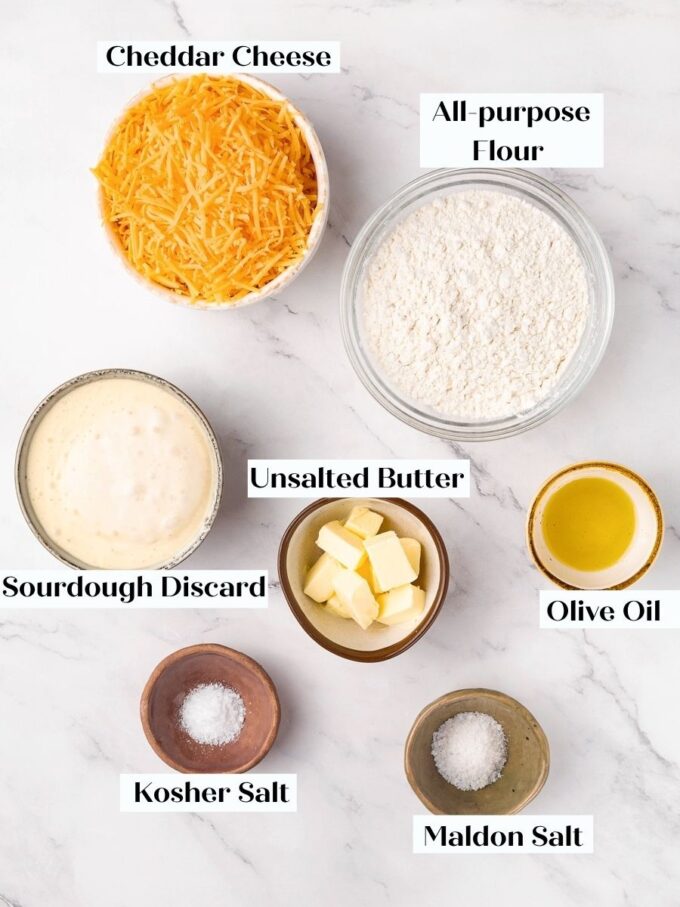
- Unfed Sourdough Starter Discard: This is the flavor engine of the recipe, contributing tang, moisture, and binding all at once. Any age of discard works here. If your discard has separated in the jar, stir it thoroughly before measuring so the full moisture content makes it into the dough. For more ways to use up what accumulates between feedings, the ultimate sourdough discard recipes collection is a good place to keep browsing.
- Sharp Cheddar Cheese: Delivers the bold cheesy flavor that defines these crackers and complements the sourdough tang. Stick with the amount in the recipe. Testing showed that adding more cheese produces a thicker, less crisp cracker and actually mutes the sourdough flavor rather than amplifying it. Shred the cheese yourself rather than buying pre-shredded, which is often coated in starch and can make even distribution harder.
- Flaky Sea Salt: Adds a finishing burst of saltiness and a pleasant textural contrast with each bite. If you use regular table salt for topping, reduce the amount since the fine grind delivers more saltiness per pinch than flakes do.
Variations for Sourdough Cheese Crackers
- Everything Bagel Topping: Swap the flaky sea salt for everything bagel seasoning sprinkled over the olive oil-brushed tops before baking. The seeds add crunch and a savory, garlicky layer that plays well against the sourdough tang.
- Herbed Crackers: Press dried rosemary, thyme, or a blend directly into the dough surface before the second roll. The herbs crisp along with the cracker and add an aromatic quality that makes these feel more like a cheese board component.
- A Different Cheese: Swap the cheddar for Gruyère for a nuttier, more mellow profile, or try Parmesan for something saltier and more delicate. For a completely different cracker experience, my easy no-knead cheese bread uses a similar bold-cheese approach in a format that requires almost no shaping skill.

Professional Tips for Perfect Sourdough Cheese Crackers
- A stand mixer makes this easier, but your hands work just as well.
- Do not skip the second roll. After cutting the crackers, roll each one again individually, aiming for as thin as you can get without tearing. This double roll is what separates a genuinely snappy cracker from one that bakes up thick and dense in the center.
- Bake by appearance. The window between perfectly golden and overdone can close fast, so check the pans every three minutes and rotate them each time. Look for light golden brown tops, visible bubbling across the surface, and cheese that has browned but not darkened at the edges.
- Give soft crackers a second bake. If any crackers still feel soft after cooling completely, they likely just need a few more minutes in the oven, not anything more complicated. Spread them back on a sheet pan and return them to a 350ºF oven in three-minute intervals until they firm up.
How to Make Sourdough Cheese Crackers
Use these instructions to make thin, snappy, deeply cheesy crackers with a distinct sourdough tang. Further details and measurements are in the recipe card below.
Make the Cracker Dough
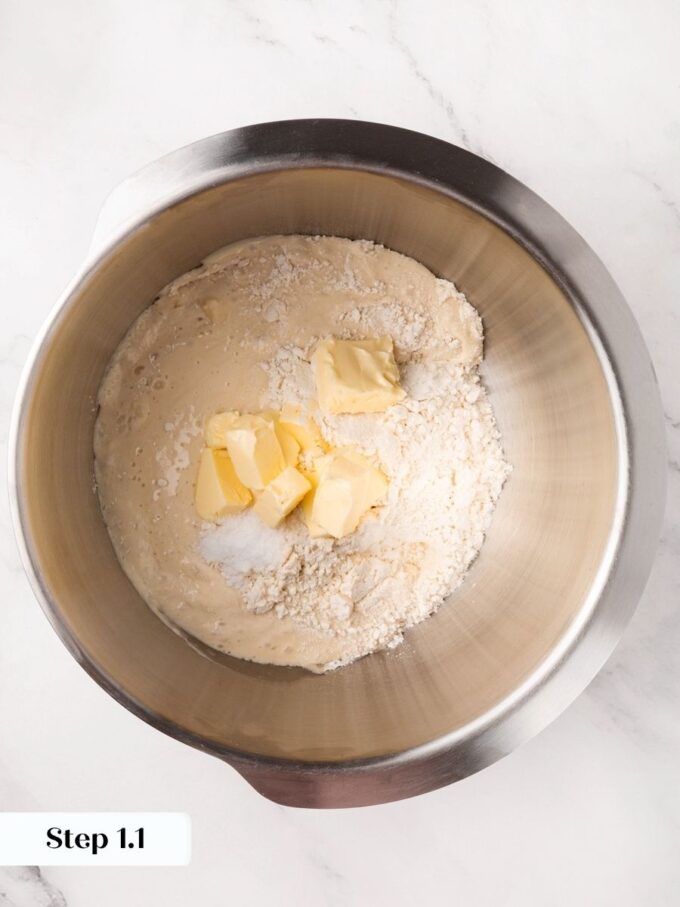
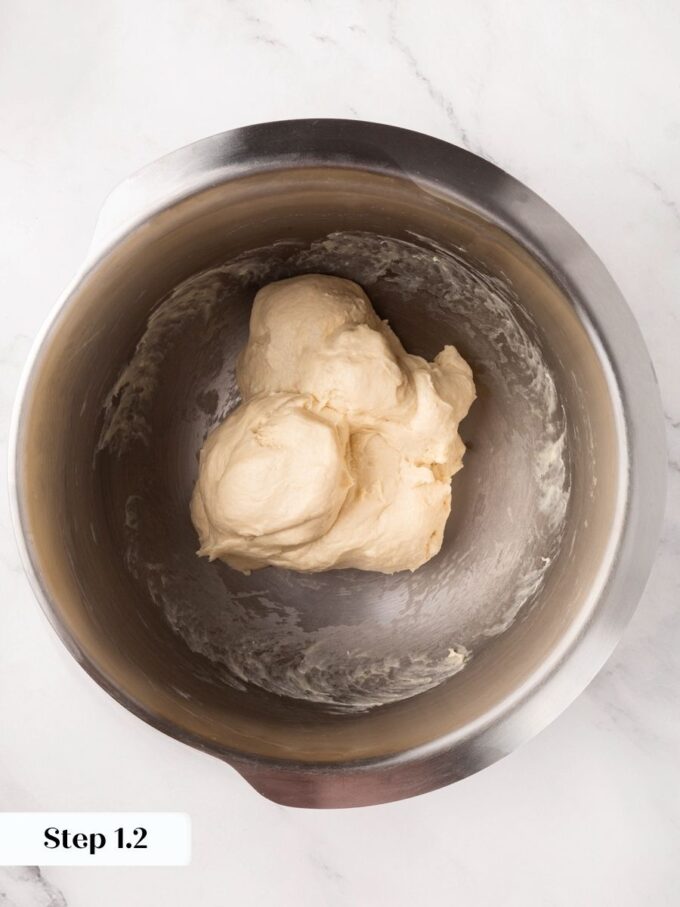
Step 1: Mix the Dough. Combine the flour, salt, sourdough discard, and butter in the bowl of a stand mixer fitted with the dough hook. Mix on low speed until the ingredients start coming together, then increase to medium and mix until a smooth, cohesive dough forms. (photos 1 & 2)
If your butter was on the cooler side, the dough may look shaggy and rough for the first minute or two, and that is completely normal. Be patient and let it keep going — the butter will incorporate and the dough will smooth out.
Step 2: Add the Cheese. Reduce the mixer to low speed and add the shredded sharp cheddar. Mix just until the cheese is distributed through the dough — you are looking for fairly even coverage, not a completely homogeneous mass. Stop as soon as the cheese is in; overworking the dough at this stage makes it harder to roll thin later. (photos 3 & 4).
The two-stage mixing — first developing the dough, then adding the cheese — makes it possible to roll the dough super thin around the cheese, which is key for that cracker snap.
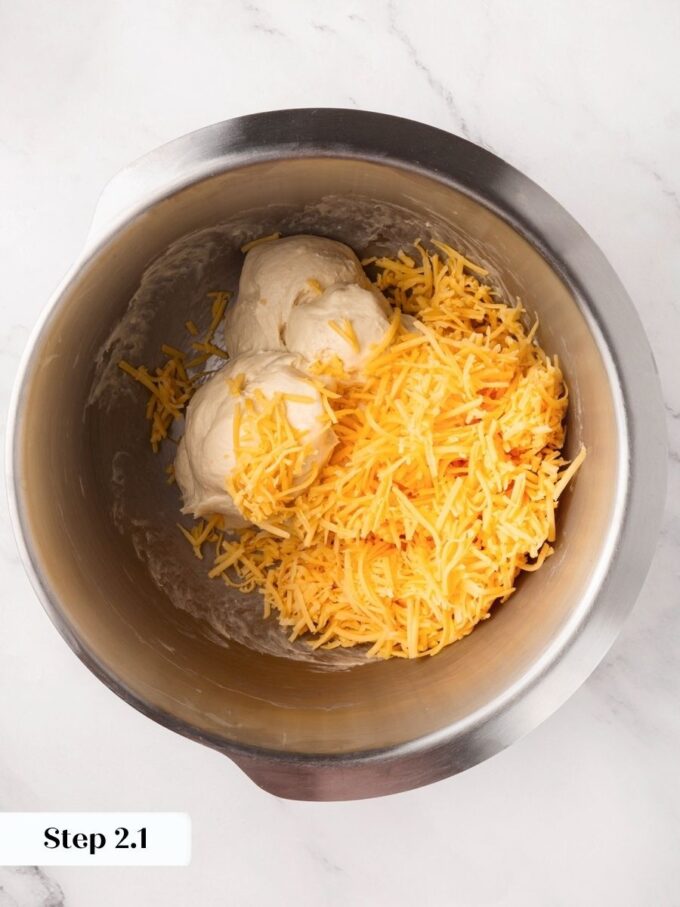
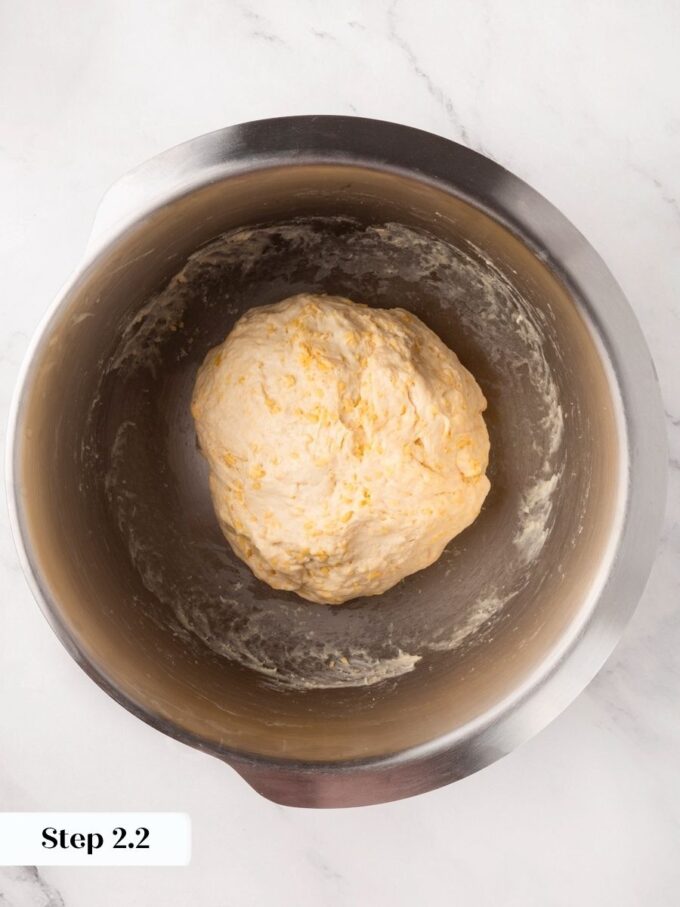
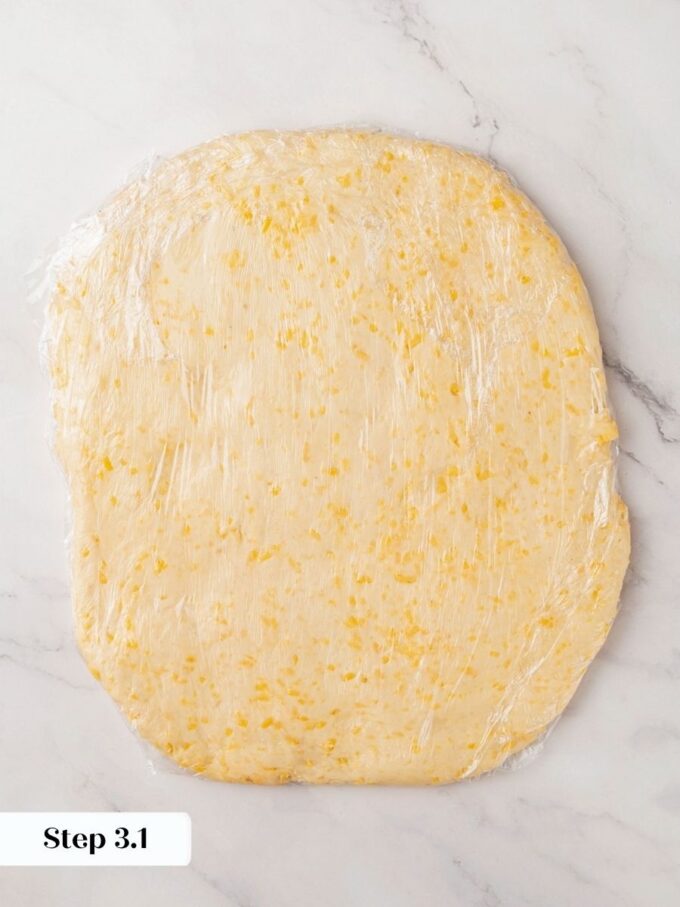
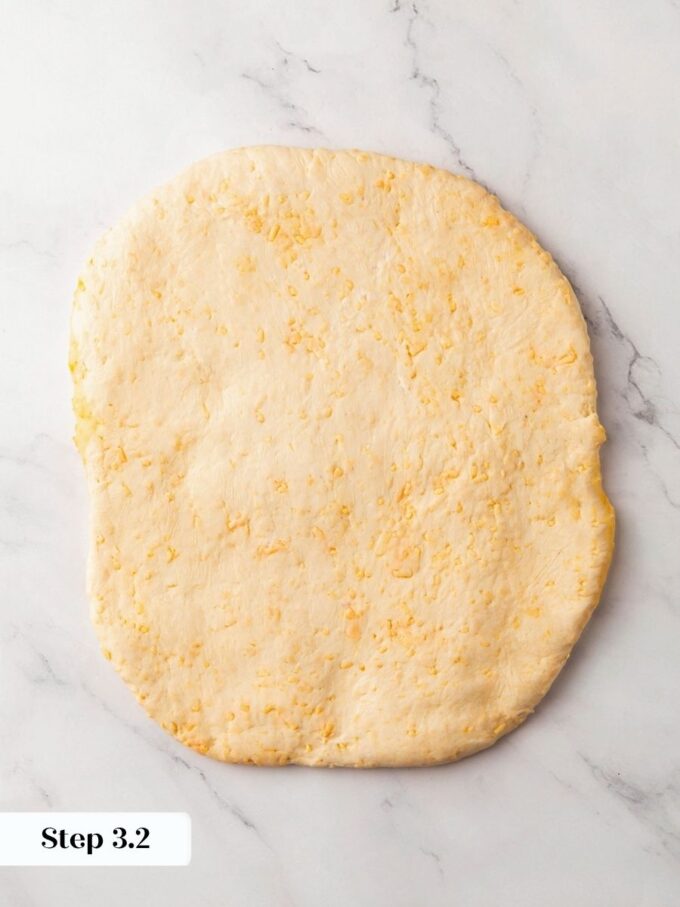
Step 3: Chill the Dough. Turn the dough out onto a sheet of plastic wrap and press it into a rough ½-inch-thick square. The dough will feel slightly tacky, and you may see flecks of cheese throughout, which is exactly right. Wrap it tightly and refrigerate for at least 2 hours and up to 8 hours, or overnight if that is easier for your schedule. The chill firms the butter and relaxes the dough, both of which make rolling much easier.(photos 5 & 6)
Step 4: Prep the Pans and Oven. Preheat your oven to 350°F convection (with fan) or 375°F conventional (no fan). Line three sheet pans with parchment paper and brush the parchment with olive oil. The olive oil prevents sticking and helps the bottoms of the crackers crisp up evenly, so don’t skip it.
Roll and Cut
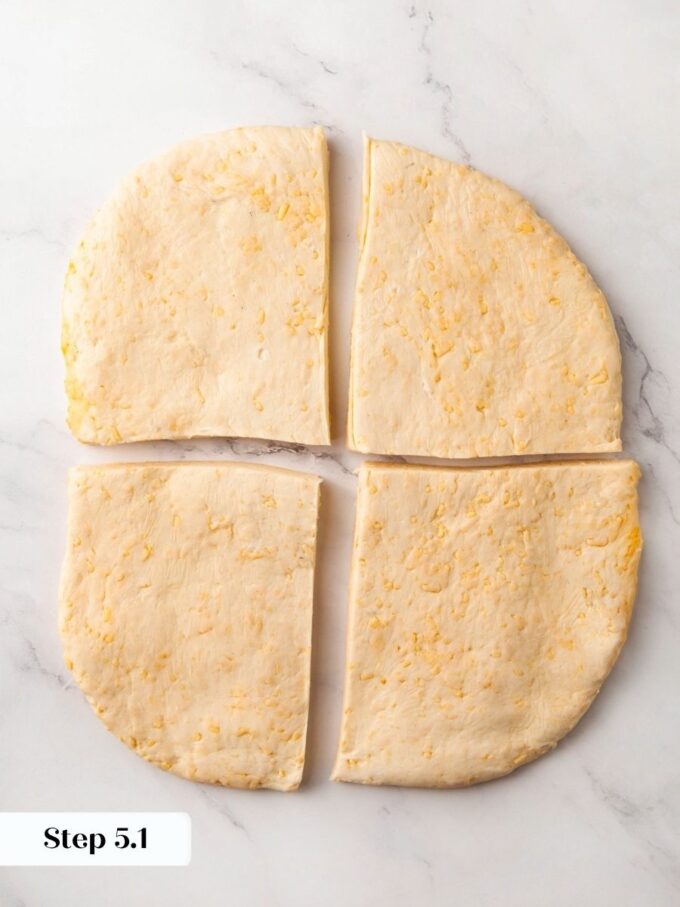
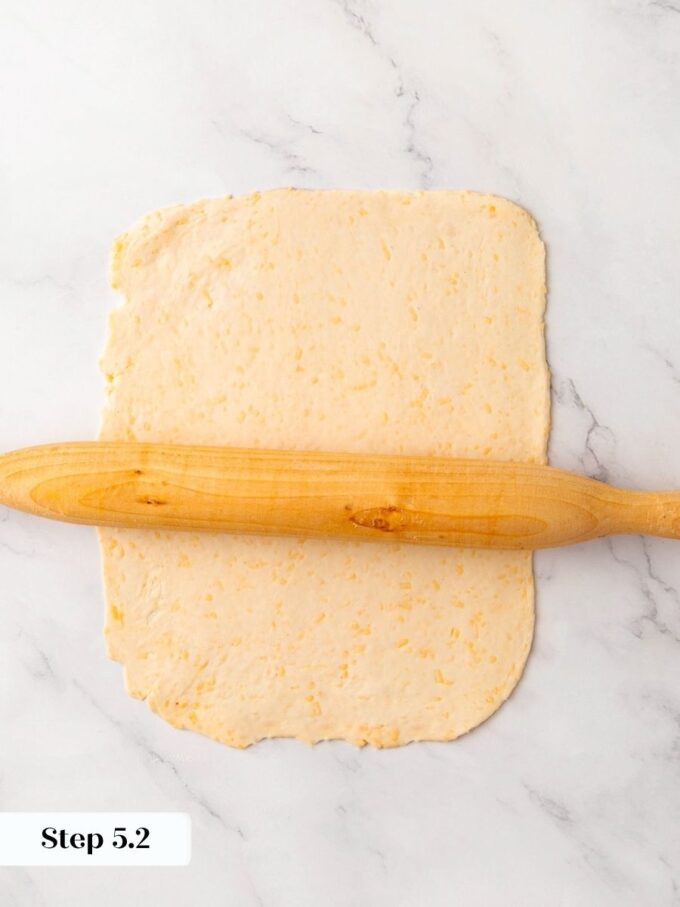
Step 5: Roll, Cut, and Roll Again. Lightly flour your work surface and rolling pin. Divide the chilled dough into four equal pieces and work with one piece at a time, keeping the rest in the refrigerator (photos 7 & 8).
Roll one piece out as thin as you can, aiming for about 2mm. The dough will feel firm coming out of the fridge, which is fine — it will relax and roll thinner as it warms up.
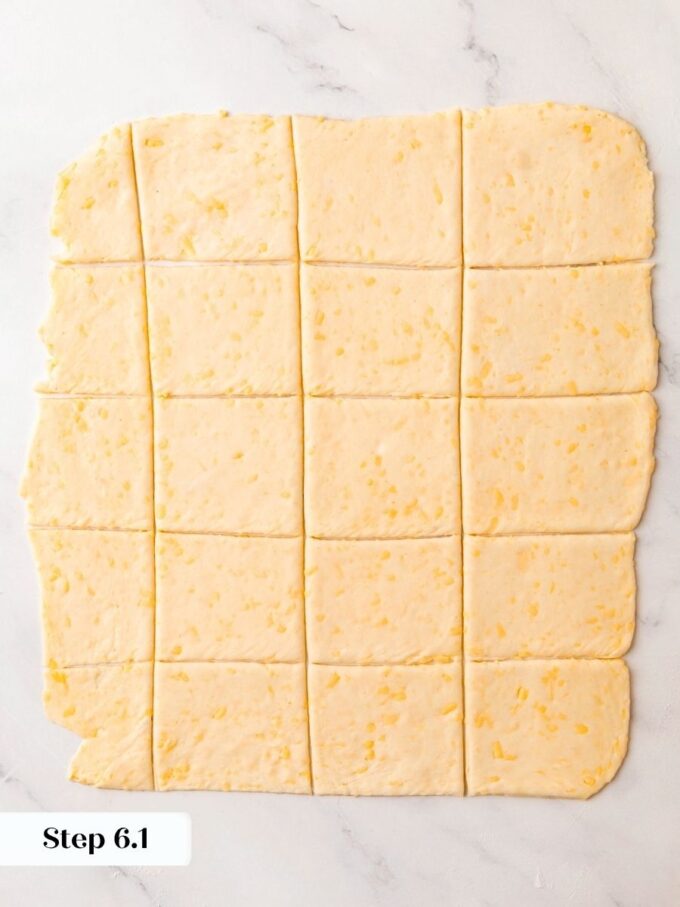
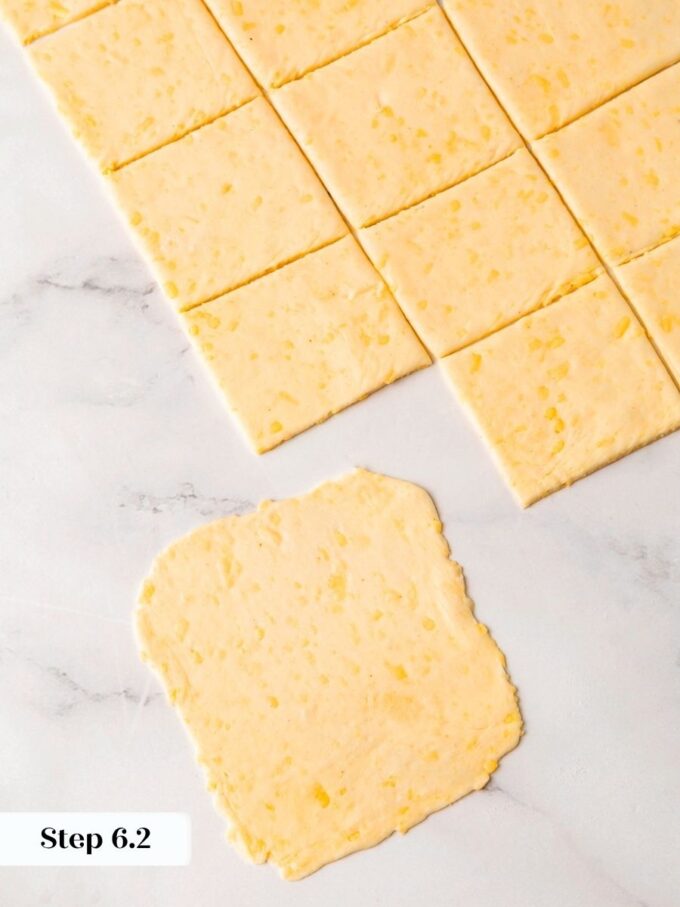
Step 6: Roll, Cut, and Roll Again. Cut the rolled dough into crackers approximately 1½ x 2 inches using a sharp knife, pizza cutter, or pie dough wheel. Then take each individual cut piece and roll it again, pushing for as thin as possible without tearing . This double roll is what gives you that true cracker snap — it is the step most people skip, and it makes all the difference. (photos 9 & 10)
The dough will roll thinner as it warms up, and a few tears near the cheese are no problem.
Bake
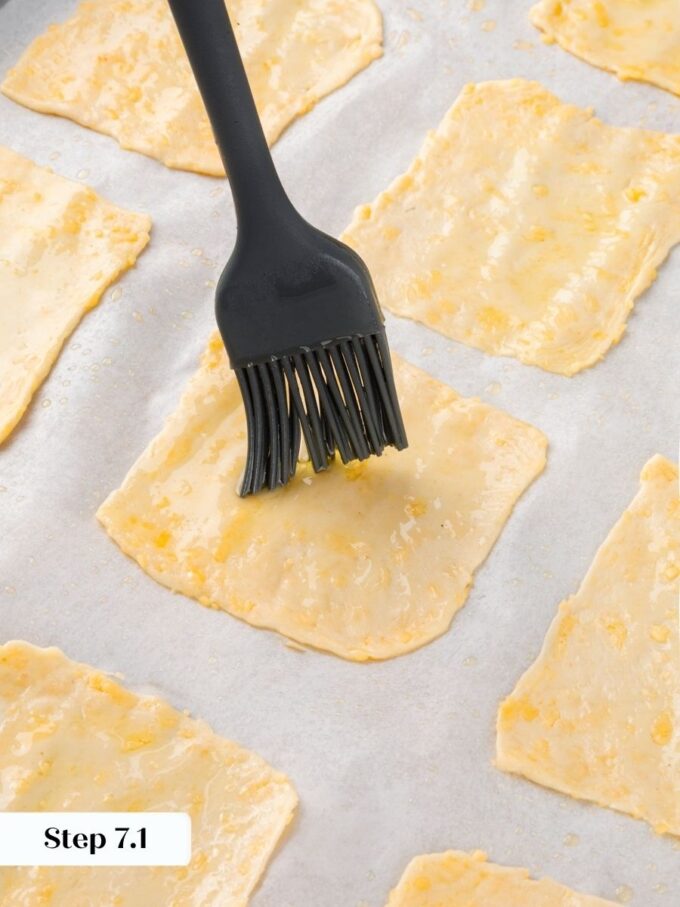
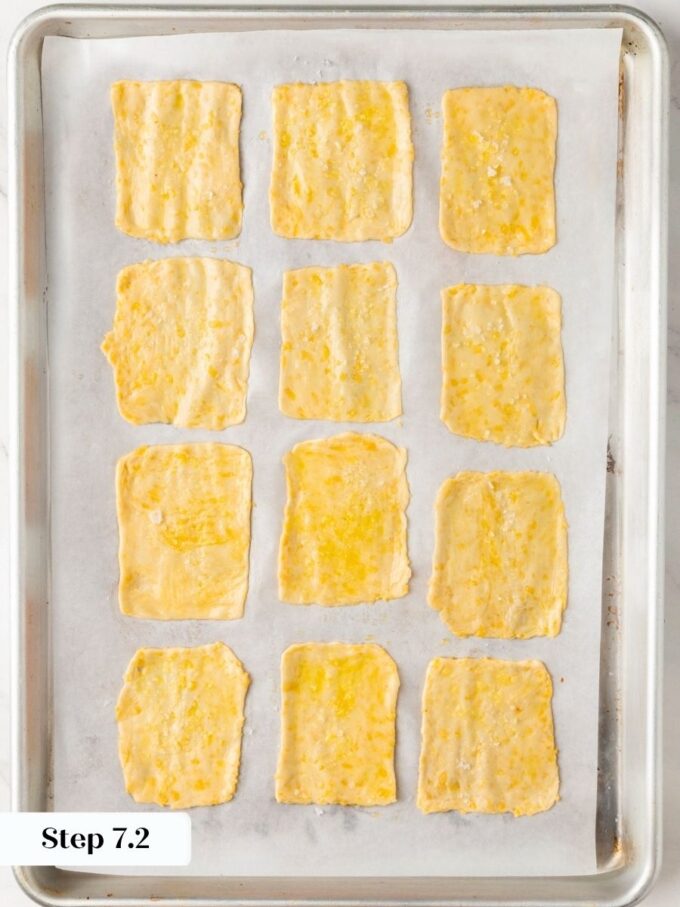
Step 7: Top and Bake. Transfer the rolled crackers to the prepared baking sheets. Brush the tops with olive oil and sprinkle with flaky sea salt or your topping of choice (photos 11 & 12).
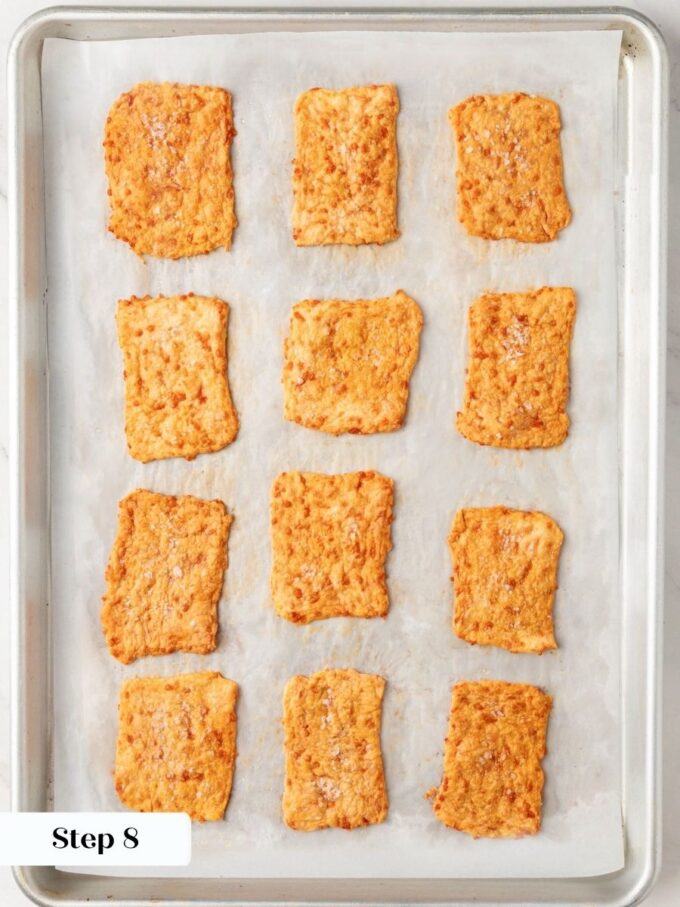
Step 8: Top and Bake. Bake for 12 to 16 minutes, checking every 3 minutes and rotating the pans. Watch the crackers rather than the clock: you are looking for light golden brown tops, visible bubbling across the surface, and cheese that has browned but not burned. Pull them when those three things line up, regardless of where the timer sits. Allow the crackers to cool completely on the pans before serving or storing — they continue to crisp as they cool. (photo 13).
Recipe FAQs
Sourdough cheese crackers are kept at room temperature in an airtight container for up to five days. If they lose their snap after a day or two, spread them on a sheet pan and return them to a 350ºF oven for three-minute intervals until they crisp back up, like I do when a batch softens overnight.
Yes, and honestly the dough is better for it. After mixing, press the dough into a square, wrap it tightly, and refrigerate it for up to eight hours or overnight before rolling and baking. The longer chill firms the butter and relaxes the dough, which makes rolling to that 2mm target noticeably easier.
The most common reason is skipping the second roll. Cutting the dough and then rolling each cracker again individually is what gets you into true cracker territory — without it, the crackers bake up thicker and denser at the center and stay soft even after cooling. If the crackers still feel soft after cooling completely, they just need another pass in the oven, which is usually enough to fix them.
You can, and it works just as well. Use the same two-stage method: combine the flour, salt, discard, and butter by hand until smooth, then fold in the cheese with as few passes as possible. The key is stopping once the cheese is distributed — overworking the dough at that stage makes it harder to roll thin, whether you are using a mixer or your hands.
Recommended Recipes
Appetizers & Snacks

Appetizers & Snacks
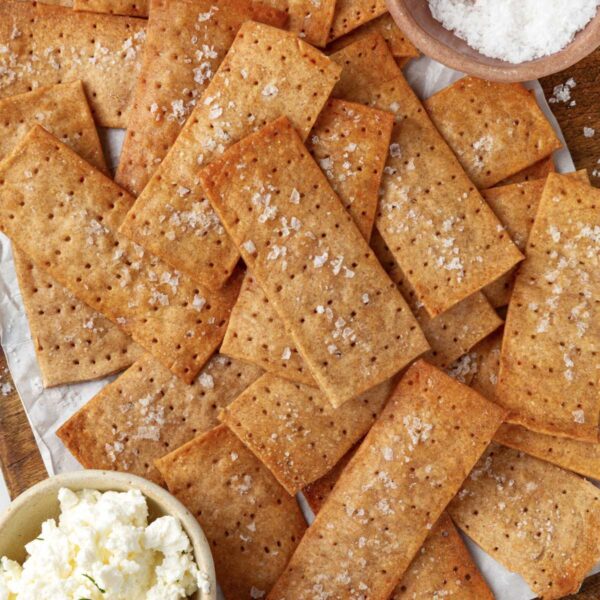
Appetizers & Snacks
Bread
Sourdough Cheese Crackers
Ingredients
- 1¼ cups all-purpose flour, 155g
- ½ tsp kosher salt
- 1 cup sourdough starter discard, 295g, measured in a liquid measuring cup, unfed
- ¼ cup unsalted butter, room temperature
- 1½ cups sharp cheddar cheese, 165g, shredded
- Olive oil, for brushing
- Flaky sea salt, such as Maldon, for topping
Instructions
- In the bowl of a stand mixer fitted with the dough hook, combine the flour, salt, sourdough discard, and butter. Mix on low until combined, then increase to medium and mix until a smooth dough forms. If your butter was cold, be patient — it will come together.
- Reduce to low speed and add the shredded cheddar. Mix just until distributed through the dough. Do not overmix at this stage.
- Press the dough into a ½-inch-thick square on a piece of plastic wrap. Wrap tightly and refrigerate for 2 to 8 hours or overnight.
- Preheat oven to 350°F convection or 375°F conventional. Line three sheet pans with parchment and brush with olive oil.
- Lightly flour your work surface and rolling pin. Quarter the dough and roll one piece at a time to about 2mm thickness.
- Cut dough into pieces approximately 1½ x 2 inches using a sharp knife, pizza cutter, or pie dough wheel. Take each cut piece and roll it again, as thin as possible without tearing.
- Transfer crackers to prepared baking sheets. Brush tops with olive oil and sprinkle with flaky sea salt or your preferred topping.
- Bake 12 to 16 minutes, checking every 3 minutes and rotating pans. Pull when the tops are light golden brown, the cheese has browned (not burned), and you see bubbling across the surface. Cool completely before serving or storing.
Notes
Cheese amount: Stick to 165g (1½ cups) shredded sharp cheddar. More cheese makes the crackers thicker and less crisp, and mutes the sourdough flavor.
Measuring discard: Stir your discard well before measuring. If it has separated, the watery layer on top will throw off the dough hydration if not fully incorporated first.
Storage: Store at room temperature in an airtight container for up to 5 days. If any crackers soften, spread them on a sheet pan and return to a 350°F oven for a few minutes to re-crisp.
Nutrition
Nutrition information is automatically calculated, so should only be used as an approximation.
 Like this recipe? Rate & comment below!
Before You Go
If these sourdough cheese crackers have earned a permanent spot in your discard rotation, there is plenty more waiting for you. Browse our Appetizer & Snack Recipes or try these fruit and nut crackers next!