
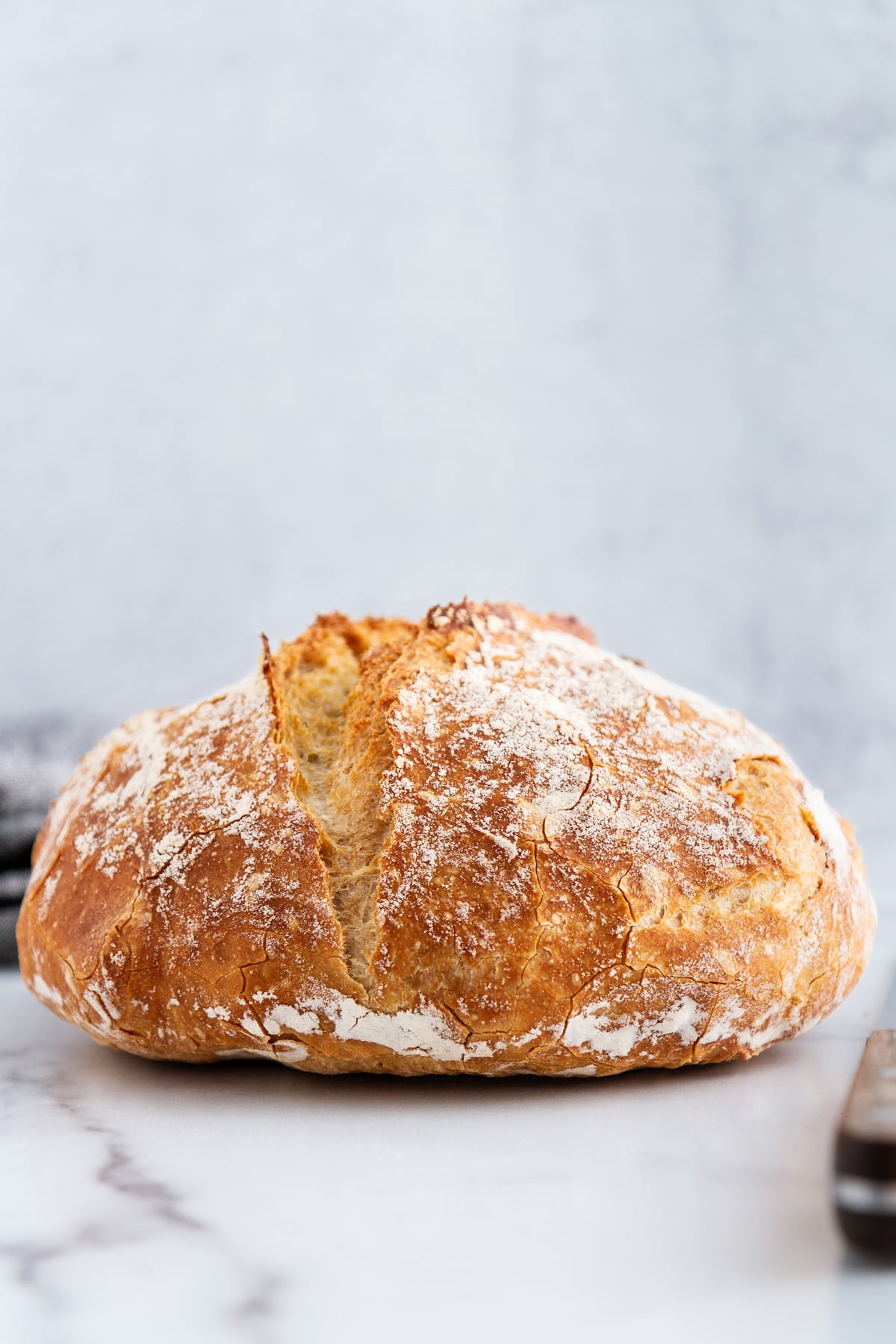
This no knead Dutch oven bread is the easiest bread you’ll ever bake! You just need 3 ingredient for a perfect loaf that is soft and chewy inside but crusty and crunchy outside!

A Quick Look At The Recipe
This is a brief summary of the recipe. Jump to the recipe to get the full details.
Prep Time
1 hour 10 minutes
Cook Time
1 hour
Proof Time
8 hours
Total Time
10 hours 10 minutes
Servings
10 Slices
Difficulty
Easy
Calories *
138 kcal per serving
Technique
Mix dough, rest, shape, proof and bake!
Flavor Profile
Mild, slightly salty, with a soft chewy crumb and crisp crust
* Based on nutrition panel
Mmmm!! This bread is amazing!! I was in the baking mood over the weekend and baked your whole wheat bread which was incredible!! This is the second time I have baked this No-knead bread and let me just say it’s a family favorite!!?????⭐⭐⭐⭐⭐
Moema Bentley
I am all about that no-knead lifestyle: everything from no knead pizza dough, to no knead ciabatta, and no knead naan bread! A crusty loaf of artisan-style, no knead Dutch oven bread seemed like a natural next step!
I know this artisan bread looks intimidating, but I promise you it isn’t! I’ll guide you step-by-easy-step through this recipe below, so you can join the thousands who have made and loved this bread!
Table of Contents
- Why You Will Love this Dutch oven bread Recipe
- What are the benefits of a Dutch oven for bread?
- Ingredients & Substitutions
- Possible Variations
- How to Enjoy No Knead Dutch Oven Bread
- Watch How to Make This Recipe
- How to Make this No Knead Dutch Oven Bread Recipe
- Frequently Asked Questions
- No-Knead Dutch Oven Bread Recipe
- Before You Go
Why You Will Love this Dutch oven bread Recipe
- A no knead bread recipe without any sets of stretch and folds. This recipe couldn’t be simpler: As in, you stir a few ingredients together, let them sit overnight, and the next morning, you shape and bake a loaf of bread. You don’t even need to do any folds to develop gluten like in no-knead sourdough bread.
- This simple recipe is actually flavorful. It’s slightly salty and not at all boring, like some basic breads tend to be.
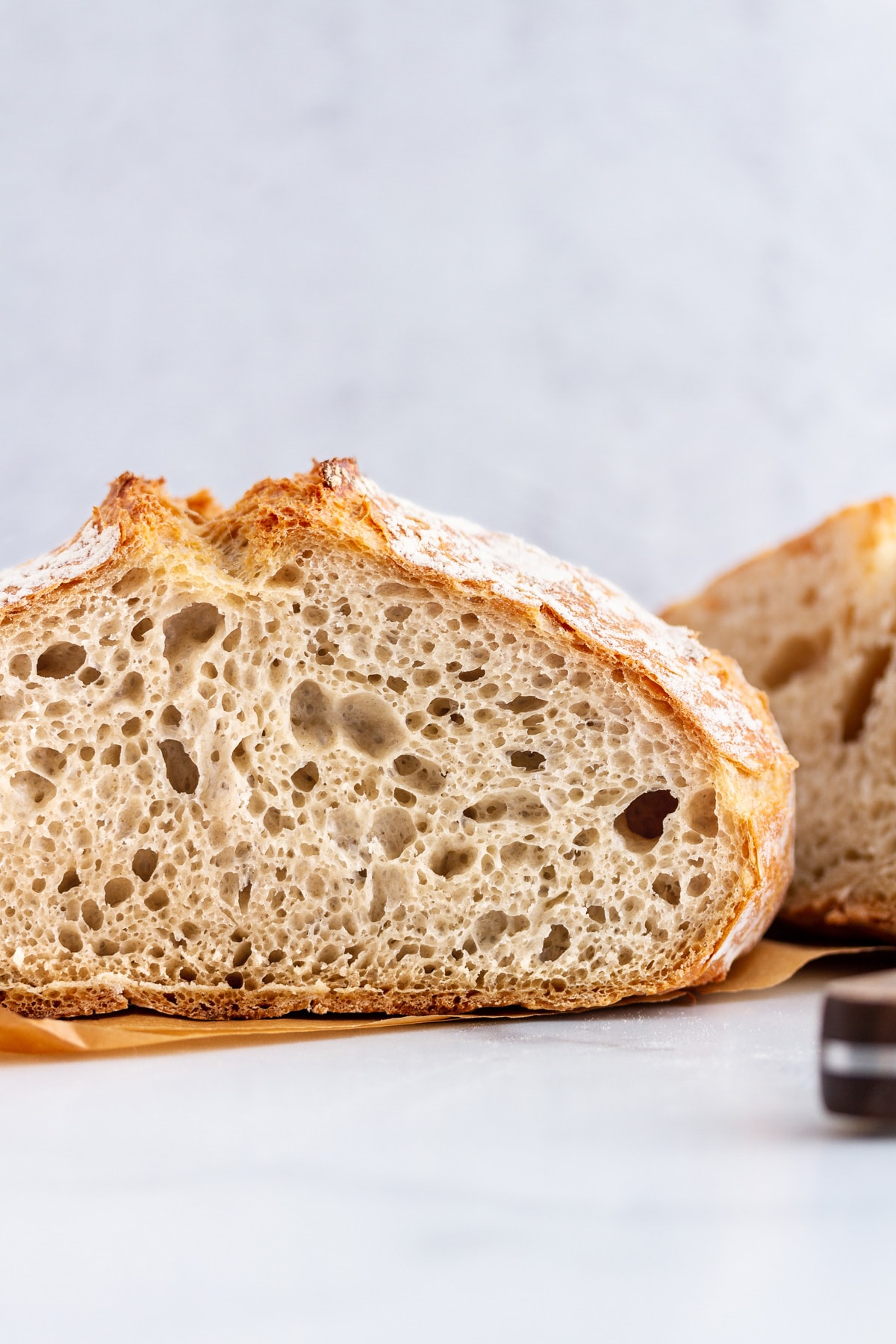
- It’s mega-soft on the inside but with a light, tender, almost flaky crust on the outside. Essentially the texture of this bread is perfect especially considering all the work we didn’t have to do! And the air pockets in the bread slices just slay me.
What are the benefits of a Dutch oven for bread?
- A Dutch oven imitates the results of a professional steam-injected oven. Professional bread ovens have a steam injection option, which allow you to add steam at the beginning and then release the steam from the oven deck to continue baking and crisping the crust. You are essentially using the Dutch oven as a miniature deck oven, whereby you can control the release of the steam by removing the top.
- Preheating the Dutch oven with the lid, creates a small, hot mini-oven. This mini oven is small enough to trap the steam released by the bread during baking. A regular oven or even a large Dutch oven are too large and will allow the steam to dissipate. This trapped steam keeps the crust soft (delays crust formation), which allows for maximum expansion and the largest, most open crumb possible.
- Removing the lid of the Dutch oven allows that steam to escape like releasing the steam on a professional bread oven. Once the steam dissipates, the crust will begin forming and you will get that nice thick, crusty, crunchy crust!
- This technique is not just for no-knead breads. You can use this same baking technique for any bread where you want a soft, chewy interior and crunchy crust. I use this same technique for my whole wheat sourdough bread, sourdough bread recipe for beginners, and even this peasant bread.
Ingredients & Substitutions
- All-Purpose Flour: I use all-purpose flour in this easy bread recipe but you could also take a page from my same day sourdough bread recipe and use bread flour to develop more gluten, faster. If you want to use whole wheat check out this no knead whole wheat bread!
- Sea Salt
- Active Dry Yeast: I include measurements for both active dry yeast and instant yeast in the recipe card below, but I recommend using active dry yeast. It has a slower, more consistent rise and will allow your bread enough time to develop a strong gluten network before attempting to shape it.
- Warm Water: I use tap water for my yeasted bread recipes but you can use filtered water if you want.
See the recipe card for full information on ingredients and quantities.
Possible Variations
- Add some flavorful mix-ins to the dough: Add fresh rosemary and garlic like in my rosemary garlic bread or go in a sweet direct with dried fruit and nuts like cinnamon raisin sourdough bread. Add chopped sun-dried tomatoes like this sun dried tomato bread or parmesan cheese like this tomato basil bread.
- Add a little substance: Add some whole grains and seeds like in this whole grain seeded bread or by substituting some whole wheat flour and adding multigrain hot cereal like in my multigrain bread. It will take a little experimentation but isn’t that what baking is all about?!
- Master this easy Dutch oven bread and then try a no knead sourdough bread! If you don’t already have an active starter, start with my sourdough starter recipe, then read all about how to feed sourdough starter and finally bake your very first loaf with my sourdough bread recipe for beginners!
How to Enjoy No Knead Dutch Oven Bread
- As the most versatile side dish. Dip this bread in soup like 13 bean minestrone, homemade tomato soup or healthy Italian wedding soup. Brush it with garlic butter and bake for easy garlic bread or serve it next to a salad to make a light lunch. Use it to soak up all the juicy goodness from sheet pan shakshuka or slow cooker Italian meatballs.
- Transform any sandwich into a filling meal! This easy bread makes fantastic grilled cheese, bacon turkey bravo, spicy Thai veggie sandwich, or open faced caprese sandwiches.
- Use leftovers in creative ways. Make croutons or make a panzanella like this Summer tomato panzanella salad. You can even make homemade bread crumbs.
Watch How to Make This Recipe
How to Make this No Knead Dutch Oven Bread Recipe
Use these instructions to make the easiest Dutch oven bread! Further details and measurements can be found in the recipe card below.
Step 1: In a large bowl, whisk flour, salt and yeast until well mixed. Pour in warm water and use a wooden spoon to stir until a shaggy dough forms. The mixture will be wet and very sticky to the touch.
Step 2: Cover bowl tightly with plastic wrap and set aside in a warm place 8 to 18 hours until dough rises, bubbles and flattens on top.


Step 3: Heat oven to 450°F. Once oven is preheated, place a 6-quart Dutch oven (with cover) in oven 30 minutes before baking. You can also preheat the Dutch oven with the oven.
Step 4: Generously flour a smooth work surface or counter. Turn out the dough onto the floured surface with floured hands or a bowl scraper.
There is no need to degas or punch down the dough because just the act of transferring it will do that for you and you won’t get all sticky. This will make shaping easier.
Step 5: Dust the top with more flour and working quickly, with floured hands, fold two sides in towards the center then flip over. Re-flour hands and gently shape the dough into a ball by rotating it with both of your hands and pulling it under itself.
It will not form as tight of a ball or have a smooth surface like a more developed dough such as whole wheat bread. That is expected and don’t try to force it or it will just get more and more sticky!
Step 6: Re-flour your hands and scoop up the dough and place it on a piece of parchment paper and sprinkle top lightly with flour. Top with a sheet of plastic wrap and let rest 30 minutes. Cut the parchment to be just a little larger than the bottom of your Dutch oven, as needed.
Step 7: Remove Dutch oven from oven. Uncover dough and carefully transfer to Dutch oven, with the parchment paper beneath. Place the lid on the Dutch oven and return it to oven.
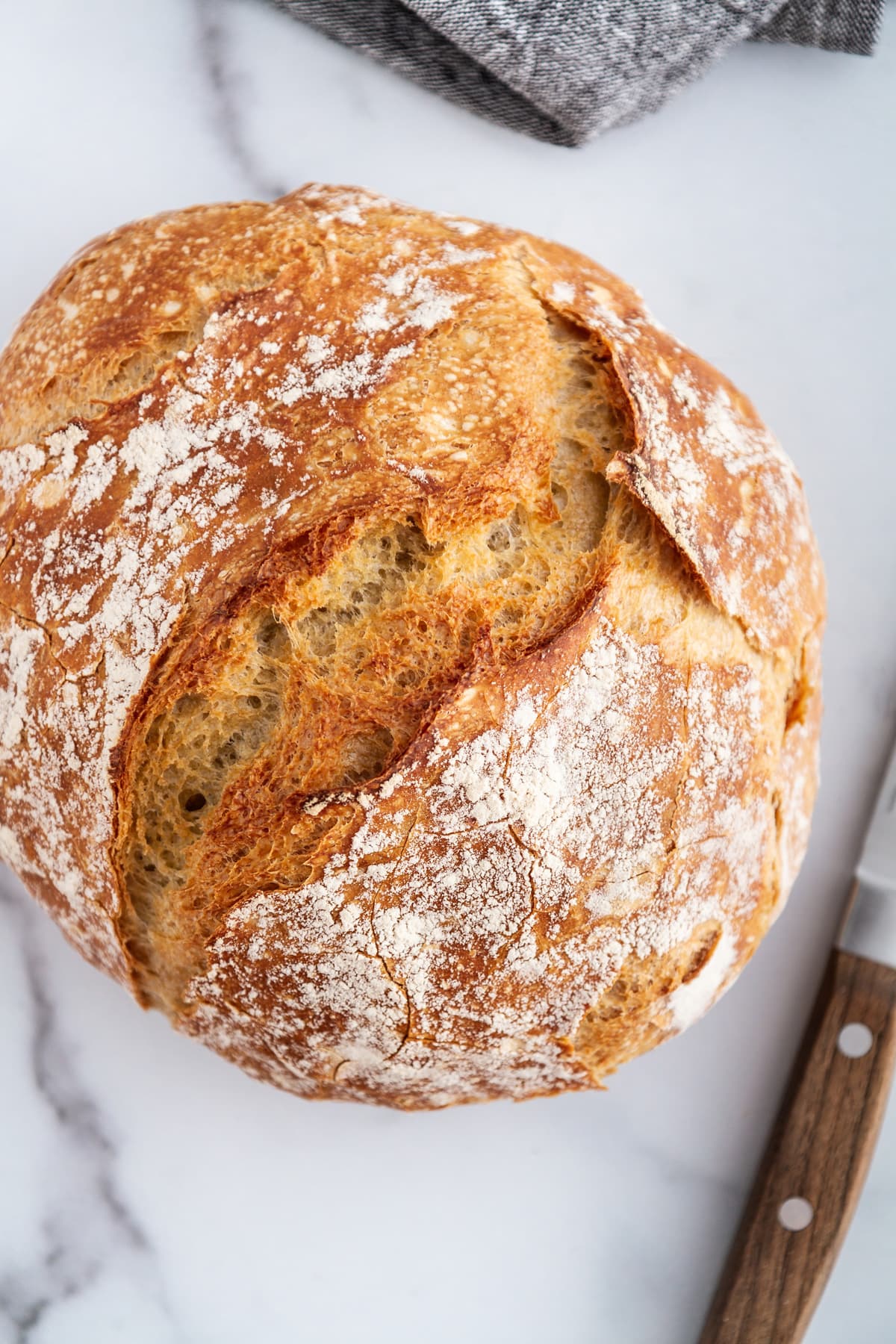
Step 8: Bake bread 45 minutes covered, then another 10 to 15 minutes uncovered until dough is baked through and golden brown on top. Cool completely before slicing, at least 1 hour.


Frequently Asked Questions
A Dutch oven is an enameled cast iron pot with a tight-fitting lid. You can use an uncoated cast iron pot but you will not want to skip the parchment paper. It will keep it from sticking.
To preserve the bread’s crunchy crust, you’ll need to store it at room temperature unwrapped either cut side down on a cutting board or in a bread box. You can store it in an airtight container at room temperature but it will lose the crispy crust almost immediately. Store at room temperature up to 5 days. It doesn’t keep as long as sourdough, so watch for signs of mold!
You can also store well wrapped in the freezer, however, I like to slice my bread before freezing so I don’t need to thaw the whole loaf at one time.
The best oven-spring, most open crumb and crusty crust will occur if baked in a Dutch oven or Challenger bread pan, but you can also preheat a baking sheet on the center rack and a large roasting pan on the bottom of the oven. When ready to bake, place the parchment paper with the scored loaf directly on the hot baking sheet and pour at least 2 quarts of hot water into the baking pan on the bottom. Close the door as quickly as possible. Release the steam after 30 minutes by opening the door.
If you haven’t sliced the loaf yet, but would like to rewarm it for serving, preheat an oven to 400° F. Place the loaf directly onto the oven rack and bake until heated through. It will take about 15-20 minutes. You can also toast a slice at a time. Reheating a partially sliced loaf will dry it out on one side.
No knead bread and bread baked in a Dutch oven are two separate techniques that sometimes overlap! This bread recipe happens to be a no knead bread that is baked in a Dutch oven to get the most open crumb and crusty crust! You can bake any lean dough in a Dutch oven to achieve that ideal crusty crust. I bake all sourdough bread recipes using this technique.
If you enjoyed this recipe, please leave a star rating and let me know how it goes in the comments below! I love hearing from you and your comments make my day!
No-Knead Dutch Oven Bread
Ingredients
- 3 cups all-purpose flour, plus more for shaping
- 2 teaspoons sea salt
- 1 teaspoon active dry yeast , OR ¾ teaspoon instant yeast
- 1 ½ cups warm water, about 110 to 115°F
Instructions
- In a large bowl, whisk flour, salt and yeast until well mixed. Pour in warm water and use a wooden spoon to stir until a shaggy dough forms. The mixture will be wet and very sticky to the touch.
- Cover bowl tightly with plastic wrap and set aside in a warm place 8 to 18 hours until dough rises, bubbles and flattens on top.
- Heat oven to 450°F. Once oven is preheated, place a 6-quart Dutch oven (with cover) in oven 30 minutes before baking. You can also preheat the Dutch oven with the oven.
- Generously flour a smooth work surface. Turn out the dough onto the floured surface with floured hands or a bowl scraper.
- Dust the top with more flour and working quickly, with floured hands, fold two sides in towards the center then flip over. Re-flour hands and gently shape the dough into a ball by rotating it with both of your hands and pulling it under itself.
- Re-flour your hands and scoop up the dough and place it on a piece of parchment paper and sprinkle top lightly with flour. Top with a sheet of plastic wrap and let rest 30 minutes. Cut the parchment to be just a little larger than the bottom of your Dutch oven, as needed.
- Remove the hot Dutch oven from oven. Uncover dough and carefully transfer to Dutch oven, with the parchment paper beneath. Place the lid on the Dutch oven and return it to oven.
- Bake bread 45 minutes covered, then another 10 to 15 minutes uncovered until dough is baked through and golden brown on top. Cool completely before slicing, at least 1 hour.
Video
Notes
Nutrition
Nutrition information is automatically calculated, so should only be used as an approximation.
 Like this recipe? Rate & comment below!
Before You Go
I hope you enjoyed this easy bread recipe. Explore our lunch and dinner recipes for ways to use this delicious and easy bread!





the information about how to make bread for everyone is great to know. Thanks for sharing the information with us. Subscribed your blog.
I have it in the oven now. I had the same issue as Jeff from 2016, with the dough being way too hydrated to form a ball. Most recipes call for the flour to be spooned into the measuring cup and then leveled, not scooped with the measuring cup and packed. It may be a good idea to clarify, since many sites recommend the opposite. Even better would be to include grams, that way how we get the flour out of the bag doesn’t matter.
Thank you so much for that helpful feedback, BP. I am the new owner of the blog, so I haven’t had the opportunity to make this recipe yet. I have, however, attended both pastry and commercial bread school and was an executive pastry chef in Manhattan with a decade of experience. I think you have nailed the issue on the head. I will prioritize this recipe and add the gram measurements. ~Lindsey
Bread turned out great except I would half the salt. It was too salty.
Thanks for the feedback, Dolma. It really depends on the type of salt you use. I agree, if you use table salt it would be too salty because the crystals are finer so it seems “more salty” per teaspoon. ~Lindsey
Can’t wait to try making this no knead dutch oven bread recipe, seems easy to try. Thanks for sharing this with us.
So excited! It looks like bread! Just checked it after the covered 30 minutes and it seems just right.
I got tired of paying 4.99 for a loaf of bread from the supermarket bakery and have been wanting to bake my own bread but have been intimidated. This recipe is a great entry point!
The house smells so good. I loved playing with the risen dough — so alive!
Oh hooray, Heidi!
Hi Lindsey, I’m so glad to hear this recipe is easy! I’ve been wanting to try my hand at making my own bread for some time now, but it seems intimidating without a bread maker. But I’m going to give this one a shot! Fingers crossed it turns out as good as yours did.
I am sure it will! Best of luck, Kim!
I covered the dough but it got a dried crust on top during the rise. How can I prevent this?
Hi Ashley! You covered the dough but it still got a dried crust on top? Hmm. How did you cover it? Perhaps it was towel and there was a draft? I typically use a piece of plastic wrap for a tight seal around the bowl. I hope that helps! ~lindsey
I’ve made this so many time and it’s simple and delicious!
I added garlic this time and somehow my dough is super sticky and spreading flat. What did I do wrong? I’ll try baking anyway and see what happens.
Hi Jennifer! You didn’t do anything wrong! So garlic is one of the few ingredients that impede fermentation. I learned this the hard way in bread school and in developing bread recipes in restaurants! Depending on how much you used it also contains water, which will impact the hydration percentage. This is already a higher hydration dough. Delaying fermentation and adding moisture would produce the results you’re describing. The easiest fix is to sauté the garlic before adding it to the dough. You could also add the garlic right before the final shaping. Just give it a little time to rise again before baking. ~Lindsey
Need help dough too watery . Could not shape it into a ball. I followed recipe. What WENT WRONG.
Hi Nayda, You didn’t do anything wrong! This is a wetter dough and will not shape into a ball. It is one of those things where you just have to work with the dough and be comfortable not having it shaped perfectly.
Sometimes the middle is slightly undercooked. Other times the dough doesn’t rise. ????
Oh goodness! Let’s address those issues separately, Grace. One foolproof method for checking for doneness in an unenriched dough like this one, is by using an instant-read thermometer. Non-enriched bread should be baked to 212 degrees F. Just stick it right in the center and make sure. Also, bread cut when it is still hot or warm will appear underbaked because slicing compresses the crumb.
If though dough isn’t rising, check your yeast for life, be sure you didn’t use too hot water when blooming them, and check your room temperature. If your room is colder than usual, the dough will take much longer to rise. You can proof it in the oven with the proof setting if your oven has that function or with just the light on. I hope that helps. ~Lindsey